






 Portuguese
  Spanish
  4 min of reading
  0 comments


The twelve-kilometer stretch that connects Urubici to Grão-Pará in the Serra Catarinense enters the final phase of paving after generations as a dirt road, with the asphalt paving concluding one of the most technical road landscapes in the country and the legendary “viração,” fog that erases the road in seconds.
The SC-370, a state highway that crosses the Serra do Corvo Branco in the south-central part of Santa Catarina, is close to being fully paved along the stretch between Urubici and Grão-Pará. The road, for decades made of dirt and gravel, takes drivers to an altitude of 1,470 meters between sandstone rock walls.

The paving work progressed throughout 2024 and 2025 and entered the final stretch in 2026, according to regional outlets like Terra Brasil Notícias, NDmais, Viagens e Caminhos, and Carimbo de Viagem.
Twelve kilometers separate the mountain town of Urubici, a tourist starting point in the Serra Catarinense, from the small Grão-Pará, in the Capivaras River valley.
-
Everyone complains, but everyone stops: Rede Graal charges R$ 20 for a coxinha, earns R$ 2 billion a year, and turned clean bathrooms, bus drivers, and hot bread into a billion-dollar machine on Brazil’s highways.

-
An entire city in Alaska needs to be moved stone by stone due to ice sinking in a mega relocation project that will cost hundreds of millions of dollars.

-
Cutting-edge engineering transforms an abandoned 88-meter-deep quarry into a luxury ‘earthscraper’ in China with submerged floors and geothermal energy.
-
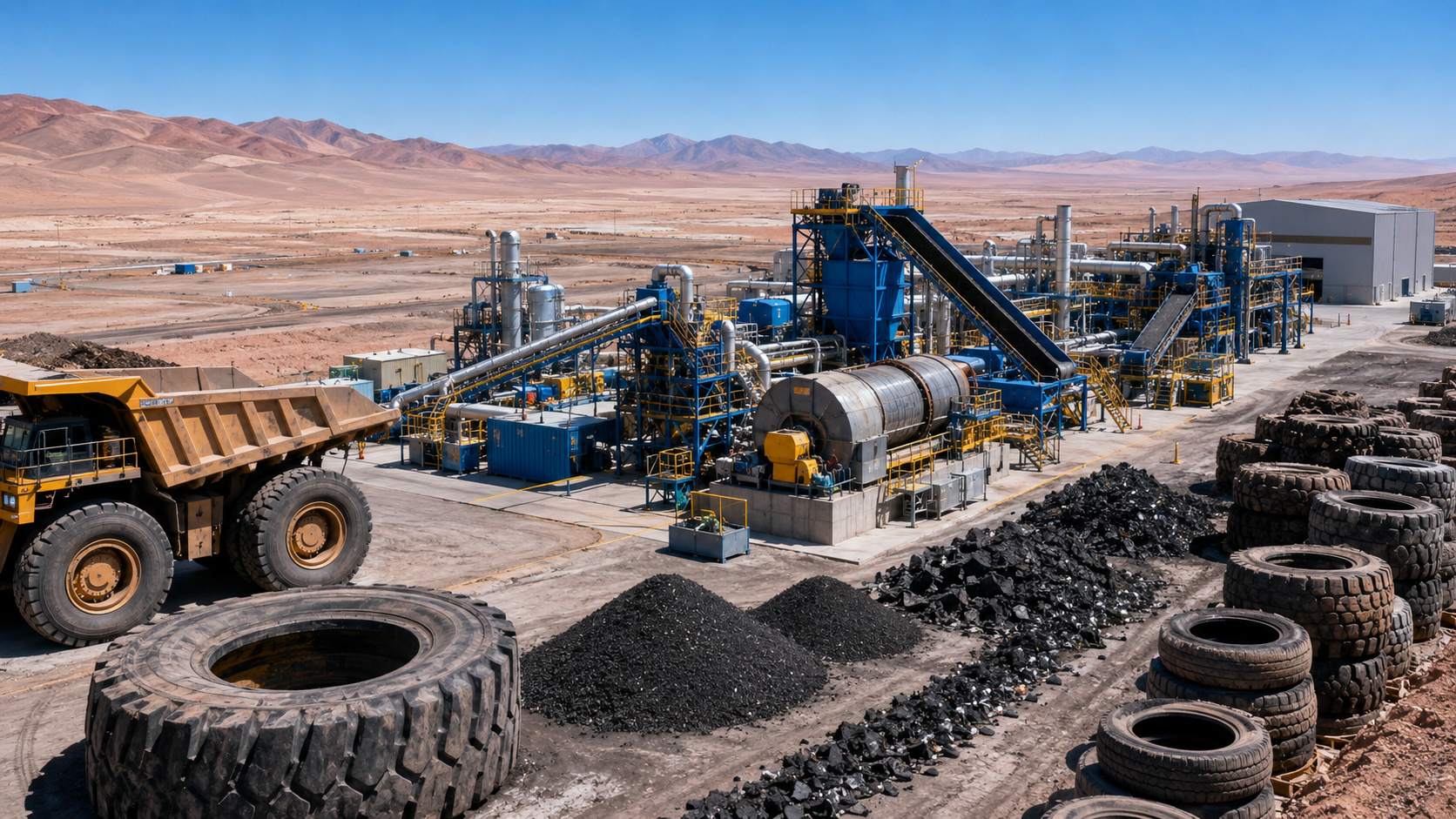
Chile transforms giant mining tires into a new industry in the heart of the Atacama: new plant recycles colossal rubbers discarded by off-road trucks and promises to process 30,000 tons per year in the driest desert on the planet.


The stretch became known for a unique feature in Brazil. The SC-370 crosses a rock cut approximately 90 meters high, in parallel vertical walls, which many researchers point to as the largest sandstone rock cut in the country.
The rock is about 160 million years old. It is part of the Botucatu Formation, the same geological structure that houses the Guarani Aquifer beneath the region’s soil.
Climbing the SC-370 is an exercise in patience and attention. The 180-degree curves appear in succession, and the incline far exceeds what urban drivers are used to facing.
In some parts of the route, the driver sees the sky above the walls but cannot see the exit of the curve ahead. The car enters and seems to disappear.
The “viração” that erases visibility at 1,470 meters
The popular name for the phenomenon is viração. It is a dense fog that forms at the maximum altitude of the stretch, near the Altos do Corvo Branco viewpoint, and appears without warning.
In a matter of seconds, visibility drops to zero. Those inside the car see the hood disappear. Locals have learned to slow down and turn on the hazard lights at the first sign.
The phenomenon is concentrated between late autumn and winter, especially when a cold front advances over the plateau. The humidity gets trapped in the walls and condenses quickly.

The region is also one of the coldest in Brazil. Urubici and neighboring municipalities like Bom Jardim da Serra and São Joaquim record frost in winter and rare confirmed snowfalls. Cold that connects with the recent polar wave that dropped Curitiba to 2.5 degrees and put eighteen states on alert, with a direct effect on the Serra Catarinense.
With the asphalt arriving, the SC-370 enters a new cycle. The dust from the dirt road disappears. Travel time decreases. Accessibility increases for tourists who previously avoided the stretch.
The other side of the equation is that the road loses part of its adventurous character. For drivers who traveled to tackle the mountain with 4×4, it was precisely the loose surface that added charm to the route.
I imagine what a road loses when asphalt arrives after decades. The topography remains. The driver’s relationship with the road changes. The risk becomes lower, and the landscape becomes a backdrop.
The Serra do Corvo Branco now joins the queue of other road works in Santa Catarina that are in the final phase. But the “viração” and the ninety-meter walls remain there, waiting for the next distracted driver.
In other parts of the country, highways with a similar profile face a different fate, such as the BR-040 in Itaipava, where the Sky-Scraper Bridge closed for six months for emergency structural works.
What was a dirt road between Urubici and Grão-Pará will become a paved tourist route, and the Serra Catarinense gains one more paved strip among its highest points. But the “viração” does not ask for permission to arrive.
Sources: Terra Brasil Notícias, NDmais, Viagens e Caminhos, Viagem & Turismo Abril, Climatempo.
Would you dare to climb the SC-370 of Corvo Branco after the asphalt, or do you prefer to face what’s left of the walls with the “viração” tightening visibility?







Be the first to react!