






 Portuguese
  Spanish


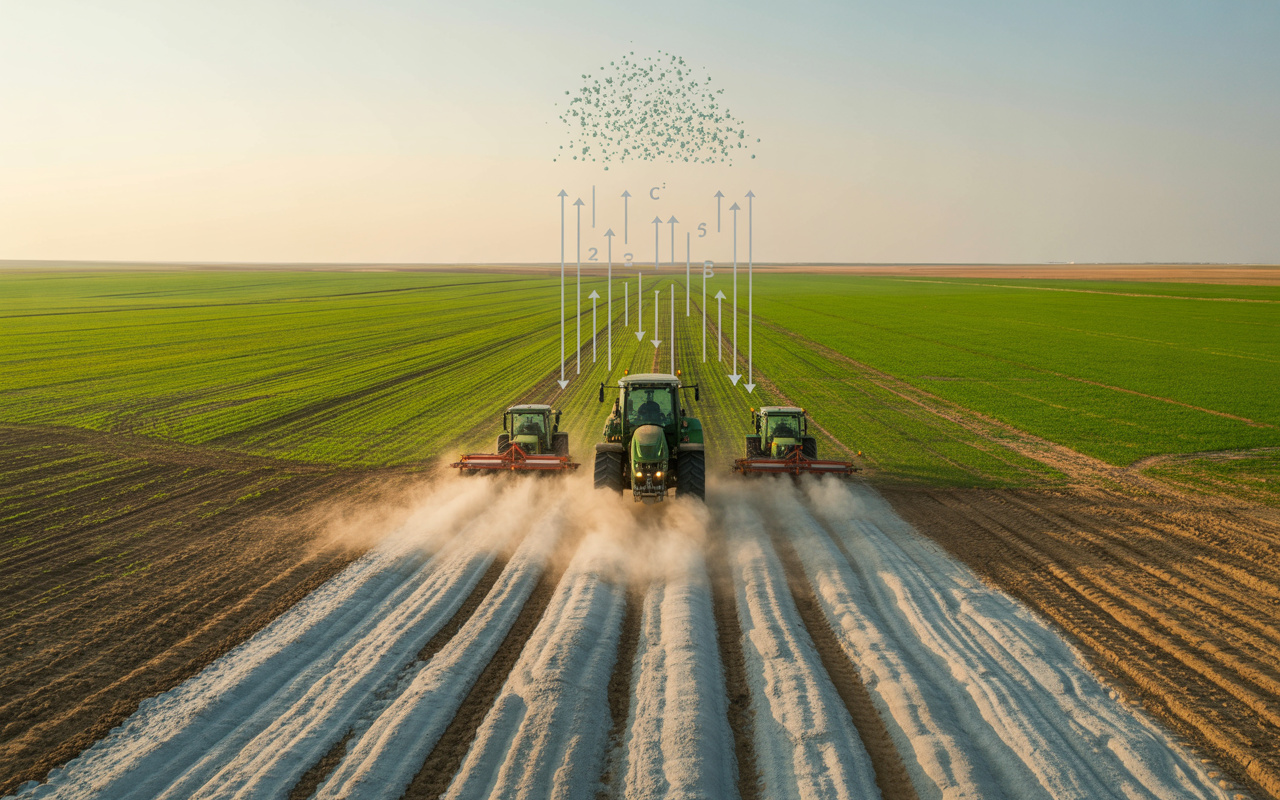


Agricultural Technique Based on Basalt Powder Accelerates CO₂ Capture, Recovers Degraded Soils, and Increases Productivity, According to Recent Scientific Studies.
What appears to be just dark dust being spread over crops is, in practice, becoming one of the world’s most promising strategies to simultaneously address three global crises: climate change, degradation of agricultural soils, and declining productivity in intensively exploited areas. Known as accelerated weathering of rocks, the technique consists of applying ground basalt rock powder directly to agricultural soil, triggering natural chemical reactions capable of removing large volumes of carbon dioxide from the atmosphere and storing it stably for decades or centuries.
Scientific studies published in journals such as Nature, PNAS, and Science Advances show that, depending on the climate, soil type, and application rate, this practice can capture up to 4 tons of CO₂ per hectare per year, while also remineralizing the soil, improving its physical structure, and increasing agricultural productivity by up to 15% to 20% in some crops.
What was once treated as a mining waste is now beginning to be seen as a strategic tool for climate engineering applied directly in the field.
-
Brazilian Family’s Cheese, Started with One Cow in 1984, Named Best in the World, Beating 2,700 Competitors from 30 Countries

-
Brazilian Ranchers Use Satellites to Optimize Pasture Management and Prevent Feed Loss in Cattle Farms

-
Russia Follows China in Recognizing Brazil as Free from Foot-and-Mouth Disease Without Vaccination, Boosting Meat Exports and Agribusiness Potential

-
23-Year-Old Brazilian Turns Beekeeping into College Tuition, Harvesting Honey Twice a Year from 50 Hives





How Basalt Powder Captures CO₂ from the Atmosphere
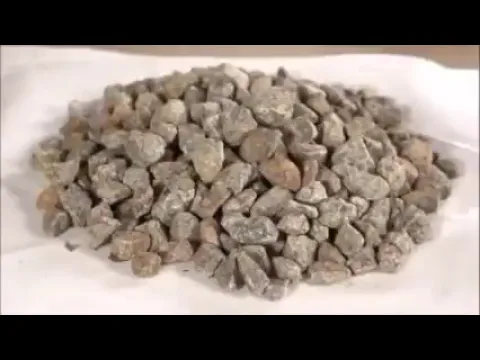
Basalt is a volcanic rock rich in minerals such as calcium, magnesium, and silicon. When finely ground and spread over the soil, it reacts with rainwater and carbon dioxide dissolved in the atmosphere and in the soil.
This chemical process, known as weathering, occurs naturally over thousands of years, but is artificially accelerated when the rock is crushed and distributed over large agricultural areas.

During these reactions, CO₂ is converted into stable bicarbonates, which can be transported to deep soil and oceans, where they remain stored for long periods. Unlike temporary solutions, this sequestration is considered chemically stable and low risk of reversal, making it extremely attractive from a climate perspective.
Research suggests that extensive crops — such as soybeans, corn, wheat, and sugarcane — are ideal environments for this technique, as agricultural management already involves machinery, soil correction, and large-scale input distribution.
Why Agricultural Crops Are Ideal for This Technology
One of the reasons why accelerated weathering has gained traction in recent years is the scale. Unlike industrial carbon capture projects, which require complex infrastructure and high investments, agricultural fields already encompass millions of regularly managed hectares.

Global agricultural areas alone total more than 5 billion hectares. If a fraction of this territory adopts the technique, the annual CO₂ capture potential could reach billion tons, approaching the scale needed to make a relevant contribution to global climate goals.
Additionally, basalt powder can be applied using the same equipment used for agricultural limestone, reducing logistical costs and facilitating adoption.
Direct Impact on Soil Fertility and Productivity
The climate benefit does not come alone. Basalt is rich in essential micronutrients that many agricultural soils have lost over decades of intensive exploitation. As it decomposes slowly, it releases calcium, magnesium, potassium, iron, and silicon, essential elements for plant development.
Field trials in countries such as Brazil, United States, United Kingdom, and Australia have demonstrated consistent improvements in water retention capacity, increased soil microbial activity, and reduced acidity, creating more favorable conditions for root growth.
In crops such as corn and sugarcane, researchers have observed productivity increases of 10% to 20%, especially in degraded fields or those poor in minerals.
Reduction of Dependence on Chemical Fertilizers
Another relevant effect is the decrease in dependence on synthetic fertilizers. By gradually restoring the mineral base of the soil, rock powder helps reduce the need for intensive applications of chemical amendments, whose manufacturing process is highly CO₂ emitting.
This factor creates a positive cascading effect, where the crop begins to emit less greenhouse gases not only due to direct sequestration but also by reducing associated industrial inputs.
In a scenario of high volatility in the global fertilizer market, this characteristic makes the technique even more strategically appealing from an economic standpoint.
How Much Rock Powder Is Needed and What Are the Challenges
Studies indicate that application rates vary between 5 and 20 tons of basalt powder per hectare, depending on the main objective — whether soil correction, productivity increase, or maximizing carbon capture.
The main challenge lies in logistics and grinding. The finer the powder, the greater the surface area in contact with water and CO₂, accelerating the chemical reactions. This requires energy for grinding, which can reduce some of the climate benefit if not done with clean sources.
Therefore, pilot projects are prioritizing the use of existing mining waste, avoiding the opening of new extraction fronts and taking advantage of materials that previously had no agricultural value.
A Solution That Connects Agriculture, Climate, and Economy
Accelerated weathering represents a rare convergence of agricultural productivity, environmental regeneration, and climate mitigation. Unlike approaches that compete with food production, this technique operates within the agricultural system, without requiring a reduction in planted area or radical changes in the production model.
Governments, climate technology companies, and carbon funds are already studying ways to compensate farmers for verified CO₂ capture, turning rock powder into a new environmental asset.
If the results observed in the field are confirmed on a large scale, what today seems to be just dust spread over the soil may become one of the planet’s most powerful tools to transform crops into true carbon sinks, while also strengthening the foundation of global food production.









Muito importante essa pesquisa, precisamos de fortalecimento de projetos e análise wmque sejam originais ao nosso alcance, importante o custo benefício, temos tudo aqui, espaço m, solo, técnicos formados em nossas universidades, acredito que com investimentos corretos em nossas regiões agrícolas conseguiremos sair dessa dependência química estrangeira, que so gera elevação de custos.
O único problema da reportagem é citar “crise climática”… A cada década temos uma “crise” para chamar de nossa que nunca se realiza. Na minha graduação era a agua daa Amazônia que iria acabar…
Fica difícil levar a sério qualquer mídia que só repete o mainstream.
Nós estamos fazendo parte desse projeto, que foi implantado nessa safra de Soja 35/26.