Portuguese
  Spanish


An underground project in the Curaçá Valley brings together international engineering, mining logistics, and local team training in a work that promises to change the way workers and ore circulate in depth.
Ero Copper advances in the Curaçá Valley, in northern Bahia, with the construction of a 1,550-meter deep vertical shaft at the Pilar Mine, within the Caraíba Operations.
The structure was designed to expand access to the deepest copper areas, reduce underground travel time for workers, and reorganize the logistics of transporting ore, people, and materials in the operation.
The project has engineering and execution by UMS Group, a South African company specialized in underground mining.
-
Brazilian Students Develop Solar-Powered AI Trap for Cotton Pests, Defeating Carnegie Mellon and Cornell in Global Agricultural Robotics Award

-
James Webb Telescope Captures Violent Galactic Wind: Galaxy Ejects Stellar Fuel at Extreme Speed, Could “Die” in 100 Million Years

-
Teen’s Weight Gain and Cushing’s Disease Revealed by Ankle Injury: Doctors Discover Tiny Pituitary Tumor in 113-Kilo Brazilian Adolescent

-
19-Year-Old Develops Fishing Game on Roblox from a Trailer in Canada, Now Earning $400,000 Monthly with Lego and Walmart Advertising on Digital Rods


According to the company, the shaft was designed to move up to 2.2 million tons of rock per year and transport 840 people per day, distributed in four work shifts.
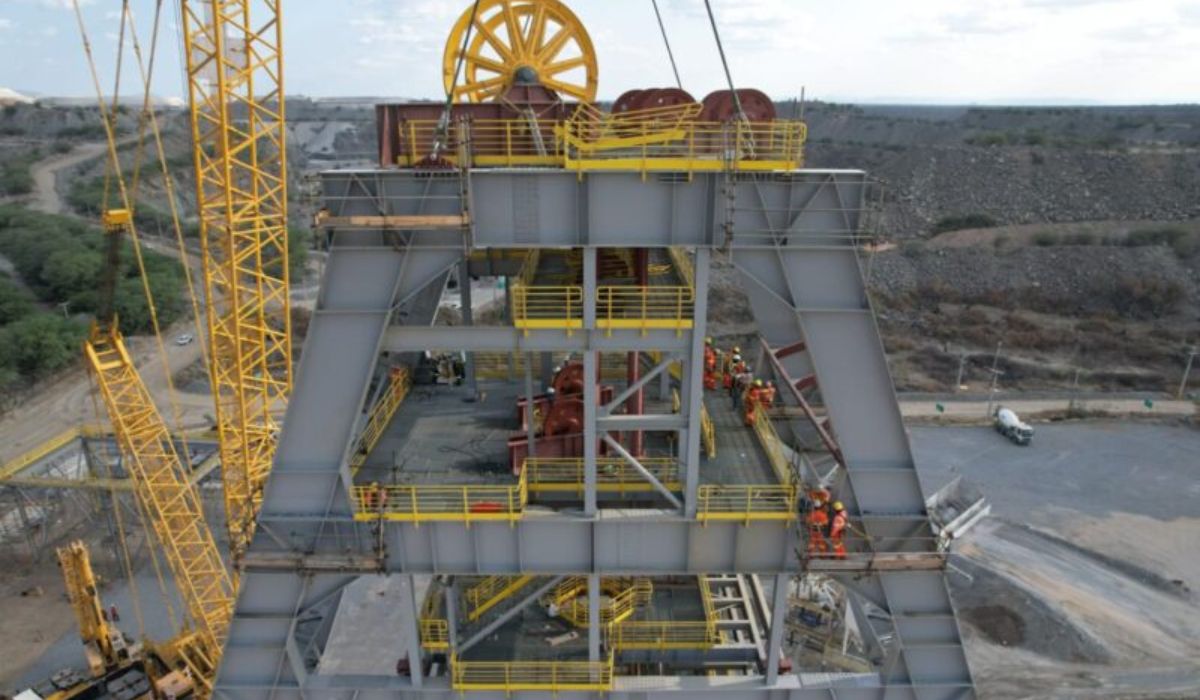
Called a shaft in mining, this type of vertical shaft will have a final diameter of 6.3 meters, concrete lining, and four internal compartments.
The operation will be served by two double drum hoists: one intended for hoisting ore and waste rock, and another aimed at transporting workers, materials, and equipment between the surface and underground levels.
Engineering, design, and infrastructure acquisition activities began in the fourth quarter of 2021.
Construction began in January 2023, according to UMS.
The company reports that the shaft system is expected to be completed by the end of 2026, while Ero Copper projects the start of operation of the new Pilar Mine shaft in 2027.
The work is part of the strategy to transform the Pilar Mine into a system with two main accesses.
The existing structure will continue to serve the upper levels, while the new vertical shaft will allow access to the so-called Deepening Extension Zone, the deepest area of the Caraíba Operations.
Vertical shaft at Pilar Mine expands access to deep copper
The Caraíba Operations are located in northeastern Bahia, about 385 kilometers north-northwest of Salvador, and form an integrated copper mining and beneficiation complex.
The complex includes the underground mines Pilar and Vermelhos, the open-pit mine Surubim, and the Caraíba plant, with a processing capacity of approximately 4.2 million tons per year, according to Ero Copper.
The company states that the new shaft should allow for higher mining rates, reduce transportation time between the surface and the deep regions of the mine, and enhance the operational efficiency of the unit.
In 2025, the Caraíba Operations produced 36,035 tons of copper in concentrate.
For 2026, the guidance released by the company indicates production between 35,000 and 40,000 tons.
In the current operation, movements through long ramps can take hours to reach the work front.
With the mine elevators planned in the shaft, the estimated access time will be reduced to about 20 minutes, according to information presented by the project executives to Conexão Mineral.
The change alters a central part of the underground routine: vertical transportation replaces part of the extensive movements made by ramps, while trucks and other equipment tend to concentrate their activities in areas closer to the operational levels.
This arrangement is presented by UMS and Ero Copper as a way to reduce unproductive time and reorganize the internal flow of the mine.
How shaft excavation works underground in Bahia
UMS adopted in the project the method known as Slype and Line, a technique that uses a central pilot hole to gradually enlarge the shaft diameter through controlled detonations.
The dismantled material falls through the shaft itself and is removed from below, using the existing underground infrastructure.
This choice was made possible by the presence of already operational tunnels and ramps in the Pilar Mine.
From these accesses, the team can support the excavation of the new shaft and remove the fragmented material without relying solely on surface operations.
According to UMS, a central raise-bore type hole crosses the shaft axis and allows the dismantled rock to be directed for removal by underground equipment.
The work cycle includes drilling, blasting, cleaning, containment, and lining, steps that need to be coordinated to keep the excavation progress within the project’s technical parameters.
After the excavation phase is completed, the shaft will receive the internal steel structure, as well as hoisting, ventilation, energy, communication, and transportation systems.
Only after this installation can the shaft operate as a vertical corridor for the movement of people, materials, and ore.
The infrastructure associated with the shaft includes ore and waste rock handling systems, ore passes, crushed material silo, and underground crushing chamber.
According to UMS, this set was designed to transfer crushed ore and rock by conveyors to the shaft loading arrangements at the deep levels of the mine.
South African Engineering and Brazilian Suppliers in the Project
The UMS Group developed the project by combining engineering carried out in its offices in South Africa with manufacturing, assembly, and contracting of Brazilian suppliers on different fronts.
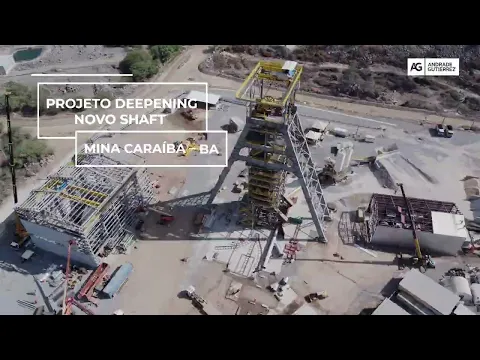
The surface structure, including the headgear, had a South African design and execution with the participation of companies in Brazil.
Robert Hull, Operations Director of UMS Group, told Conexão Mineral that the company was responsible not only for the shaft but also for the design of the underground envelope linked to the project.
This scope includes galleries, crushing chamber, and surface support structures.
Bruno Paladino, Country Manager of UMS in Brazil, explained that highly specialized equipment, such as winches and Top Hat Guides type steel guides, needed to be acquired abroad.
These components will be used to guide the movement of elevators along the vertical shaft.
In other areas, the company reported having prioritized national suppliers, especially in metal structures, compressors, and electronic controls.
The need to import certain items was attributed to the level of specialization required by deep shaft excavation projects, still uncommon in the Brazilian market.
Training Workforce for Underground Mining
The training of specialized labor is one of the points highlighted by UMS in the execution of the project.
The excavation of deep shafts has a low presence in Brazil compared to markets with a greater tradition in underground mining, which reduces the availability of professionals with direct experience in this type of work.
To address this limitation, the company structured a training program for Brazilian workers with previous experience in mining or construction.
According to a report presented by UMS, these professionals undergo theoretical and practical training underground, always accompanied by experienced international teams during the execution of activities.
The organization of shifts was also pointed out by the company as a relevant factor for the progress of the work.
According to the portal Conexão Mineral, the executives mention limitations associated with the work shifts of underground mine workers in Brazil and rules related to the involvement of senior professionals, but the exact application of these points to the project was not documented in detail in the source consulted.
In the Bahia project, more than 30% of the current workforce is made up of professionals from Bahia, according to the executives interviewed by Conexão Mineral.
The company also reported an increase in female participation in areas such as EHS, purchasing, and administration, without detailing the total percentage of women in the project’s workforce.

Safety and productivity in underground transportation
The reduction of heavy traffic in underground ramps is presented by UMS as a factor linked to the mine’s safety and productivity.
According to the company, less reliance on long truck journeys at depth can reduce equipment wear, diesel consumption, and workers’ exposure to extensive underground travel.
Hull told Conexão Mineral that safety is a priority in the execution of the shaft.
According to the executive, Brazilian technicians were trained in UMS standards, while expatriate professionals accompany shaft excavation activities alongside local teams.
The company also reported achieving, in its global projects, periods without recordable injuries with lost time.
As this data was presented by the company itself in the interview, it should be treated as information attributed to UMS, and not as an independent audit record.
In Ero Copper’s operational planning, the new shaft at Mina Pilar is associated with access to the Deepening Extension Zone starting in 2027.
The company reported that it will continue investing in the vertical shaft and in infrastructure linked to Caraíba Operations to support the next stages of production.
The expansion of underground access occurs in a context of increased demand for copper projects in different countries.
In the case of Bahia, the project connects UMS’s South African experience in deep shafts to Ero Copper’s Brazilian operation in the Curaçá Valley, a region that concentrates an important part of the company’s copper production in the country.
UMS expands operations in Latin America
Besides Brazil, UMS reported having opened an office in Santiago, Chile, to support local mining clients with technical and field support in underground operations and shaft projects.
The regional expansion was presented by Paladino as part of the company’s strategy to operate in Latin American markets with demand for underground solutions.
The executive also highlighted the company’s accumulated experience in such projects.
According to UMS, the group has more than six decades of experience in the development and operation of underground mines, with a presence on different continents.

Hull stated that the company sees opportunities in new projects for copper, gold, platinum, and potash, due to the commodity price scenario and the demand for underground operations.
UMS also reported having secured a construction contract for a potash project in Africa, without the original text detailing the name of the venture.
In Brazil, the execution of the Pilar Mine shaft represents one of the most relevant applications of this type of engineering in an underground copper operation.
The project includes deep excavation, lifting systems, crushing infrastructure, and local workforce training in a single industrial project.