Portuguese
  Spanish



The Airline Industry Is Always on the Radar of Innovation, and Recently, a Technology That Has Caught Attention Is That of a Plane With a Transparent Roof. But Is This Idea a Near Reality or Just a Futuristic Illusion?
The technology of a plane with a transparent roof is not new. As early as 2011, discussions about concept planes with this feature were circulating in the media.
However, the reality is a bit different. Airbus, for example, uses the term “transparency” in its designs, but refers to transparency regarding environmental impact, not a literally transparent roof.
In a video released by Airbus, the company presents several innovations, including the use of recycled materials, innovative design, and a scientific research philosophy focused on sustainability.
-
Latin America’s Largest Port Invests $400 Million in Rail System with Trains Up to 2.4 Kilometers Long
-
New Smart Radar Begins Issuing Fines to Solo Drivers in Carpool Lanes, Uses Cameras to Count Occupants, Changing Traffic Enforcement Rules on Busy European Roads

-
Brazil Welcomes Spanish Wamos Air and Nigerian Air Peace, Potentially Transforming International Routes and Increasing Competition
-
Why can the crane operator only obey the correct signalman on the construction site: among dozens of workers, a hand raised by the wrong person can confuse the maneuver and turn a load of tons into an immediate risk.



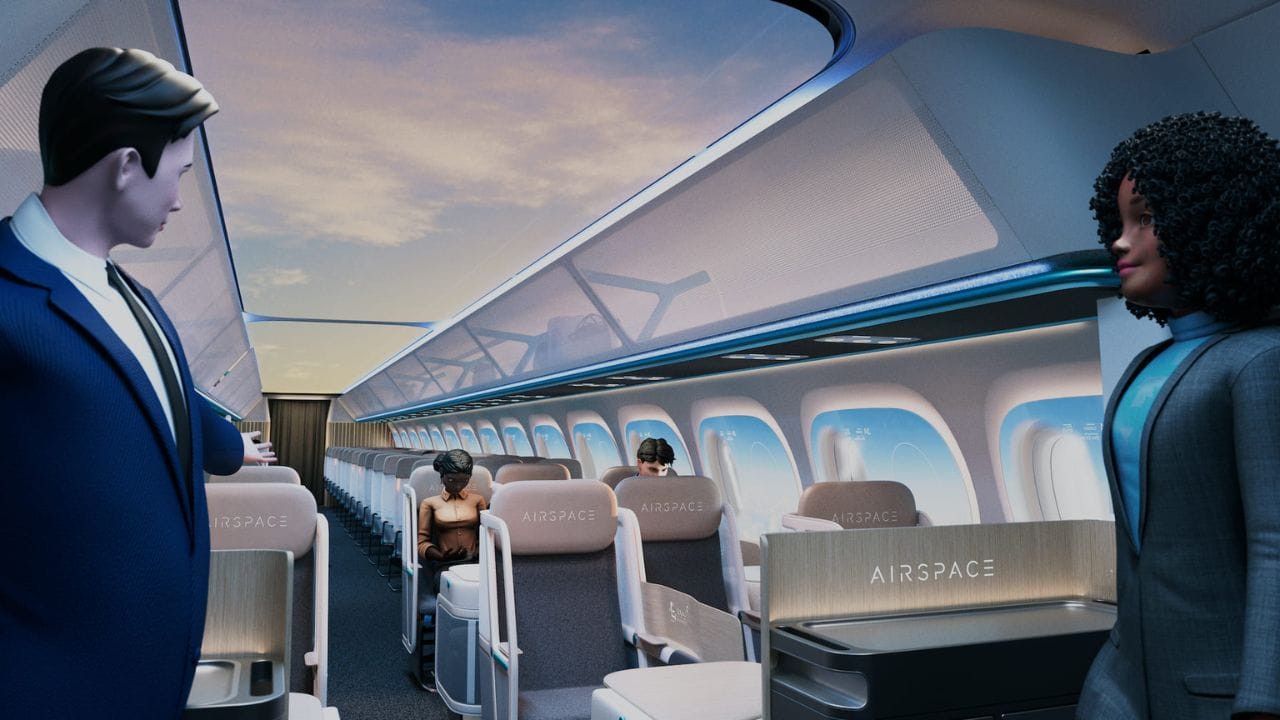
But what many interpreted as a transparent roof is, in fact, a projection on a touchscreen – an optical illusion, not a transparent fuselage.
Technological Advancements in the Flight Cabin


Airbus is investing in cabin technology, with screens that simulate a transparent roof, offering passengers a panoramic view of the sky.
This technology is part of a broader project that includes 3D printing, bionic structures, and circular design, aiming for fuel consumption efficiency and pollution emissions reduction.
Looking to the Future of Aviation, It Is Clear That the Trend Is the Incorporation of More Technology and Innovation
Both for the passenger experience and for operational efficiency. The concept of planes with “transparent roofs” may not be literal, but symbolizes a significant advancement in the way we interact with the flight environment.
While the idea of a transparent roof in planes may be more fiction than reality, the aviation industry continues to evolve with technological innovations that promise to transform the flying experience.
Airbus and other companies are at the forefront of this movement, seeking solutions that balance the desire for unique experiences with the need for sustainability and efficiency.