






 Portuguese
  Spanish


The Oil-Free Fryer Market Advances With Unique Features and Intense Competition Among Brands That Dominate The Sector in Brazil. Steam Models and 3-in-1 Oven Versions Change The Kitchen Experience and Attract New Consumers.
New features have been reshaping the oil-free fryer segment in Brazil.
While 3-in-1 “oven” models and steam versions gain ground, consumers remain torn between two strong brands: Electrolux and Oster.
This comparison analyzes, in an inverted pyramid format, design and variety, technology, cost-effectiveness, energy efficiency, and customer service, as well as presenting standout models from each manufacturer based on official specifications and recent retail data.
-
How Many Outlets Should Each Room Have? Guidelines Suggest 6 to 10 in the Kitchen, One Every 3.5 Meters in Living Rooms, and Specific Recommendations for Bedrooms, Bathrooms, Laundry Rooms, and Outdoor Areas

-
Family Turns Homemade Cheese Bread Recipe into a $17 Million Frozen Foods Business with 200 Tons Monthly Production and Over 1,400 Clients

-
Ancient 4,000-Year-Old City in Brazil Grew Wealthier and Reduced Inequality, Study Finds
-
Lost Page from Archimedes Palimpsest Resurfaces in French Museum After Decades, May Reveal Hidden Mathematical Calculations with X-ray and Multispectral Imaging




New Technology in Air Fryers
The category has ceased to be synonymous only with baskets and heating elements.
Counters with air fry function allow baking, grilling, toasting, and dehydrating, often at multiple levels and with accessories for rotisserie.
Case in point is the Oster OFRT780 (12 L, 1,800 W), positioned as 3-in-1 in the brand’s portfolio.
On Electrolux’s side, the latest innovation targets moisture: the line with steam function — like the EAF180 (7 L) — combines hot air frying and steam to regenerate and retain the juiciness of foods, expanding the cooking options without oil.
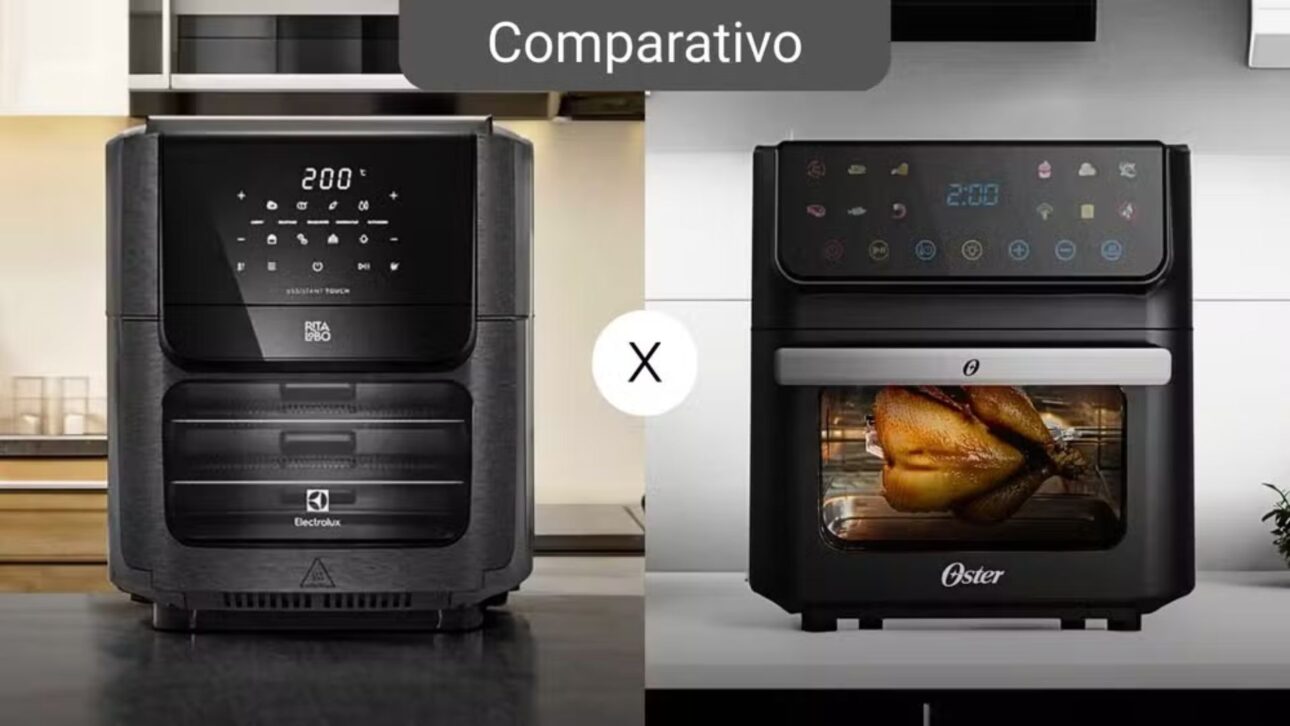
Design and Variety of Models
Both brands invest in a sober visual and high-quality materials. Electrolux explores graphite and brushed steel finishes in part of the line, alongside editions signed by chefs.
Oster, on the other hand, favors black and stainless steel, with a more “cooktop/oven” language in the oven versions.
In terms of product range, Electrolux offers a more diverse portfolio in Brazil, ranging from compact analog models to digital variations, as well as hybrid models with steam and oven formats.
Oster also covers well from basic to advanced, especially with the 3-in-1 12-liter model, but its traditional basket line is slimmer.
This landscape favors those looking to choose based on size, finish, or specific functionality within Electrolux, without ruling out good alternatives from Oster.
Technology and Innovation in Fryers
The features converge, but each brand prioritizes different paths.
At Electrolux, convenience appears in touch panels, pre-programmed recipes, temperature control, and turn reminders in certain models.
The EAF20 (3.2 L, 1,400 W) is an example of this approach with 9 automatic programs and a removable non-stick basket.
Oster emphasizes the versatility of cooking in the oven models, which combine air fry, electric oven, and dehydrator in one unit, with accessories that expand options for whole chickens, potatoes, and snacks.
In practice, those preparing larger volumes tend to make better use of the internal space and modes of the OFRT780.

Cost-Effectiveness of Brands
The prices of both brands occupy similar ranges in the national retail market and fluctuate according to promotions.
Considering features and capacity, especially in the 12-liter oven type, Oster tends to offer an aggressive combination of functions for every real invested, giving it an advantage in this subcategory.
In smaller basket models, Electrolux compensates with construction, finishes, and options with user automations — an appeal for those prioritizing interface and consistency in results.
Therefore, the choice tends to lean towards Oster when the goal is to do “a little bit of everything” in larger volumes, and towards Electrolux when practicality and internal variety weigh more.
Energy Efficiency
In terms of power, the 3 to 4 liter fryers from both brands operate around 1,400 W, such as the Electrolux EAF30 (4 L) and the EAF20 (3.2 L).
On the other hand, the oven versions of 12 liters rise to 1,700–1,800 W, like the EAF90 and the Oster OFRT780.
The consumption pattern, therefore, is similar when comparing equivalent categories.
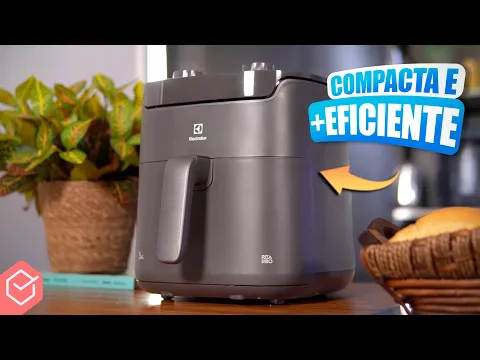
However, there is a positioning differential: Electrolux advertises, in its 5.6 L “Efficient” line, savings of up to 48% in energy compared to previous references and traditional ovens, thanks to optimized airflow and insulation.
This does not eliminate the general equivalence between brands but signals an explicit focus on efficiency in part of the portfolio.
Customer Service and After-Sales
Consistent support weighs heavily when something goes wrong.
On Reclame Aqui, Electrolux Brazil boasts a RA1000 seal and a recent average of around 8.7–8.8/10 over 6 months, indicating solid performance in after-sales.
Oster Brazil has a reputation of “Excellent” and a recent average close to 8.4–8.6/10, with a high response rate to complaints.
Overall, Electrolux ranks one step above in recognition, although Oster also presents well-valued service.
Reference Models Electrolux
Those needing volume and wanting to centralize functions will find the Electrolux EAF90 (12 L, 1,700 W) a air fryer oven with a digital panel, preheating, and multiple programmed functions, as well as oven accessories.
For smaller kitchens, the Electrolux EAF20 (3.2 L, 1,400 W) blends compact size and daily use features, such as 9 automatic recipes and Turn Function, helping to standardize preparations.
The EAF30 (4 L, 1,400 W), with analog controls and a timer of up to 60 minutes, suits those who prefer simplicity at a lower cost.
Reference Models Oster
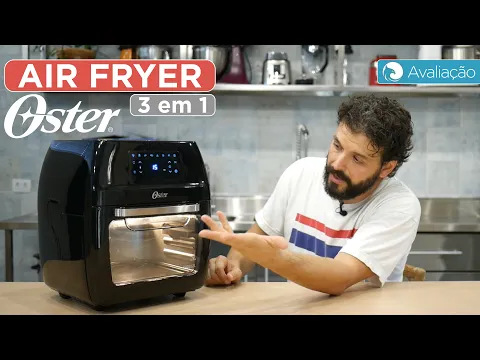
On Oster’s side, the OFRT780 (12 L, 1,800 W) combines three functions — air fry, oven, and dehydrator — in one appliance and stands out for its broad use in large portions.
The OFRT660 (4.8 L, 1,500 W) adopts a black & stainless steel design with a touch panel, ideal for those seeking a balance between capacity and digital features.
The OFRT520 (4.6 L, 1,500 W) is the compact analog option, with temperature adjustment from 80°C to 200°C, 60 min timer, and Easy Clean grill to facilitate cleaning.
Is It Worth More Electrolux or Oster?
If the priority is a broad portfolio, convenience functions, and a after-sales reputation for excellence, Electrolux has the advantage.
For those seeking versatility in large volumes and wanting to maximize functions from a single appliance, Oster often offers good cost-effectiveness in oven models.
In the end, the best investment depends on your predominant use: large portions and multiple techniques in the same equipment or smaller routines with automations that simplify daily life?





Esses equipamentos tem a função descongelar? Ou seja, também substituem o microondas?