Portuguese
  Spanish


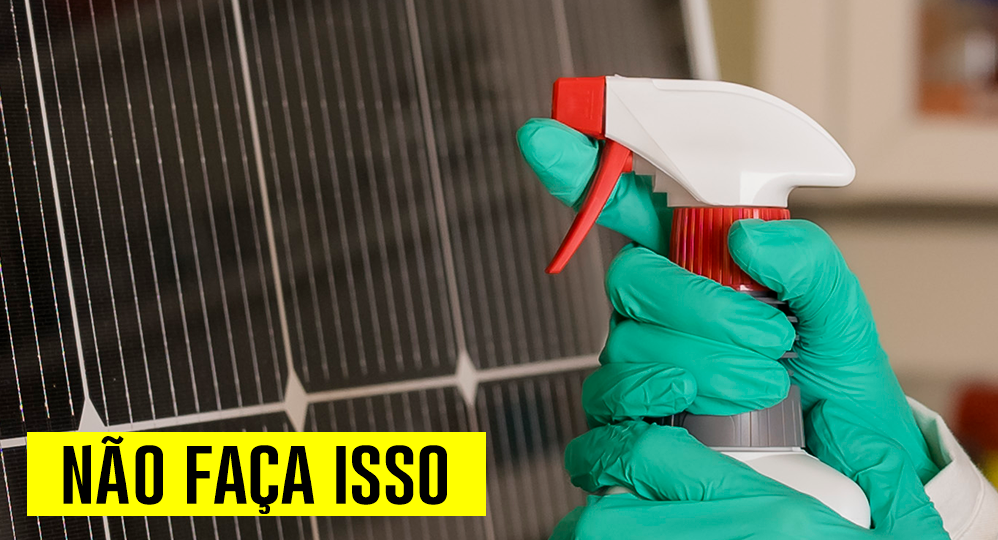


Experts Reveal The Danger Of Using This Basic Cleaning Product On Solar Panels And How It Can Compromise Their Efficiency And Durability.
A study conducted by the University of Turku in Finland has brought new information on the influence of household cleaning products on the efficiency of solar panels.
The study highlighted how different chemical agents can affect the ability of the glass covering the panels to transmit light, an essential element for the optimized operation of solar panels.
Solar panels depend on their maximum capacity to absorb solar radiation. However, accumulated dirt and even damage caused by improper cleaning can significantly compromise this process. Thus, discovering the safest and most efficient method for cleaning the panels becomes crucial.
-
Scientists Convert Food Waste into Aviation Fuel, Successfully Test 50% Blend with Conventional Kerosene to Cut Emissions and Promote Sustainable Flights

-
OnePlus N6 Smartphone to Launch in India with 8,000mAh Battery and 45W SuperVOOC Charging, Lasting Up to Three Days
-
Scientists Plan to Release Air Bubbles Underwater to Protect Antarctica’s “Doomsday Glacier” from Melting

-
Chinese R6000 Drone Combines Airplane and Helicopter Features, Carries Up to 12 People for Multiple Missions


Tests With Various Products For Cleaning Solar Panels
The study analyzed the effectiveness of products such as common glass cleaners and isopropanol. The good news is that these products proved suitable for cleaning, preserving the optical properties of the glass studied.
However, the results were different when dish detergent was used. The light transmission in the glass cleaned with detergent was lower than that of still dirty glass.
Materials engineering professor Kati Miettunen explained that, although the glass appears clean after applying detergent, its ability to transmit light decreases drastically.
He emphasized the importance of preserving the anti-reflective coating present on solar panels, which is sensitive to inadequate products and aggressive cleaning methods, such as high-pressure washers.
Why Detergent Is Not Recommended?
The study pointed out that detergent does not directly damage the glass. However, rinsing does not seem sufficient to restore the original transparency.
Assistant researcher Julianna Varjopuro emphasized that, even with a clean appearance, light transmission is impaired, compromising the panel’s performance.
The research also identified that a specific commercial cleaner for glass and mirrors, from the Mellerud brand, showed performance almost as efficient as products developed exclusively for cleaning solar panels.
Relevance For The Energy Transition
This work was conducted by the Solar Energy Materials and Systems (SEMS) research group, within the RealSolar project, which seeks to integrate solar energy into the Finnish energy system. The results were presented at the 41st European Solar Photovoltaic Energy Conference, highlighting the importance of accessible and effective maintenance practices to democratize the use of solar energy.
With detailed information and practical tests, the study provides valuable guidance for solar energy users, reinforcing the need for attention to the type of product used in equipment maintenance.