Portuguese
  Spanish


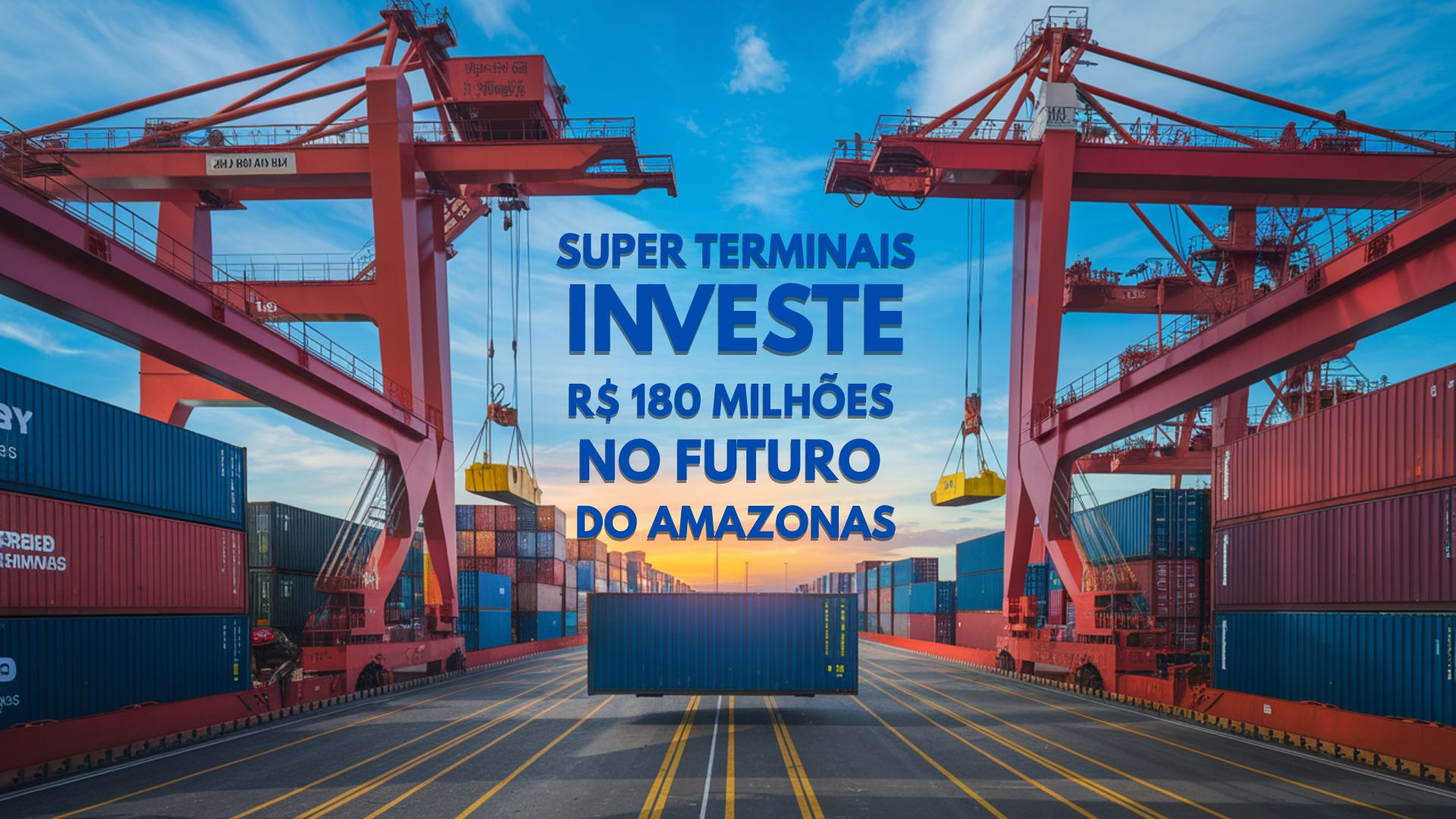

Surge In Demand in January 2025 Leads Companies to Expand Operations; Super Terminals Announces R$ 180 Million for Modernization and Expansion in Manaus.
The volume of activities in transportation and maritime commerce in Amazonas recorded a leap of 741% in January 2025 compared to December 2024. With the strong expansion, companies in the sector began new investment cycles to keep up with the growing demand. Among them, Super Terminals revealed an investment of R$ 180 million aimed at the modernization and expansion of its operations in Manaus.
The announcement took place during Intermodal South America, one of the main integrated logistics events in Latin America, bringing together companies in transportation, infrastructure, and technology.
Super Terminals Invests in Electric Cranes to Reduce Environmental Impact
The new investment from Super Terminals will be primarily directed towards the purchase of three electric cranes, which will be added to the existing structure at the port. With this acquisition, the company will operate six electric cranes in its activities.
-
The U.S. Navy Conducts Submarine Tests in Idaho Lake to Detect Underwater Noises Hidden by the Ocean

-
Nuclear Submarine USS Alexandria Retired After 35 Years, Having Completed Over 1 Million Miles in Missions

-
MODEC Introduces New Hull Design for FPSO Gato do Mato to Produce Up to 120,000 Barrels of Oil Per Day in Brazil’s Pre-Salt Region
-
This Massive 12-Meter, 21-Ton Underwater Drone Can Operate Autonomously for Up to Five Days


The new equipment will be manufactured in Germany and is expected to be delivered in 2026. The technology used will allow for a reduction in hydraulic oil consumption by around 5,200 liters per year, contributing to the decrease in emissions of greenhouse gases.
While traditional cranes use hydraulic systems to lift and move loads — through pumps and hoses with pressurized oil — the electric models operate with motors powered directly by electricity. The system operates at a voltage of 13.8 kV, which is transformed to 440V before energizing the motors.
According to Marcello Di Gregorio, the company’s director, the decision to expand the fleet of electric cranes results from the positive results observed with the technology. “The first equipment delivered significant gains in efficiency and productivity,” he stated.
Floating Pier Will Be Expanded to Meet Growing Demand
In addition to acquiring the new cranes, Super Terminals’ investment includes expanding the floating pier used for the loading and unloading of cargo. The current structure, measuring 600 meters in length, will be extended to 720 meters, resulting in an area of 14,400 square meters.
The expansion aims to increase the capacity to accommodate ships and barges, especially in supporting the movement of agricultural products, which is gaining strength in river transport in the region.
Part of the agricultural production from the Central-West, especially soybeans, has been shipped via the Amazon rivers. The 2025 harvest, estimated at 164.4 million tons, has reinforced the need to expand port capacity to accommodate cargo movements.
Naval Sector of the Free Trade Zone of Manaus Experiences Accelerated Growth Phase
According to data from the Economic Panel of Amazonas, the performance of the transportation and maritime commerce sector also showed an increase of 405% compared to January 2024. The scenario reflects the strengthening of the Free Trade Zone of Manaus as a strategic hub for national logistics.
The movement of cargo through Amazonas has become an important alternative for shipping agricultural and industrial products, driving new investment projects in port infrastructure.
Super Terminals’ initiative aligns with this trend of expansion and modernization, aiming not only to increase operational capacity but also to seek more sustainable and efficient processes. Thus, the company prepares to continue meeting the growth in demand for river transport and strengthen its presence in the market.
Source: Portal Você