





 Portuguese
  English
  Spanish
  5 min of reading
  0 comments


India Launches Nuclear Submarine S3 Arighat, Equipped With Ballistic Missiles With Nuclear Weapons, A Display of Strength That Could Threaten Even China On The Global Stage
On August 29, India took another significant step in its military advancement by commissioning the S3 Arighat, the second nuclear submarine built domestically by the country. The ceremony, presided over by the Defense Minister, highlighted the nation’s progress towards building a nuclear triad, which includes air, land, and sea-based nuclear weapon systems.
This diversification is essential for maintaining robust nuclear deterrence, especially in the context of rising tensions with China. The Arighat, alongside its predecessor, the Arihant, is part of an ambitious program aimed at consolidating the Indian Navy’s ability to conduct nuclear submarine patrols 24 hours a day.
The Arighat, whose name means “enemy killer,” is not a conventional submarine intended for hunting enemy vessels. It is an SSBN, meaning a ballistic missile submarine, designed to operate stealthily and hide in ocean depths, awaiting orders to launch a barrage of nuclear missiles if necessary. Its function is essentially deterrent, serving as a guarantee of retaliation in the event of a nuclear attack.
-
Brazil’s almost forgotten neighbor found oil at sea, attracted ExxonMobil and Chevron, became a billion-dollar bet in global energy, and now tries to answer if quick wealth also turns into real development.

-
The domino effect of US sanctions reaches cards in Cuba, bringing down Visa and Mastercard and exposing a new obstacle for the island’s economy.

-
US proposes extra tariff on Brazil for “forced labor” and raises alert about new commercial pressure against Brazilian exports

-
AI video released by the Iranian embassy shows Christ the Redeemer toppling the Statue of Liberty after a 25% tariff threat to Brazil, turning landmarks into symbols of a new political battle between Brasília and Washington.


This underwater capability is particularly important for India due to its historical rivalry with China, a power that not only possesses more long-range nuclear missiles but also has a more formidable navy in the Indian Ocean.
Additionally, China is a close ally of Pakistan, India’s main regional adversary, which places additional pressure on New Delhi to strengthen its military capabilities.
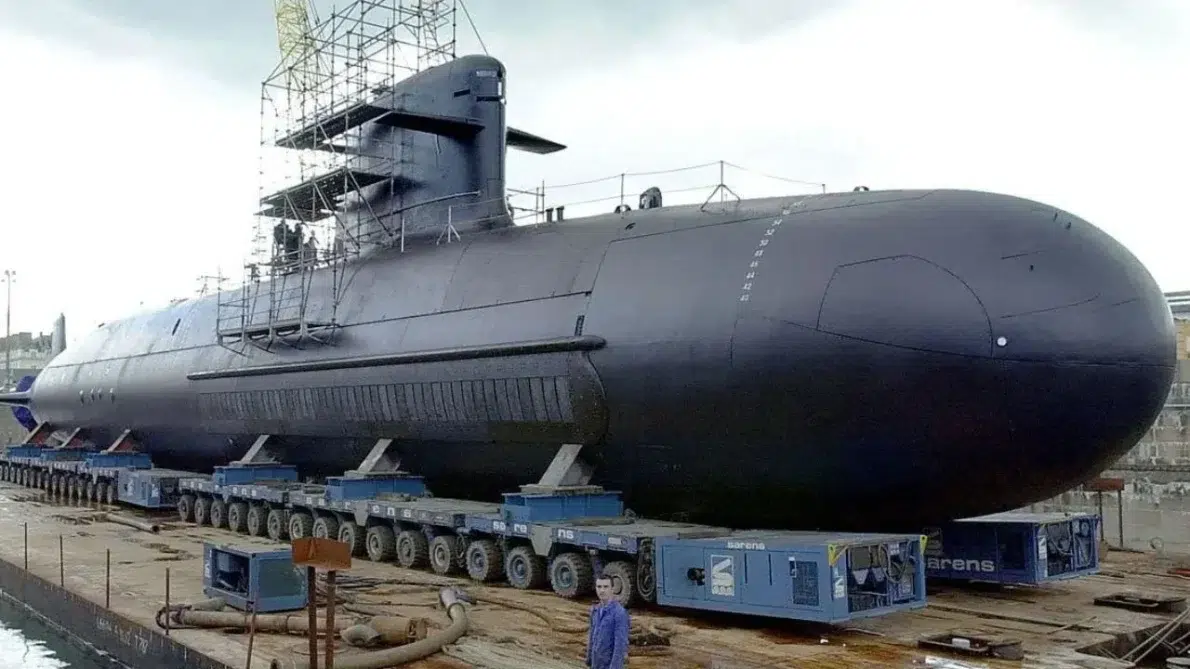
India’s Nuclear Submarine
The Arighat and the Arihant are the first examples of nuclear submarines that India plans to construct, with the intention of maintaining a continuous deterrent presence.
These submarines have nuclear reactors that allow them to remain submerged for long periods, a significant advantage over conventional diesel-powered submarines, which need to surface regularly to recharge their batteries. This makes India’s “boomers,” as the ballistic missile submarines are known, more difficult to detect and, therefore, more resistant to surprise attacks.
However, the Indian submarine fleet is still under development. Although the Arighat was launched in 2017, it only started its sea trials in 2022 and was commissioned three years later than planned.
While it was speculated that the Arighat would be more advanced than the Arihant, with a more powerful reactor and greater missile capacity, in practice, it retains the same 83-megawatt CLWR-B1 reactor and can carry four medium-range K-4 missiles.
These missiles can reach targets up to 2,500 miles away, which allows them to threaten significant targets in China, but they still have limited range compared to the long-range missiles of other powers.
The Indian Navy is also working on future improvements. The next submarine in the series, the S4 Aridaman, will be larger and can carry up to eight medium-range missiles.
Moreover, new submarines of the S5 class are planned, capable of carrying between 12 and 16 long-range K-6 missiles with multiple nuclear warheads. These submarines will be essential for India to match China’s capabilities and ensure a robust and continuous maritime nuclear deterrent.
Challenges and International Cooperation
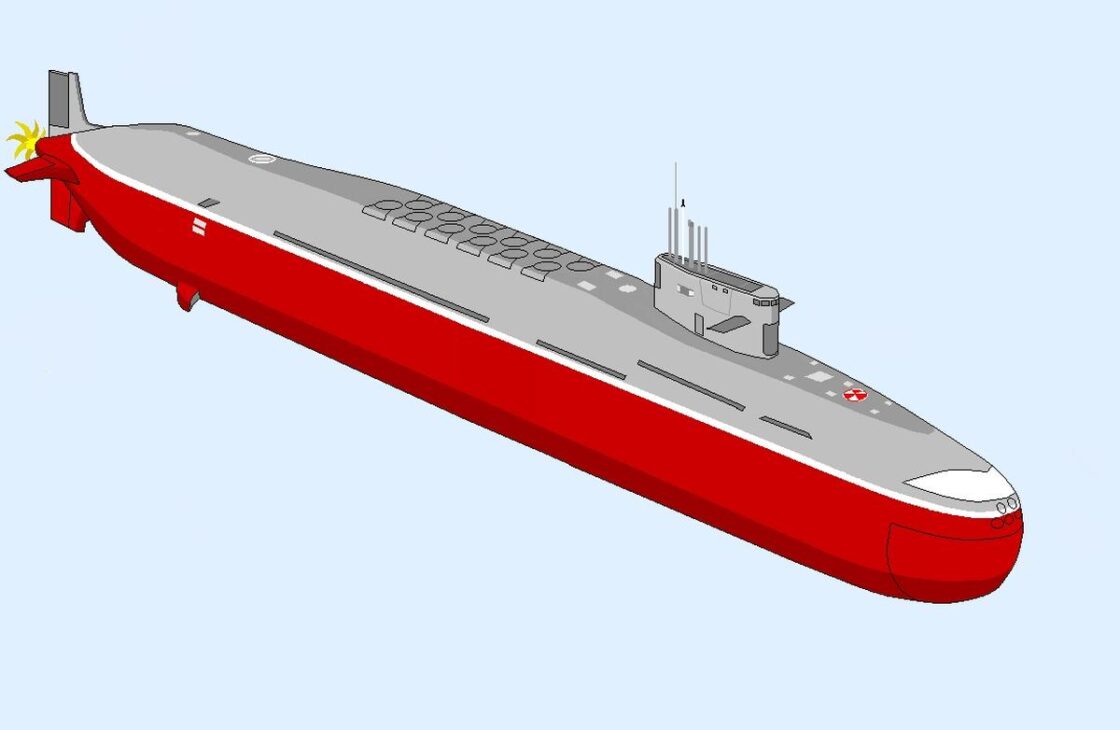
Despite the advancements, India still faces technical and logistical challenges in developing its nuclear submarines.
The development of a 190-megawatt class reactor, necessary for larger and faster submarines, is still in the design phase, and a land-based prototype has yet to be constructed. This represents a significant obstacle for the Indian Navy’s modernization program.
International cooperation has played an important role in advancing India’s submarine capabilities. Technology transfers from Russia were critical in the development of the Arihant, and the country also leased two Russian Akula-class nuclear submarines, renamed Chakra I and II, which helped India gain experience with this type of technology.
Furthermore, many of the internal systems of Indian submarines, such as radars and defense systems, have been acquired from British, French, and Israeli companies.
Another factor influencing India’s strategy is the growing involvement of the United States and its allies with the Indian Navy.
Mutual tensions with China have led to deeper military cooperation between these nations, including joint naval exercises and information sharing. The aim is to strengthen India’s presence in the Indian Ocean and ensure that its forces are prepared to deter any Chinese aggression.
Rivalry With China
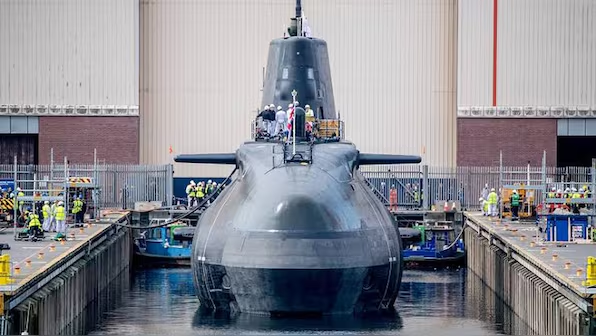
The rivalry between India and China is not just a maritime issue. The two countries have long-standing border disputes, including conflicts in the Himalayas that date back to the 1962 war.
In recent years, these tensions have escalated, with periodic skirmishes along the Line of Actual Control. China, with its increasingly active navy in the Indian Ocean and its military base in Djibouti, also poses an increasing threat to Indian interests in the region.
India, in turn, is focused on increasing its nuclear deterrence capability against China. Currently, China has more robust nuclear submarines, including six Type-094 boomers equipped with long-range JL-2 and JL-3 missiles that can reach targets across India.
In contrast, Indian submarines still need to approach dangerously close to Chinese coastal defenses to hit significant targets.
The Future of Indian Nuclear Deterrence
While the commissioning of the Arighat is an important milestone for the Indian Navy, the path to a reliable and continuous maritime nuclear deterrence is still lengthy. Experts believe that at least three boomer submarines are needed to ensure that one is always on patrol while the others undergo maintenance.
Additionally, India needs larger submarines, with more and longer-range missiles, to match China’s capabilities.
The future of Indian nuclear deterrence will depend on the country’s ability to overcome the technical and financial challenges it still faces. If the S4 and S5 submarine programs advance as planned, India may be able to reduce the current nuclear power imbalance with China, making the prospect of nuclear war even more remote.








Be the first to react!