





 Portuguese
  English
  Spanish
  6 min of reading
  0 comments


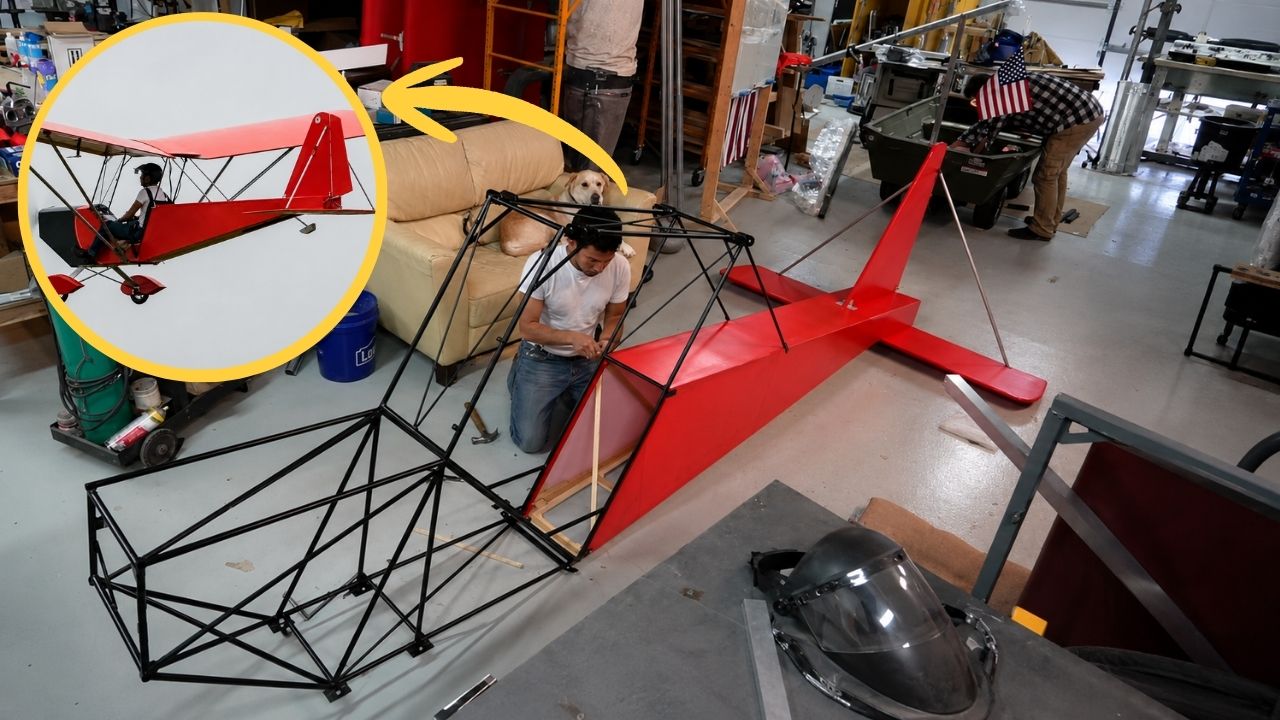
Using styrofoam, plywood, and adapted electric motors, Peter Sripol abandoned remote-controlled airplanes and built an experimental ultralight capable of flying on the first attempt.
Using styrofoam, plywood, aluminum tubes, and adapted electric motors, Peter Sripol made a transition that seems unlikely even to those who follow the world of experimental aviation. After gaining attention with large remote-controlled airplanes on his YouTube channel, he abandoned the reduced scale and built an experimental manned ultralight, which took to the air on the first attempt.
According to Hackaday and the Experimental Aircraft Association, Sripol’s journey mixes rapid prototyping logic, maker culture, and an American regulatory framework that allows amateur-built aircraft for recreational and educational purposes. The result was a series of projects that began with the Mk1, a single-seat electric ultralight that flew for about 15 minutes on the first test, and later evolved into even more daring versions.
Peter Sripol left model aviation and brought garage logic to experimental aviation
Before building a manned aircraft, Peter Sripol was already known for assembling large remote-controlled airplanes with simple materials. His projects combined styrofoam, tape, lightweight wood, and electric motors, always focusing on quickly testing ideas, filming the results, and correcting mistakes in practice.
-
The Soviet rocket N1 had 30 engines, was created to beat the USA to the Moon, and exploded four times in a row: the second detonation destroyed the platform, scattered debris over 10 km, and exposed the secret failure that the USSR denied.

-
Material created at MIT absorbs 99.995% of light and has become ten times darker than Vantablack by engulfing a 16.78-carat diamond valued at 2 million dollars, turning it into pure shadow.

-
Four times faster than sound and reused twice in 90 minutes, General Hypersonics’ rocketless system surpassed Mach 4 with impact accelerator, a milestone that promises to reduce the cost of hypersonic tests and bring repeatable suborbital missions closer.
-
Before the astronauts arrive, NASA wants to send 4 robotic drones weighing 250 kg to the Moon’s south pole to hunt for underground water, measure radiation, and reveal where humanity can establish its first base outside Earth.



It was this same logic that he brought to manned aviation. Instead of buying a ready-made kit or hiring an engineering team, Sripol decided to develop his own airplane with accessible materials from a hardware store, combining model aviation techniques with already known solutions in the world of light aircraft.
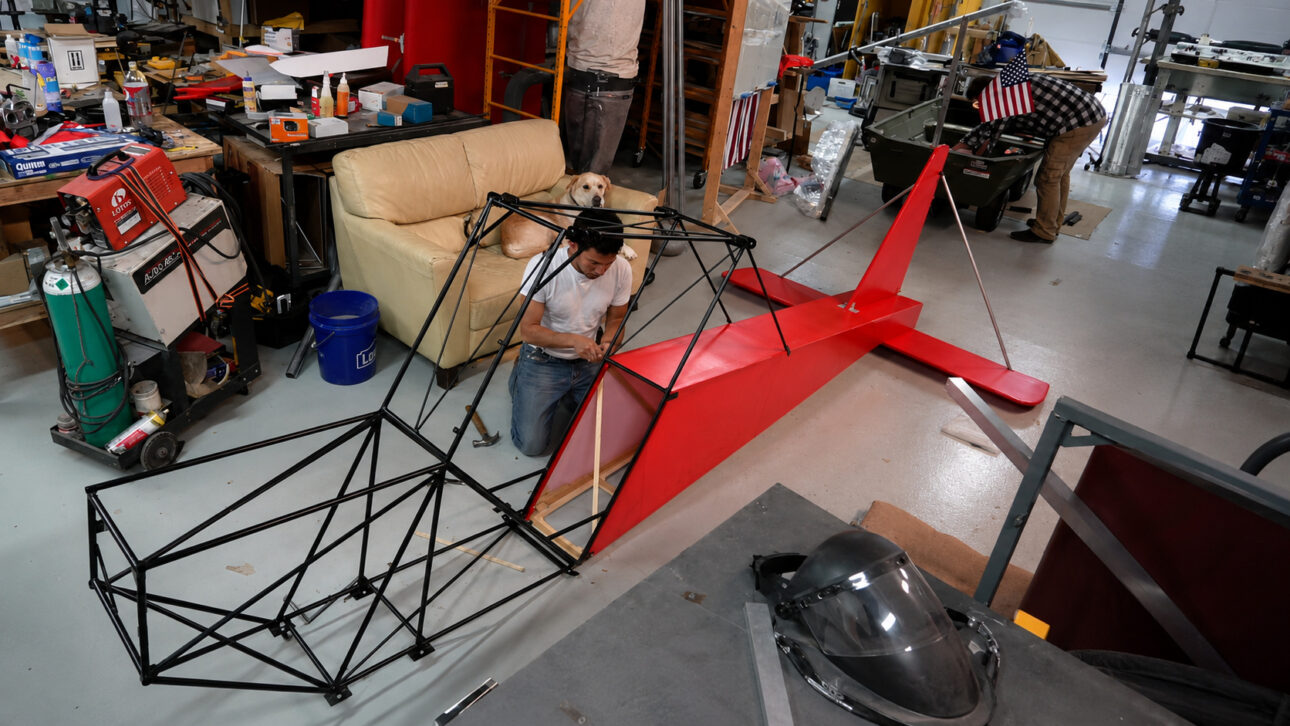
According to Hackaday, the Mk1 was built with thermal insulation foam cut with hot wire, perforated plywood, aluminum tubes as wing spars, and large brushless motors connected to the OpenPPG project, aimed at electric paramotors. The proposal was simple in appearance but bold in execution.
Mk1 flew right on the first test and proved the idea was viable
The first major milestone in Sripol’s journey was the flight of the Mk1. The aircraft was a single-seat electric ultralight, with a simple look and lightweight structure, but it managed to take off and remain in flight for about 15 minutes on the first attempt.
This result was more important than the flight time itself. It showed that the construction logic based on lightweight materials, simple solutions, and rapid prototyping could also work in a manned aircraft, as long as the project respected weight, stability, and control limits.
The initial flight did not mean perfection. The Mk1 had clear limitations in range, efficiency, and aerodynamic finish. But it fulfilled the most important role of any first prototype: proving the concept and paving the way for new iterations.
Dihedral wings without ailerons provided more stability to the ultralight
One of the smartest design choices made by Sripol was to eliminate the ailerons in one of the later versions, the Mk4. In conventional airplanes, ailerons are the movable surfaces on the wings responsible for controlling lateral roll. By foregoing them, Sripol reduced weight, complexity, and points of failure.
Instead of ailerons, he opted for dihedral, the upward inclination of the wings when viewed from the front. This geometry creates a natural tendency to return to level flight. When the aircraft tilts to one side, the lift difference between the wings helps correct the attitude.
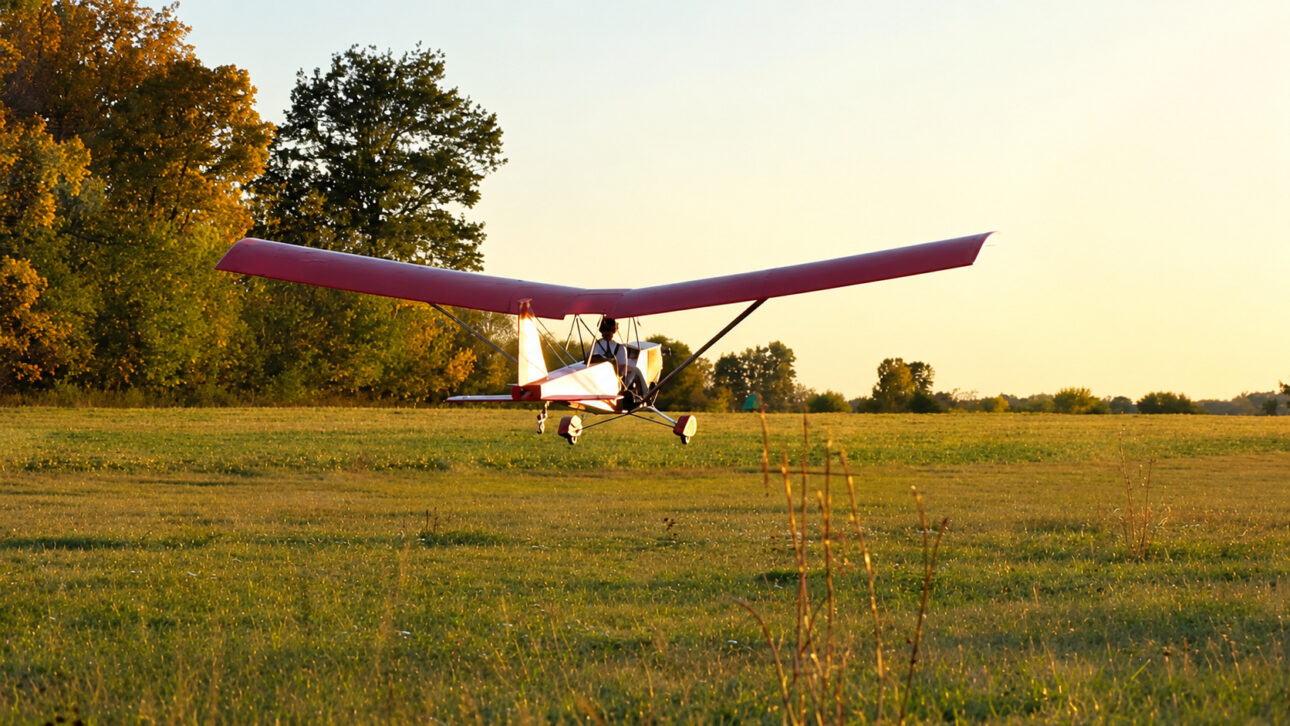
According to Hackaday, this solution made the airplane more stable passively. For a garage-built ultralight, focused on simplicity and low weight, this decision was more than a technical detail. It helped transform a potentially more demanding aircraft into something more predictable and controllable on the first flight.
Each version of the project incorporated errors, corrections, and engineering gains
Sripol’s trajectory did not stop at the Mk1. As happens in real experimental projects, each new version absorbed lessons from the previous one. The first ultralight showed that the concept could fly, but also revealed limitations in range, efficiency, and structural refinement.
This iterative logic is one of the strongest marks of Sripol’s work. Instead of trying to get everything right in the first project, he adopted a practical engineering approach: build, test, identify failures, correct, and test again. It is the same principle used in the development of products, vehicles, and prototypes in various technological sectors.
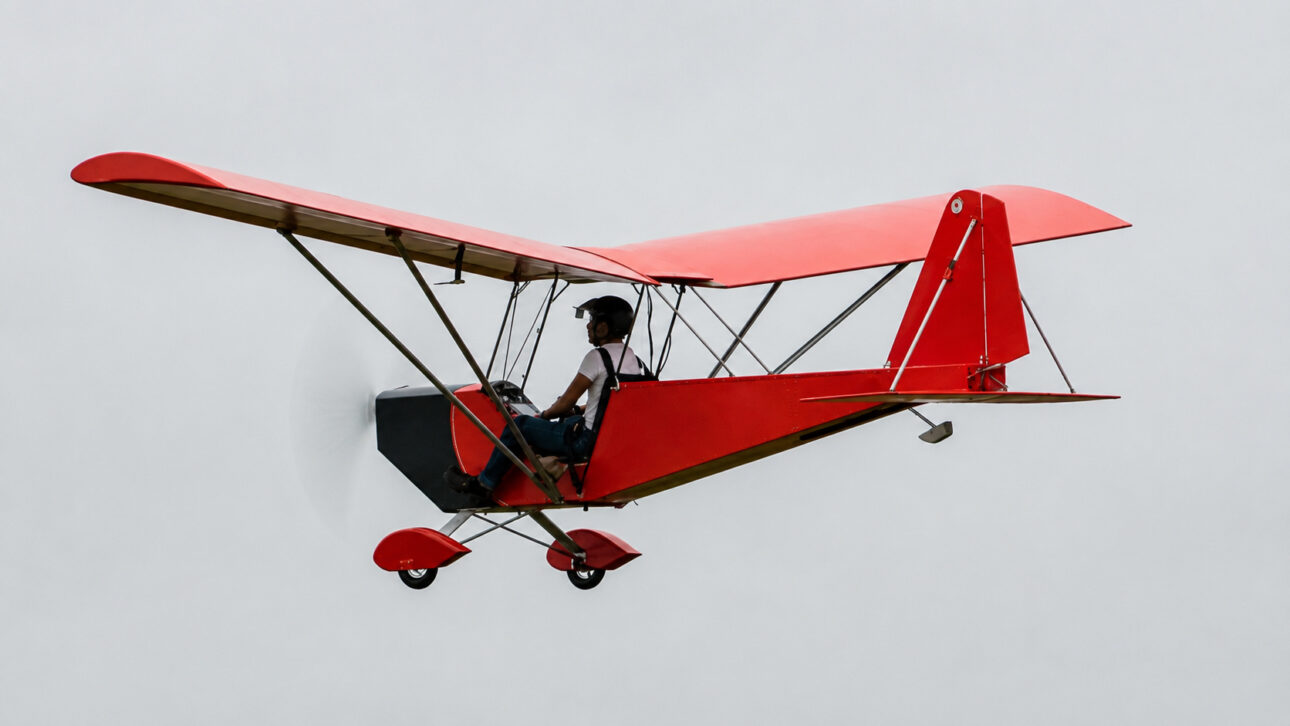
This helps explain why his projects attract attention. They do not appear as finished and perfect pieces from the start, but as a documented sequence of evolution, where each problem exposed in flight or on the ground becomes input for the next solution.
The cardboard airplane expanded the philosophy of using unlikely materials
In December 2025, Sripol published a project that took his philosophy to a new extreme: a manned aircraft with wooden wings and a cardboard fuselage. According to Hackaday, the structure used folded sections of cardboard as cladding, creating rigidity through geometry, and not just by the brute strength of the material.
The wing box was built with folded sections, while the tail received a horizontal stabilizer, elevator, vertical stabilizer, and rudder, all also based on this logic of a lightweight closed-box structure. Propulsion came from electric motors mounted on a structure reinforced with plywood.


The project did not repeat the full success of the Mk1 right away. In the first tests, the aircraft had difficulty gaining altitude and even landed abruptly in an open field. Even so, the logic remained the same: the partial failure did not end the experiment but pointed out what should be improved in the next version.
EAA Rule Allows Amateur Builders to Make Experimental Aircraft in the USA
One of the reasons why projects like those of Sripol can legally exist in the United States lies in the Experimental/Amateur-Built category of the EAA. According to the Experimental Aircraft Association, this rule allows a person to build their own aircraft for recreational or educational purposes, provided that the builder has performed the majority of the manufacturing.
After inspection and certification within this category, the aircraft can legally fly as experimental. This has created, over the decades, a huge community of independent builders, with thousands of aircraft regularly flying in the country.
According to the Experimental Aircraft Association, there are more than 30,000 experimental/amateur-built aircraft registered in the United States. This regulatory base is what makes it possible for creators like Sripol to move from a garage prototype to a real flight without relying on the traditional industrial model.
Styrofoam and Aluminum Are Not Pure Improvisation, But Lightweight Materials with Aeronautical Logic
The most common reaction to an aircraft made with styrofoam and aluminum tubes is skepticism. But these materials are not absurd by definition when used in the correct functions. In light aircraft, the secret is not to use heavy and oversized materials, but to combine low weight, sufficient rigidity, and intelligent load distribution.
The styrofoam used in the wing ribs, for example, does not need to support all the structural efforts alone. Its main function is to maintain the aerodynamic profile of the wing, something it can do well when combined with suitable structural elements. Meanwhile, the aluminum spars take on the main role in resistance to bending.

According to Hackaday, Sripol did not invent new materials for aviation. What he did was apply known materials in a project that prioritizes simplicity, lightness, and ease of construction, following a logic reminiscent of the pioneers of experimental aviation.
According to Hackaday, what Sripol did was not invent new materials, but apply known materials with a design logic that prioritizes simplicity and lightness above all, exactly as aviation pioneers did when they built aircraft from bamboo, canvas, and wire before certified aeronautical aluminum existed as an industrial category.







Be the first to react!