





 Portuguese
  English
  Spanish
  5 min of reading
  0 comments


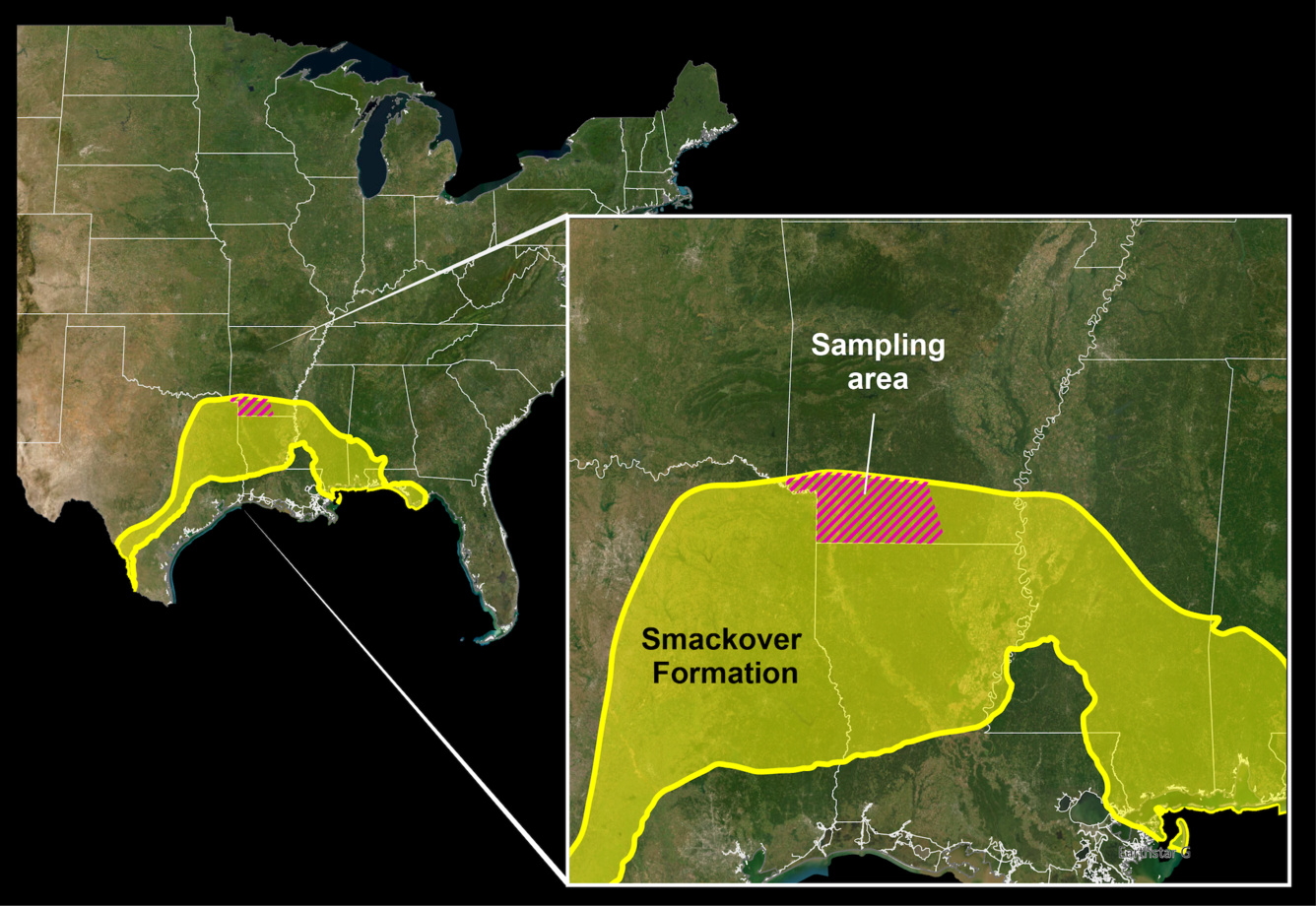
Smackover Formation in Arkansas may contain up to 19 million tons of lithium, according to the USGS, and is already attracting giants like Exxon to the battery race.
For over a century, the Smackover Formation was primarily associated with oil, natural gas, and bromine production. Now, this same geological structure has gained attention for another reason: it may house one of the largest concentrations of lithium in brine ever identified in the United States. According to the USGS, the deep brines of southern Arkansas contain between 5.1 million and 19 million metric tons of lithium. The agency itself emphasizes that this volume represents a geological resource in place, not a proven economically recoverable reserve.
The discovery has gained significance because lithium is a central component of rechargeable batteries used in electric cars, energy storage systems, and electronics. According to the USGS, the calculated range for Smackover is equivalent to something between 35% and 136% of the current estimated lithium resources of the United States, which explains why the region has moved from the radar of the traditional energy industry to the center of the critical minerals race.
Lithium in Arkansas is not in a traditional mine but dissolved in deep brines
The most unusual aspect of the discovery is the way this lithium appears underground. Instead of being concentrated in a hard rock mine, as is the case in parts of Australia, or in salt flats, as in South America, the lithium in Smackover is dissolved in deep underground brines. According to the USGS, the formation extends across parts of Arkansas, Texas, Louisiana, Mississippi, Alabama, and Florida, but the highest concentrations identified in the study appear in southern Arkansas.
-
Brazilian startup created a camera with artificial intelligence that weighs cattle in the pasture in 15 minutes, replacing a process that previously required 5 cowboys, 12 hours of work, and caused high stress in the herd.

-
The World Cup will serve as a “laboratory” for 5G in 2026, with 48 teams, 104 matches, and mobile networks being tested in stadiums, airports, fan zones, subways, and hotels in the USA, Canada, and Mexico.

-
Oil platform 300 km off the coast generates energy like an isolated city at sea: gas that rises with the oil drives turbines, heats potable water, and keeps 200 people working, but a failure can cost millions per day.
-
Three students from Bahia, aged 17 and 18, create sugar-free chocolate for diabetics using 70% cocoa, pumpkin seed flour, and bitter melon, turning school research into a health innovation.




The agency explains that these underground waters have been brought to the surface for decades as part of oil, gas, and bromine activities.
USGS.gov
In 2022, about 5,000 metric tons of dissolved lithium reached the surface in these brines as part of the existing flow of the local industry, which helps to show why the region has come to be seen as a concrete industrial opportunity and not just a geological curiosity.
USGS used machine learning to map lithium distribution in Smackover
The estimate did not come from a few isolated drillings. According to the USGS, researchers combined chemical data from brine samples with a machine learning model to predict lithium distribution throughout the geological formation.
The method allowed the creation of concentration maps and estimated how much lithium might be present in the underground system of southern Arkansas.
The central point of the study is precisely this: it measures how much lithium exists underground, but it does not automatically answer how much of that volume can be extracted profitably.
The USGS itself emphasizes that the estimate does not consider the technological or economic feasibility of extraction and, therefore, should not be confused with a reserve ready for commercial production.
Discovery in Arkansas could reduce U.S. external dependency
The strategic importance of Smackover goes far beyond geology. If a relevant part of this lithium can be commercially extracted, the United States could strengthen domestic production of an essential mineral for the battery supply chain.
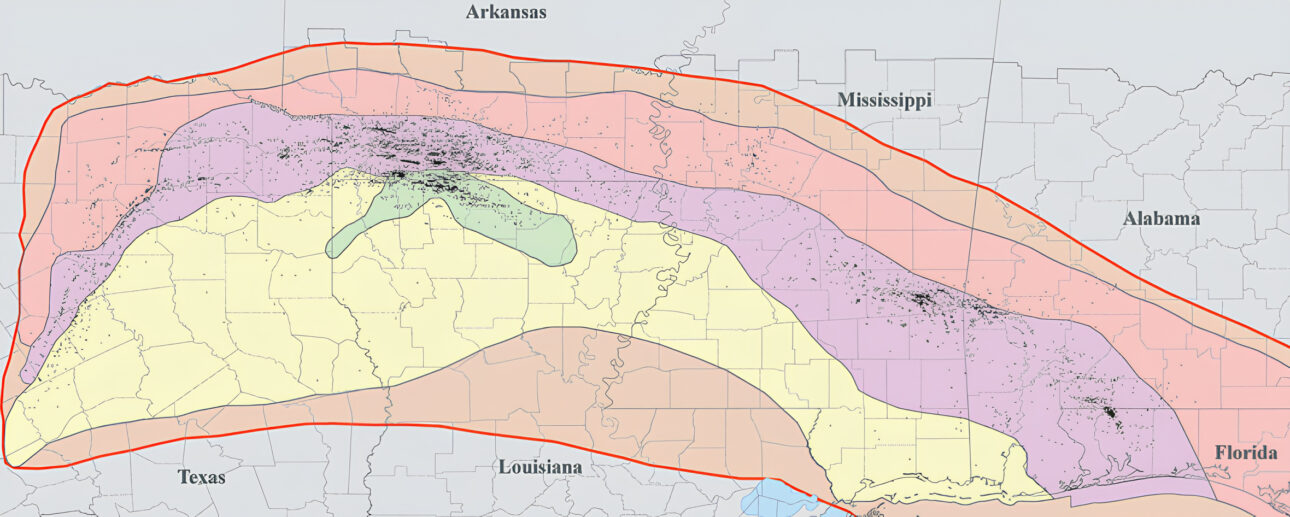
According to the USGS, the scale of the identified resource helps to understand why Arkansas has come to be seen as an important piece in the American effort to expand the national supply of critical minerals.
This potential became even more evident because the discovery coincides with the industrial race for electric cars, energy storage, and local battery manufacturing. The logic is simple: the greater the domestic production capacity, the lower the vulnerability to external chains concentrated in a few countries.
Exxon and other companies already treat southern Arkansas as the new lithium frontier
The business movement shows that the market interpreted the discovery as something serious. Reuters reported that Exxon Mobil signed a non-binding agreement to supply up to 100,000 metric tons of lithium to LG Chem from its proposed project in Arkansas. According to the agency, the company intends to extract the mineral from the Smackover Formation using direct lithium extraction technology, known as DLE.
Reuters itself also showed that Arkansas has become a hub of a broader race. Projects linked to Standard Lithium, Equinor, and other companies have advanced with financing and commercial agreements, while energy giants have started to see lithium in brine as a natural continuation of competencies already mastered in drilling and processing underground fluids.
The big question is not the presence of lithium, but the economic viability of extraction
The enthusiasm around Smackover does not eliminate the main uncertainty of the project: the economic viability.
The fact that there is a lot of lithium dissolved underground does not mean, by itself, that it can be transformed into batteries competitively against producers already established in countries like Australia, Chile, Argentina, and China.


This is precisely where the bet on direct lithium extraction technologies comes in. Companies and investors are betting that these methods can separate the mineral from deep brines without relying on large evaporation ponds, shortening timelines and reducing part of the operational cost. But this promise still needs to be sustained on a robust commercial scale.
Ancient Jurassic sea has become a piece of the global battery race
The geological irony is powerful. A formation created in an ancient marine environment of the Jurassic and explored for decades because of oil, gas, and bromine is now being treated as a potential source of one of the most strategic minerals of the energy transition.
The Smackover Formation has ceased to be just a relevant structure for fossil energy and has transformed into a potential asset of the new battery economy.

If direct extraction technology works as the industry promises, Arkansas could establish itself as one of the most important areas for American lithium in the coming decades.
But, for now, the central fact remains this: according to the USGS, the lithium is there, on a gigantic scale. What is still uncertain is how much of this volume can actually be extracted from the brines and enter the industry.


Be the first to react!