





 Portuguese
  English
  Spanish
  5 min of reading
  0 comments


Olho do Dono’s technology uses 3D camera, computer vision, and artificial intelligence to estimate cattle weight without traditional scales, reducing handling, animal stress, and work time on farms.
A Brazilian startup has created a technology that seems like something out of a futuristic movie but is already being used in the field: an artificial intelligence camera capable of weighing cattle individually, in the pasture, without scales, without crowded pens, and without restraining the animals.
According to Canal Rural, the solution from Olho do Dono, a startup from Espírito Santo, allows filming 100 animals in just five minutes. What previously required transportation, cowboys, pens, stress, and hours of handling can now become a quick, digital process that is much less aggressive for the herd.
The camera that weighs cattle without touching the animals
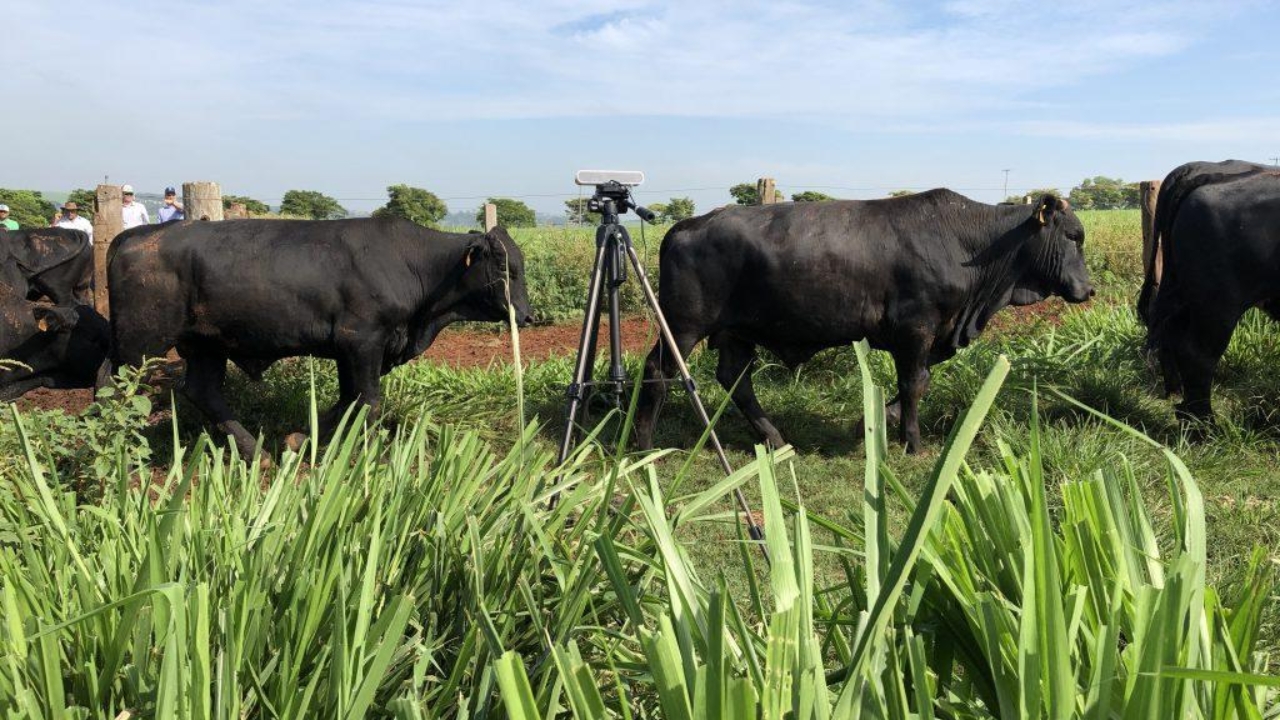
According to Compre Rural, Olho do Dono, founded in 2015, developed a system based on portable 3D cameras, computer vision, and artificial intelligence. The proposal is simple and impactful: instead of taking the cattle to the scale, the scale goes to the cattle.
-
An ancient underground sea of oil could become the new “liquid mine” for electric cars: a USGS study points to up to 19 million tons of lithium hidden beneath Arkansas, sparking a billion-dollar race for batteries without opening a single crater.

-
The World Cup will serve as a “laboratory” for 5G in 2026, with 48 teams, 104 matches, and mobile networks being tested in stadiums, airports, fan zones, subways, and hotels in the USA, Canada, and Mexico.

-
Oil platform 300 km off the coast generates energy like an isolated city at sea: gas that rises with the oil drives turbines, heats potable water, and keeps 200 people working, but a failure can cost millions per day.

-
Three students from Bahia, aged 17 and 18, create sugar-free chocolate for diabetics using 70% cocoa, pumpkin seed flour, and bitter melon, turning school research into a health innovation.



As reported by Canal Rural, the equipment is water-resistant and does not require internet or electricity during field use. The camera records the animals in motion, and then the data is sent for processing in the cloud.
The result is reports with individual weight, weight per batch, average daily gain, headcount, and presence audit, according to Compre Rural. For farms that use electronic tags, the system also allows tracking the history of each animal.
The end of a process that could take up to 12 hours
The most striking data is the stark contrast between the old method and the new technology. According to Canal Rural, traditional weighing of 300 animals can take 6 to 12 hours, require five cowboys, and subject the cattle to stress, risk of accidents, and weight loss.
With Olho do Dono’s technology, as reported by Canal Rural, the same activity can be performed in about 15 minutes, directly in the pasture, with just two or three cowboys.
In practice, this changes the farm’s logic. Management ceases to be a heavy, expensive, and exhausting event and becomes a quick data collection. The rancher starts to monitor the herd’s performance more frequently and with less disruption to the animals’ routine.
The artificial intelligence learned from more than 1.5 million images


According to Canal Rural, the startup consolidated a database with more than 1.5 million 3D images of cattle associated with actual scale weight. This data was collected on farms in Brazil, Argentina, Paraguay, and Mexico.
This database feeds the algorithms that estimate the animals’ weight. The more records the system processes, the greater its ability to recognize body patterns related to weight.
The Revista Pesquisa FAPESP had already reported that the system analyzed 500 physical characteristics related to the cattle’s weight and that the average accuracy of individual weighing reached 95%. Therefore, the technology is presented as a precision alternative to replace the old “eyeballing” used in many properties.
JBS and Grupo Rialma already appear among the users
According to Canal Rural, the solution is already present in properties with herds ranging from 500 to 120 thousand heads. Among the names mentioned are JBS and Grupo Rialma, two giants linked to the Brazilian livestock universe.
According to Canal Rural, Grupo Rialma conducts monthly weight audits on its farms, while JBS incorporated the technology into a technical assistance program for producers.
This point is crucial to understand the size of the movement. It’s not just a curious invention. The technology has already entered the routine of large operations, where any error in management, weight, or inventory can represent a million-dollar loss.
Less stress, more data, and faster decision
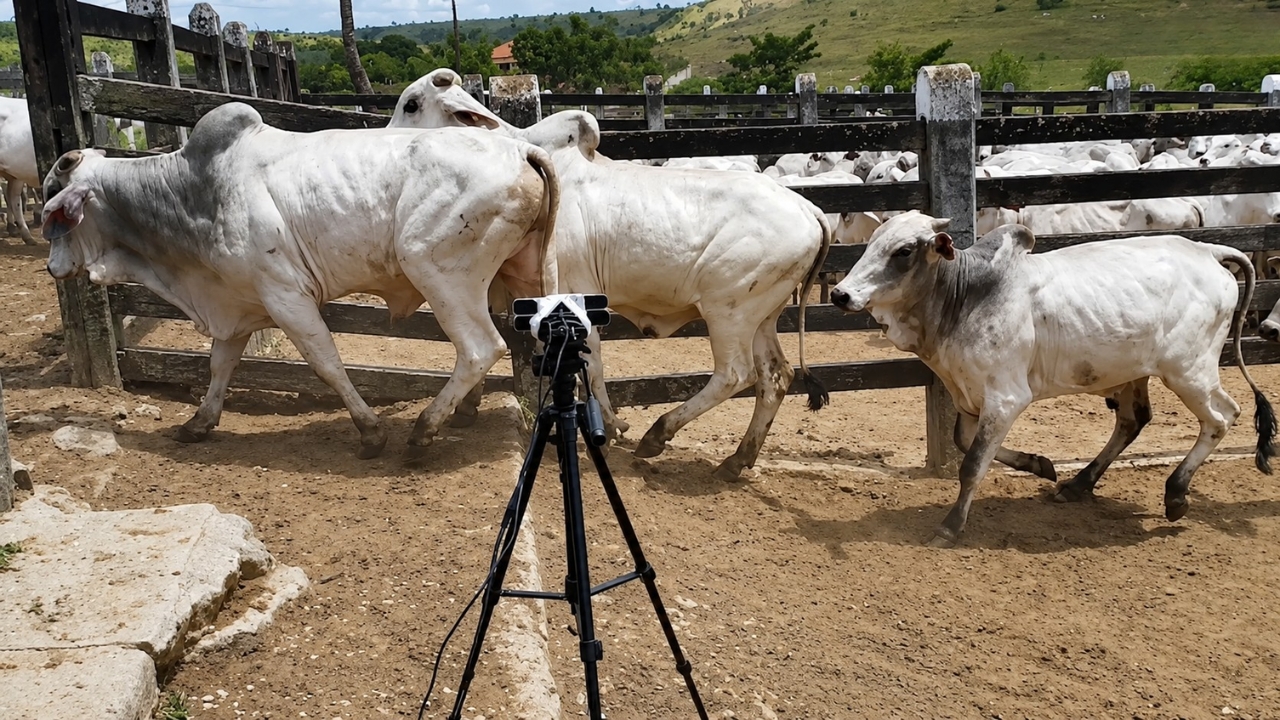
Fapes already highlighted, in 2016, that traditional weighing involves transporting the animals, using force to control the cattle, and unnecessary stress, a factor that can contribute to weight loss.
With the camera, the animal passes through a structure on the farm itself and is recorded without needing to stop on a conventional scale. This reduces forced contact, decreases risks for cowboys and animals, and turns weight into frequent information.
According to Canal Rural, Pedro Henrique Mannato, CEO of Olho do Dono, states that artificial intelligence can reduce weighing management time by up to 95%. In a sector where time, labor, and the price per arroba are valuable, this number helps explain the producers’ interest.
Million-dollar investment to accelerate expansion
The technology also caught the attention of investors. As reported by Portal DBO, Olho do Dono received a new investment round of R$ 2.2 million in 2025, led by BR Angels.
According to Portal DBO, with this funding, the company surpassed R$ 5.8 million in fundraising. The plan is to expand direct sales to farms, structure a network of sales representatives, and strengthen partnerships with cooperatives and rural unions.
The same outlet reported that the startup already serves producers in the main Brazilian states and also has a presence in countries like Argentina, Paraguay, and Mexico.
Livestock enters the era of the invisible scale
What is at stake is much more than weighing a bull faster. The technology from Olho do Dono shows how artificial intelligence in agribusiness can transform old tasks into data systems, traceability, and decision-making.
With 3D cameras, algorithms, electronic tags, and digital reports, the farm starts to see the herd animal by animal. Weight, presence, performance, and evolution cease to be estimates and start to feed decisions on purchasing, selling, nutrition, and management.
If the promise is confirmed on a large scale, the old scene of cattle being pushed into the corral to step onto the scale may begin to disappear. In its place, a more digital, less traumatic, and much more data-driven livestock industry emerges.


Be the first to react!