





 Portuguese
  English
  Spanish
  5 min of reading
  0 comments


The Prosthesis exoskeleton weighs 4,000 kg, delivers 200 hp, enhances human strength by 50 times, and shows how far human-piloted robotics can go.
For decades, giant robots were confined to science fiction. The Prosthesis was one of the most ambitious attempts to take this concept from the movies to the real world. Created by Jonathan Tippett, founder of Exosapien Technologies, the project resulted in a mechanical exoskeleton weighing 4,000 kg, with 200 horsepower, 100% human control, and the ability to enhance the pilot’s strength by 50 times, according to the company itself.
The result is a machine that seems to mix dinosaur, excavator, off-road vehicle, and futuristic armor. But the project’s goal was never to create an autonomous robot. The proposal was always different: to build a structure where the human remains at the center of the operation, using their own body to command a giant-scale machine.
Jonathan Tippett turned a vision from Burning Man into one of the most daring robotics projects
According to Tech Briefs, the origin of Prosthesis dates back to 2003, when Jonathan Tippett saw at Burning Man a static sculpture of giant mechanical legs that resembled a Tyrannosaurus rex.
-
Living right under the takeoff route of San Francisco airport, an enthusiast created Skylight, a system that projects onto the ceiling in real-time each plane that passes over the house using a radio receiver costing about $30 and a Raspberry Pi.

-
14,400-year-old footprints in a cave reveal that a child and a dog explored a bear-filled site in Italy, helping scientists reconstruct a prehistoric journey.

-
Under the Antarctic ice lay a secret the size of a continent, the crust that fanned out when Australia separated, and uncovering this hidden mold could be the key to predicting how the ice will respond to global warming.
-
A 454-gram stone that fell to Earth may be the last remnant of a planet between the Moon and Mars that disappeared 4.56 billion years ago, claims Aaron Bell’s team, which says they only know of this world’s existence because fragments of it landed here.



The image served as the spark for an idea he describes as incubated for years: to create a machine that could be moved not by joystick or steering wheel, but directly by the human body.
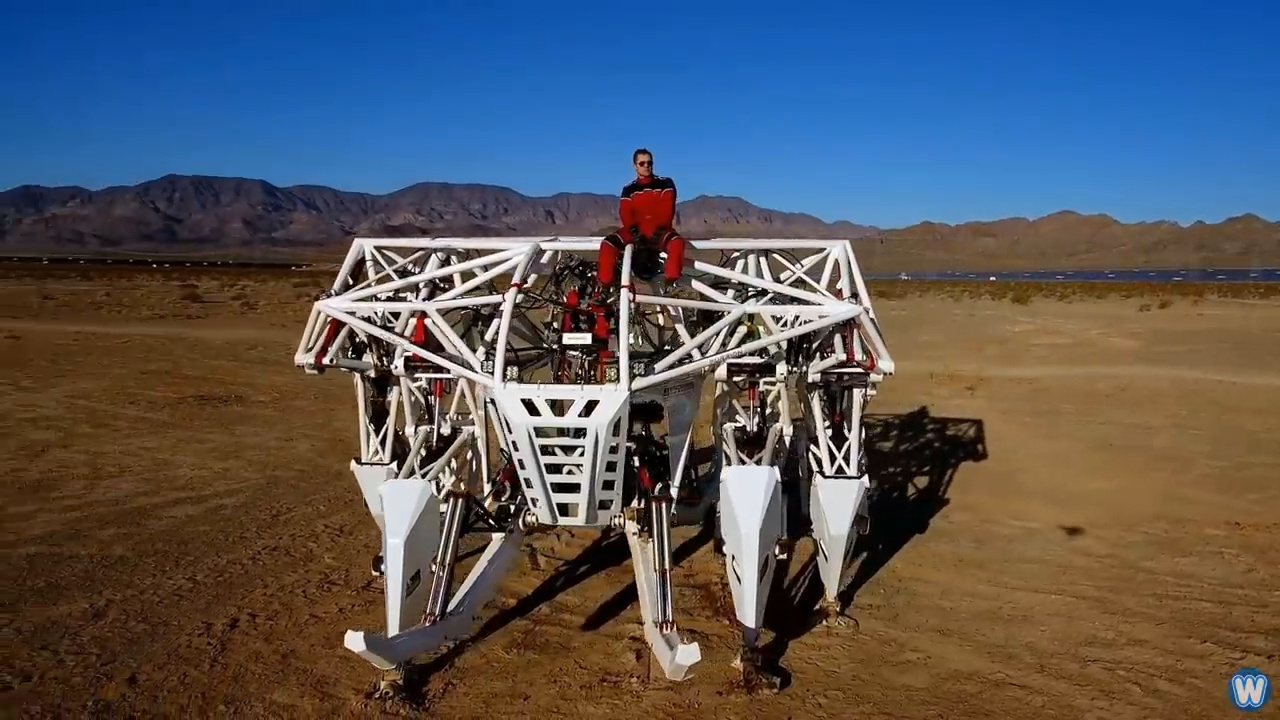
From there, the project advanced in long stages. Tippett stated that he made the first sketches in 2006, spent years studying how to amplify human skill and strength with the highest possible fidelity, and began developing the prototypes that would lead to the definitive system over the following decade.
The decisive leap occurred between 2015 and 2017. According to Tech Briefs, it was during this period that Tippett managed to structure the company, gather support, develop the alpha leg of the system, and build the version publicly presented in 2017. What was a personal obsession then became a functional full-scale machine.
Prosthesis weighs 4 tons, is 4 meters tall, and functions as a giant exoskeleton
According to Exosapien Technologies, the PX1 Prosthesis has a mass of 4,000 kg, 4 meters in height, 5.5 meters in width, and 5.1 meters in length.
The structure uses a 96-volt and 36 kWh battery, with an estimated autonomy between 15 and 60 minutes, depending on operating conditions. The peak power reaches 150 kW, equivalent to about 200 hp.


These numbers help explain why the project draws so much attention. The Prosthesis is not a compact laboratory piece. It is a machine the size of a small building, built to support the pilot’s weight, multiply their movements, and operate on real terrain.
The company itself describes the system as an electric mech suit, fully human-controlled and designed to enhance the operator’s capabilities. It is not about automation replacing the human body, but an attempt to mechanically expand it.
Pilot controls the machine with their own body, without joystick, steering wheel, or conventional pedals
One of the most striking features of the Prosthesis is its control system. According to Exosapien Technologies and Tech Briefs, the pilot does not use a joystick, steering wheel, or traditional pedals. The command is done limb-for-limb, meaning limb by limb, with the operator’s movements being directly translated into machine movements.
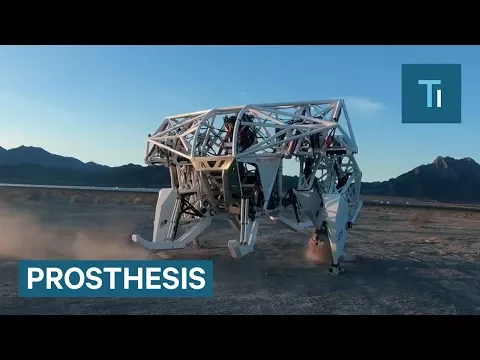
This arrangement works through an electro-hydraulic system with direct haptic feedback. In practice, the operator is trapped inside an exoskeletal structure in the center of the vehicle and physically feels part of the machine’s response while moving it.
The logic is not to pilot the robot remotely, but to literally wear the machine as if it were an extended part of the body.
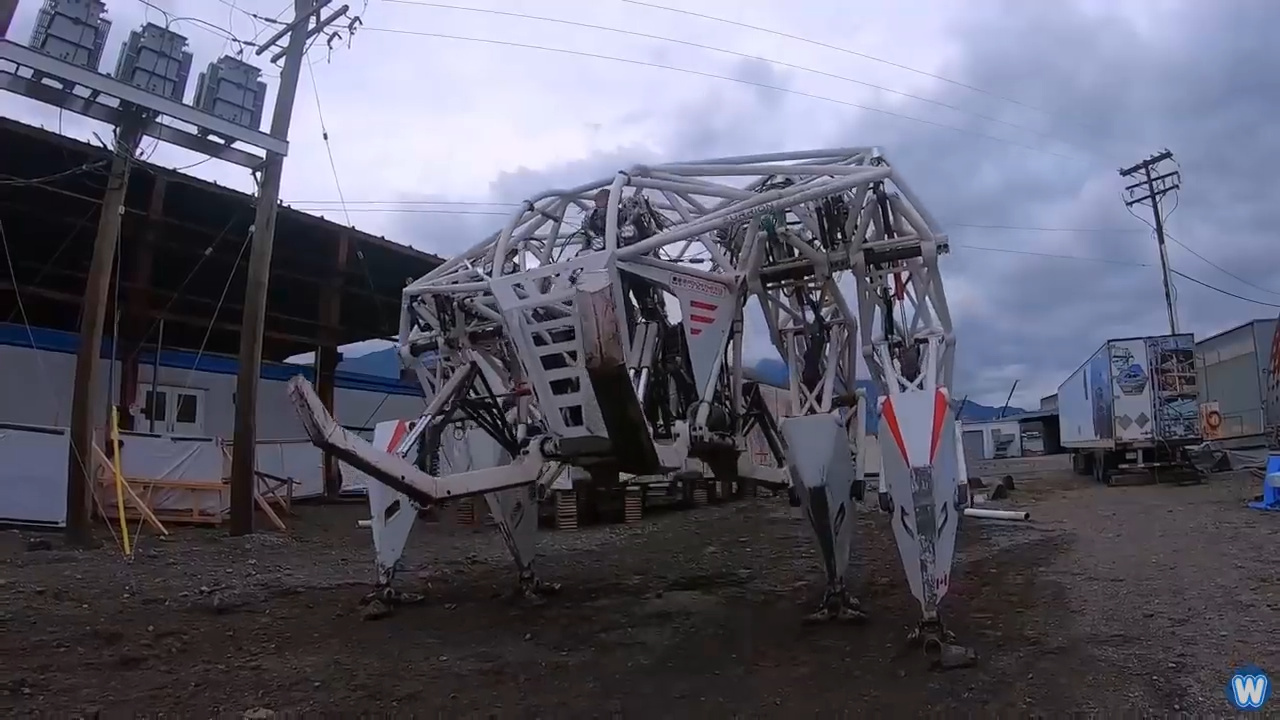
It was precisely this control fidelity that Tippett pointed out as one of the biggest technical challenges of the project. According to him, it was not enough to move tons of metal. It was necessary to do this with precision, responsiveness, and a sense of control compatible with human use.
The project not only aims to impress but to pave the way for sports with giant machines
The futuristic look is the most immediate part of the Prosthesis, but the project was designed to go beyond technological demonstration. According to Exosapien Technologies, one of the goals is to develop a new category of mech sports, that is, sports with giant machines piloted by humans.
Tech Briefs emphasizes that Tippett sees in this type of vehicle the embryo of its own modality, something that would combine elements of racing, body control, rough terrain, and competition between machines inspired by the same base technology of the Prosthesis.
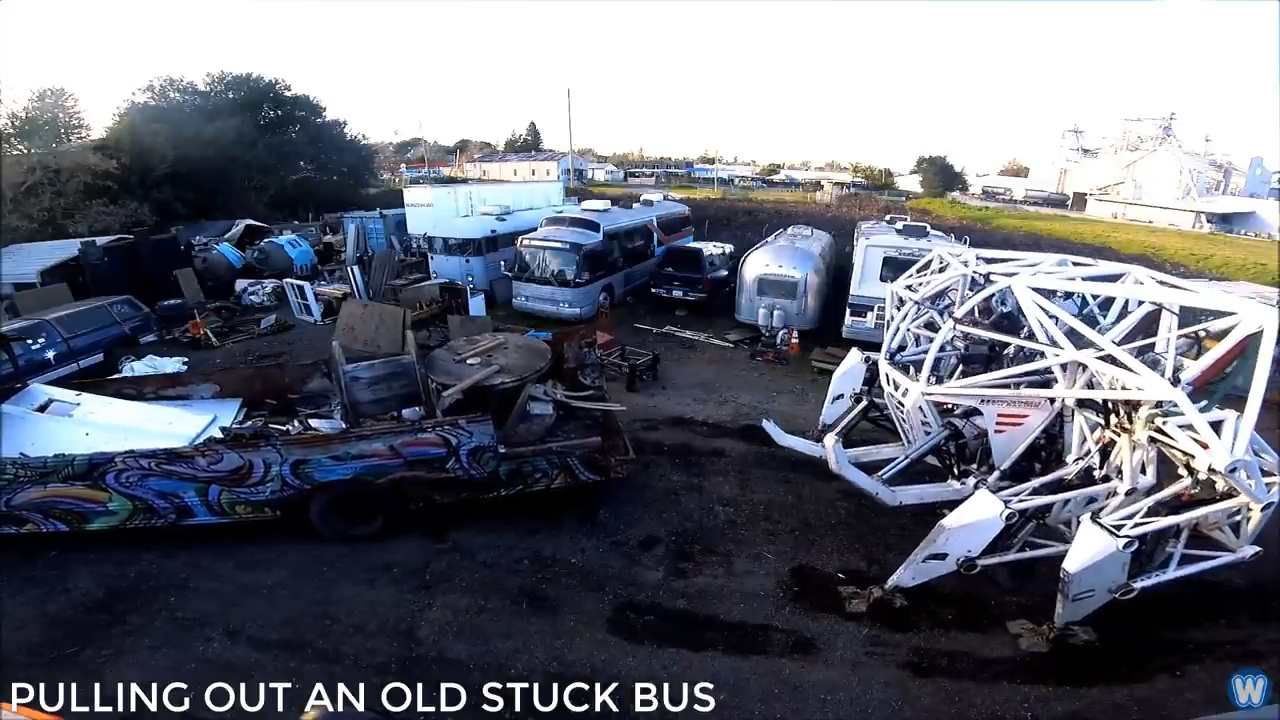
This ambition helps explain why the project was not treated just as mechanical art or an exotic prototype. It was developed as a technology platform, with the potential to evolve in different usage formats.
Exosapien also sees future applications in rescue, disasters, and difficult operations
Beyond entertainment and sports, Exosapien Technologies claims that its technology can pave the way for applications in search and rescue, disaster response, wildfire fighting, and other activities in challenging terrains. The company presents these possibilities as future exploration fronts for the platform.
It is important to separate what already exists from what is still a projection. What is objectively documented is the PX1 Prosthesis as a functional prototype and testing ground for the technology. Applications in sectors such as emergency and complex operations appear as potential future uses, not as services already commercially implemented.
Even so, the interest in these scenarios makes sense. A machine that amplifies human movements and offers great mechanical capability can, in theory, be adapted for environments where traditional vehicles encounter mobility or fine control limitations.
Prosthesis has become one of the most ambitious projects in human-piloted robotics
The Prosthesis is not the largest robot in the world nor the most powerful vehicle ever built. But few machines have combined so radically scale, mobility, direct bodily control, and the proposal of human amplification. This is why the project has gained so much attention in the world of robotics and mechanical engineering.
Weighing 4,000 kg, with 200 hp, and the promise of amplifying human strength by 50 times, the machine created by Jonathan Tippett represents one of the boldest attempts to transform the human body into the center of a giant-scale mechanical creature. It does not replace the operator. It exists to expand them.
If this vision consolidates in the future, what today seems like an almost cinematic prototype may end up serving as the basis for a new generation of vehicles, mechanical sports, and robotic systems where the boundary between pilot and machine becomes increasingly smaller.





Be the first to react!