





 Portuguese
  English
  Spanish
  4 min of reading
  0 comments


With 16 host cities spread across the United States, Canada, and Mexico, the 2026 World Cup is expected to gather millions of fans while anti-drone systems, facial recognition, robotic dogs, command centers, and intelligence platforms expand the debate on security, privacy, and the permanence of surveillance after the tournament
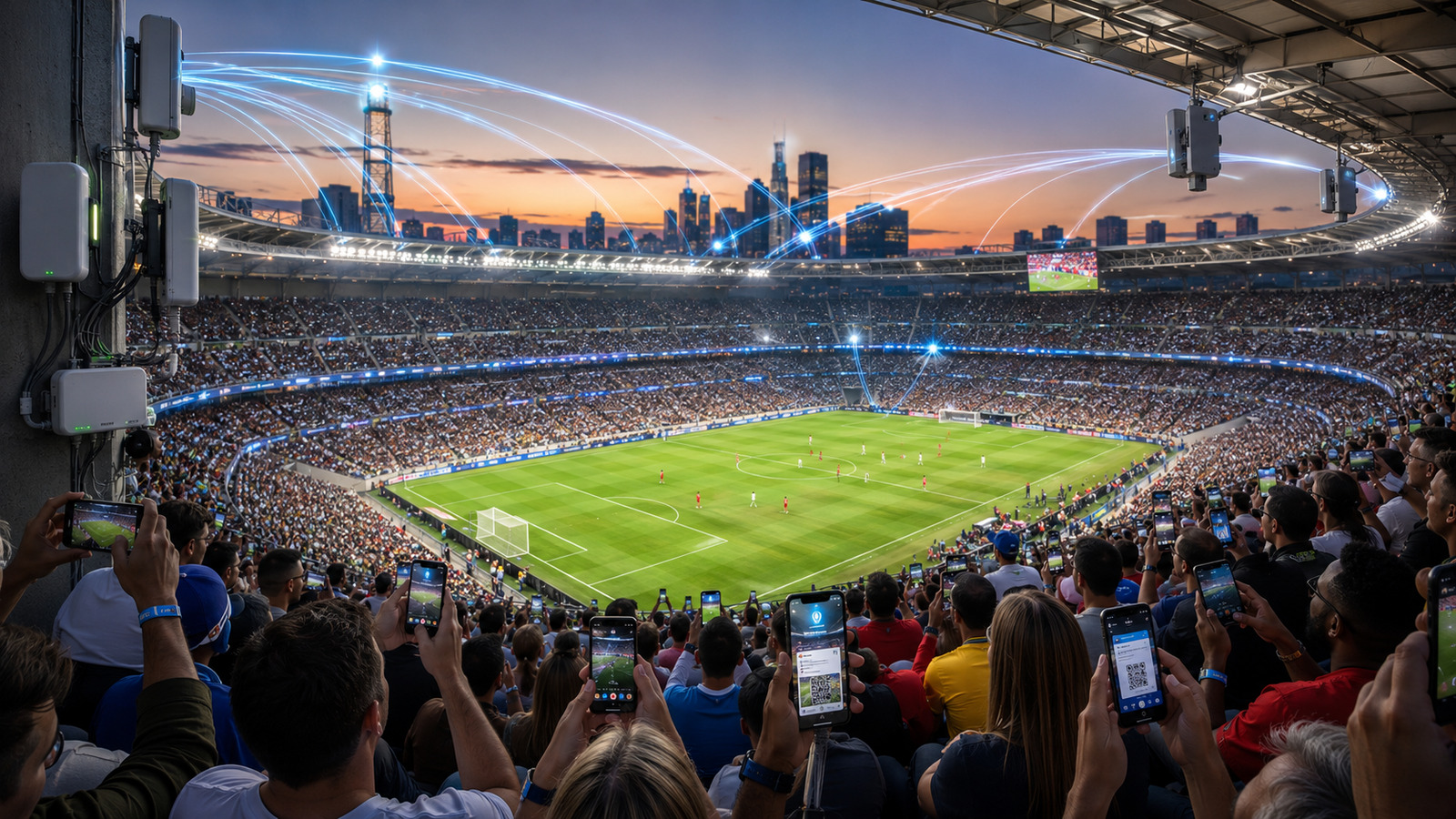
Millions of fans are expected to circulate during the 2026 World Cup in 16 cities across the United States, Canada, and Mexico, while governments and companies expand drones, facial recognition, and command centers.
World Cup security gains a technological layer
The preparation takes place amid warnings from civil rights organizations about the reach of security measures. Experts cited by WIRED claim that concerns about terrorism, linked to the war in Iran, may justify invasive tools without clear safeguards.
In the United States, another concern involves the Immigration and Customs Enforcement, ICE. The agency has advanced technologies, including facial recognition and spyware, and there is fear of aggressive immigration enforcement during the event.
-
Student from Colégio Militar do Recife wins 1st place nationally in the CNPq Life Sciences Award, surpasses students from federal and state universities, and achieves an unprecedented feat for the Brazilian Military School System at 17 years old.

-
The most educated European countries in the world: see which ones lead the ranking and what explains this performance
-
A ‘black hole’ in the middle of the yard in Balneário Camboriú has surpassed 23.5 million views, and the secret of this pool that seems to swallow the water is a material imported from Africa, applied by hand over days for R$ 40,000 just on the finishing.

-
Scientists discover enormous structure hidden beneath the Antarctic ice and reveal an unknown chapter of Earth





Human Rights Watch has asked FIFA for a “truce with ICE,” although the agency’s final role remains uncertain. The ACLU led a coalition of over 120 groups that issued a travel warning to foreigners.
The warning cited increased surveillance for foreign fans. Jay Stanley from the ACLU told WIRED that security could be used as an excuse for other agendas.
Drones and anti-drone systems enter the center of the operation
Drones and anti-drone systems occupy a central role. Fortem Technologies claims to have signed a “multimillion-dollar” contract with the U.S. Department of Homeland Security to provide kinetic anti-drone technology to American venues.
Sentrycs is said to have secured multiple contracts with federal, state, and local agencies to detect and neutralize drones. Axon’s anti-drone technology will also be used in some venues.
In January, the Department of Homeland Security announced an office for the rapid deployment of drones and anti-drone technologies. An investment of $115 million in these capabilities was also announced for the security of the tournament and the country’s 50th-anniversary celebrations.
FEMA has granted $250 million to the District of Columbia and the 11 states that will host matches, through the Counter-Drone Systems Grant Program. For Jake Laperruque of the CDT, there are concerns about possible interception of phone data.
He stated that C-UAS technologies can disrupt radio signals from control devices, such as phones, and advocated for transparency regarding any collection and handling of this data.
Facial recognition and artificial intelligence arrive at stadiums
AI-based surveillance is also expected to have a significant presence. Boston Stadium implements AI facial recognition before the World Cup, allowing entry and purchases by registered fans using their faces.
Similar technologies appear at Miami Stadium and Atlanta Stadium. Two robotic dogs with cameras and AI will be sent to the International Broadcast Center in Dallas, and two others to the Stadium in New York and New Jersey.
At the 2022 World Cup, more than 15,000 cameras monitored fans in eight stadiums and on the streets of Doha. For critics, transparency about AI surveillance changes depending on the state, operator, and location.

Command centers expand real-time control
Other planned technologies include real-time intelligence and command platforms. Lenovo, FIFA’s official technology partner, will deploy an Intelligent Command Center with digital twins, virtual models of the game venues.
The proposal is to monitor crowd movement and manage operations in real-time. Booz Allen Hamilton stated it will bring the Sit(x) platform to selected locations, combining data from drones and tracking of police officers, vehicles, aircraft, and drones.
Canada and Mexico also reinforce surveillance
In the other host countries, measures also spark debate. Toronto inaugurated a police command center costing 12.5 million Canadian dollars, equivalent to $9 million, and is expanding body cameras for subway station staff.
Vancouver installed 200 surveillance cameras as part of enhanced security. Data protection agencies in Ontario and British Columbia have asked authorities to comply with laws regulating surveillance systems during the event.
In Mexico, the state of Nuevo León deployed robotic security dogs around the Monterrey Stadium to assist patrols and crowd surveillance before the tournament.
Temporary measures may remain in cities
The 2026 World Cup follows the Qatar tournament, described as highly militarized and marked by deals for defense companies. In 2017, the United Kingdom and Qatar announced a “joint operational fleet” ahead of the 2022 edition.
There was also the purchase by Qatar of 24 Eurofighter Typhoon jets from BAE Systems, in a $6.8 billion deal.
Cited analysts point out the risk of temporary structures remaining. Matthew Guariglia, from the Electronic Frontier Foundation, states that the surveillance infrastructure may last longer than the World Cup and leave cities with more everyday monitoring.
The 2026 World Cup will be accompanied by millions of fans, but also by an unprecedented network of cameras, sensors, drones, and digital platforms. Do you believe these technologies are necessary to protect large events or do they represent a lasting risk to civil liberties?
With information from Wired.




Be the first to react!