Portuguese
  Spanish


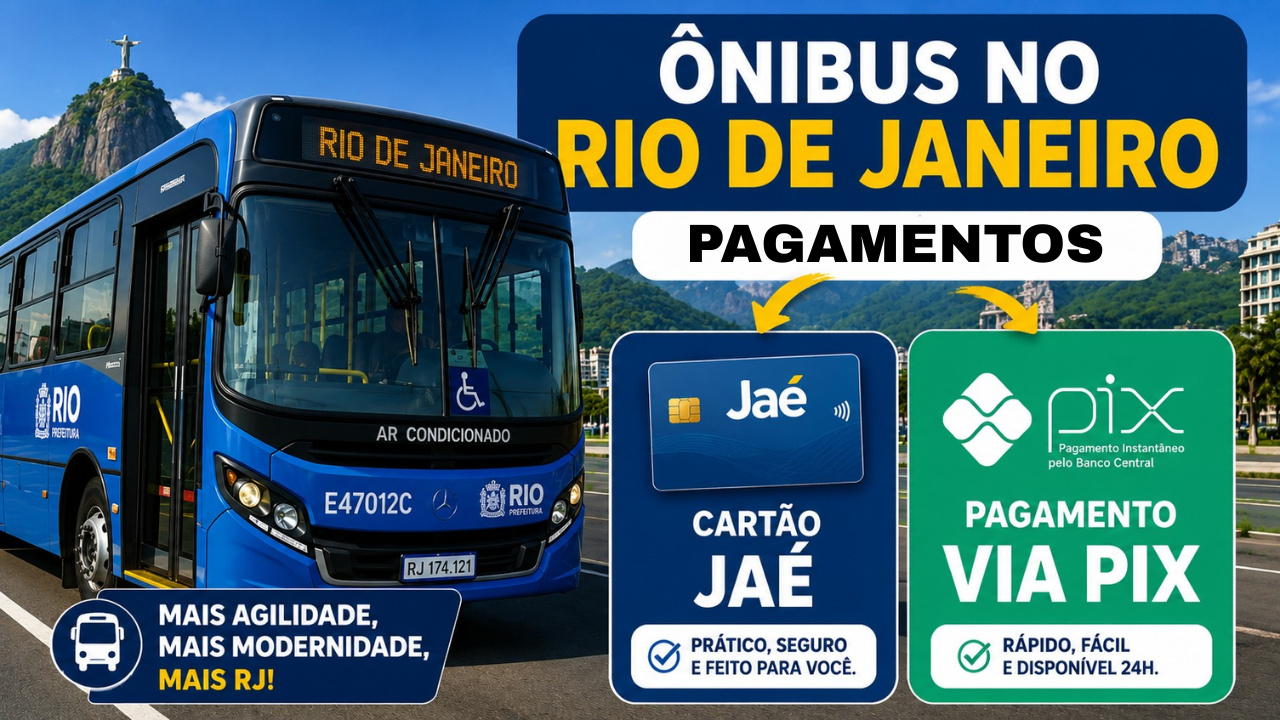
Payment on Rio buses is now made only by Jaé card, QR Code, or PIX. Understand the changes in integrations and cards.
Passengers on municipal buses in Rio de Janeiro have been boarding without the option to pay the fare in cash since Sunday, June 28. With the definitive change, the payment on Rio buses must be made by Jaé card, by the app’s QR Code, or by PIX directly on the validator.
The change also affected users of the Bilhete Único Carioca and Bilhete Único Margaridas. To continue using fare integrations, the passenger needs to have a black Jaé card or use the QR Code linked to the CPF.
According to the Municipal Transport Secretariat, 96% of trips were already paid electronically before the removal of cash from the buses. The city hall claims to have expanded the service network to 1,600 points, where passengers can buy or recharge cards.
-
Toll Fees in São Paulo’s Countryside Drop by Up to 50% Starting Today

-
Petrobras Invests $2.3 Billion in Brazilian Coastal Shipyards, Creating Over 5,000 Jobs and Revitalizing the Naval Industry

-
$2.5 Billion Amazon Potash Mine Aims to Reduce Brazil’s 95% Import Dependency

-
Grendene’s Sales Decline in 2025, but Melissa Brand Surges 36% and Becomes Key Focus


How does payment work on Rio buses?
The system now accepts three forms of payment inside the vehicles:
Jaé Card: the passenger brings the card close to the validator to release the passage.
App QR Code: the trip is paid with the digital code generated on the Jaé platform.
PIX: the user requests a QR Code on the validator itself and completes the payment through the banking app.
PIX is available only for single fares. To use it, the passenger must press the button on the equipment installed on the bus. Then, the validator will display the code that will be read by the cell phone.
After reading, the payment is completed in the user’s financial institution app.
Cash can still be used outside the buses
Although bills and coins are no longer accepted during boarding, the passenger can still use cash to purchase or recharge the Jaé card.
Operations can be carried out at kiosks, ticket offices, accredited establishments, and self-service machines.
The equipment is available at VLT, BRT, and metro stations, on the stretch between Jardim Oceânico and Botafogo.
According to the city hall, the expansion to 1,600 locations aims to facilitate the adaptation of passengers who still depended on cash payments.
Green card loses integration benefit
The change not only alters the way to pay the fare. The type of card used also determines whether the passenger can take advantage of the fare integration.
The Jaé single-use card, identified by the green color, remains valid for recharges and single trips. However, it no longer offers integration benefits.
This means that the user can continue boarding with the green card, but will not have access to the mechanism that allows using different means of transport within an interval by paying a single integrated fare.
To maintain this benefit, it will be necessary to migrate to an option linked to the CPF.
Black card and app maintain integrations
Passengers of the Bilhete Único Carioca and Bilhete Único Margaridas should use the black Jaé card or the QR Code from the app associated with the CPF.
These are the options that remain enabled for fare integrations.
The linkage allows the system to recognize the user and apply the benefits during the combination of different transport modes.
Therefore, those who use buses and other services in the same trip need to check if they have the appropriate card before boarding.
Jaé Gratuidade does not need to be exchanged
Users of the Jaé Gratuidade card, yellow in color, do not need to replace the document.
The card will remain valid for people who are entitled to fare exemption. The removal of money and changes in integrations do not alter the gratuity benefit.
Thus, only passengers who depend on integration and still use the green card need to consider switching or using the app linked to the CPF.
City Hall says change will not be temporary
The municipal administration informed that the end of cash on public transport is permanent and there is no forecast for a return to the previous system.
The measure requires passengers to adopt one of the available digital modes or use cash only at purchase and recharge points.
According to the municipal secretary of Transport, Jorge Arraes, the new system should also affect the operation of buses.
“The measure increases safety within the buses, reduces the risk of robberies, speeds up boarding, and ends the dual role of drivers. Additionally, it improves the operational and financial control of the system and increases the transparency of fare collection,” stated the secretary.
Boarding should be faster, according to the secretary
The removal of cash eliminates steps such as handing over bills, checking amounts, and giving change.
According to the justification presented by the Municipal Transport Secretariat, this can reduce the time spent at stops and speed up passenger boarding.
The measure also removes from drivers the responsibility of receiving and controlling fare money during driving.
For the city hall, digitalization also improves the monitoring of revenue and reduces the circulation of money within vehicles.
What passengers need to check before boarding
Those using municipal transport should consider two issues: how they will make the payment and whether they need the integration benefit.
For a simple trip, passengers can use the Jaé card, app QR Code, or PIX. The green card remains accepted in these situations.
For integrated journeys, however, the black card or the QR Code linked to the CPF is required.
Cash will still be useful for buying and loading cards at authorized points, but it can no longer be handed directly inside the bus.
With the new payment on Rio buses, the most important adaptation will be for users who still paid in cash and those who used the green card for integrations.
With information from último segundo (ig)