Portuguese
  Spanish


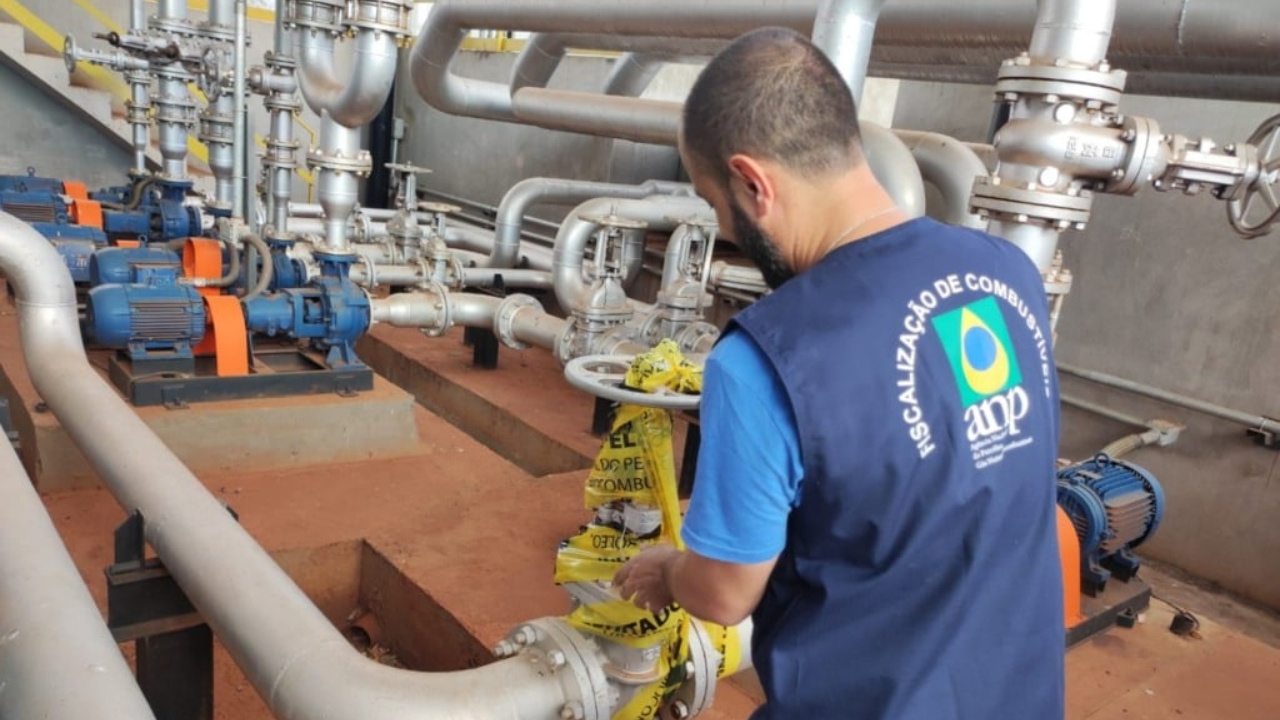

ANP Interdicted A Fuel Base In Mato Grosso Do Sul Suspected Of Acting As A “Front”. The Practice, Considered Illegal, Has Already Led To The Revocation Of Authorizations Of Several Distributors In Brazil.
The National Agency of Petroleum, Natural Gas and Biofuels (ANP) conducted a compliance operation on September 5, resulting in the interdiction of a distribution base in Iguatemi (MS), as reported by the agency itself on Wednesday. The unit belonged to Ecológica Distribuidora de Combustíveis Ltda. and was the target of an investigation following reports of irregularities.
With the support of the State Department of Finance of Mato Grosso do Sul (SEFAZ-MS), the inspectors found that the structure served as a kind of “phantom base,” with no real movement of fuel. The most serious practice, according to the ANP, was the use of the space as a “front,” where distributors declared fictitious storage to meet regulatory requirements and obtain operating authorizations.
Security Irregularities Compromised The Operation Of The Base
In addition to the administrative fraud, the inspection identified security issues that posed risks to the population and the environment. Among the main points raised, the following stand out:
-
OPEC+ Boosts Oil Supply by 188,000 Barrels per Day in July 2026, Leading to Price Drop from $112 to $89 per Barrel in Under Two Months

-
TotalEnergies Signs 20-Year Deal to Purchase 2 Million Tons of LNG from Alaska, Boosting Project Viability
-
Turkey Deploys Çağrı Bey Drilling Ship to Explore New Oil Frontier Off Somalia’s Coast
-
Golden Pass LNG Ships First Liquefied Gas Cargo from the U.S., Completing $10 Billion QatarEnergy and ExxonMobil Investment

- Lack of foam generator liquid (LGE): the location had only 1.55 m³ of the product, out of date, when the authorization provided for 8 m³. The LGE is essential for combating fires in such facilities.
- Inadequate containment basin: the structure did not meet ANP specifications. While the approved dimension was 2.15 meters, the base operated with only 1.5 meters, which would make the containment of leaks or accidents unfeasible.
In light of these failures, the ANP determined the immediate interdiction of the base. The resumption of activities can only occur if the company proves the correction of the irregularities, without prejudice to the opening of administrative proceedings.
What Is The “Front” Practice In The Fuel Sector
In the distribution market, the “front” occurs when companies artificially declare the sharing of storage bases to meet legal requirements. According to ANP regulations, each distributor must have a minimum space of 750 m³ to obtain an operating authorization.
In the investigated case, the companies declared that they used the Iguatemi base as a support point, but in practice, no fuel was stored or moved at the location. This artifice allowed smaller companies to request authorizations to open branches in other states without maintaining their own infrastructure.
The scheme was financially advantageous. By indicating the base in Mato Grosso do Sul as their headquarters, distributors saved on fixed costs and operated in more profitable markets, such as São Paulo, without investing in local storage. This, according to the ANP, constitutes unfair competition and regulatory fraud.
ANP Resolution No. 950/2023 establishes that distributors cannot cease their fuel movement activities for more than 180 days or 90 consecutive days without justification.
In the case of the Iguatemi base, it was found that no product had been received since June 2024, confirming its inactivity. Furthermore, the companies involved did not report movements to the ANP electronic system, reinforcing the suspicion of fraud.
Revocations And Proceedings Against Distributors
The ANP did not limit its action to the interdiction alone. In parallel, it has already initiated revocation proceedings for distributors involved in the “front” scheme.
Of the 24 companies that used the base, five have already had their authorizations revoked. Another 19 remain under administrative investigation and may present a defense. However, all will be fined for providing false information to the Agency.
The clampdown is being intensified. Some of the companies had already been cited in Operation Hidden Carbon, conducted by the Public Prosecutor’s Office of São Paulo (MPSP) in partnership with the ANP, aimed at dismantling schemes of fraud and money laundering in the fuel sector.
Impacts On Competition And Consumers
According to the ANP, fuel distribution is considered a public utility activity. Requiring own or shared bases is not just a regulatory formality, but a way to ensure that supply is expanded and decentralized across all regions of the country.
By declaring storage space in a city but not actually operating at that location, companies end up harming the population of that region. This is because they fail to offer more supply options, which could lower prices and improve competition.
Additionally, companies that genuinely invest in bases and infrastructure suffer from unfair competition from those who only simulate operations. The result is a distorted market where the end consumer can be harmed in both price and service quality.
The Iguatemi episode reinforces the need for continuous oversight in the fuel sector. For the ANP, practices such as the “front” compromise not only the regulation of the market but also operational safety and transparency of activities.
With the recent interdictions and revocations, the Agency sends a clear message: there will be no tolerance for irregularities. Companies that insist on defrauding the system may permanently lose their authorizations and face administrative and criminal proceedings.