Portuguese
  Spanish


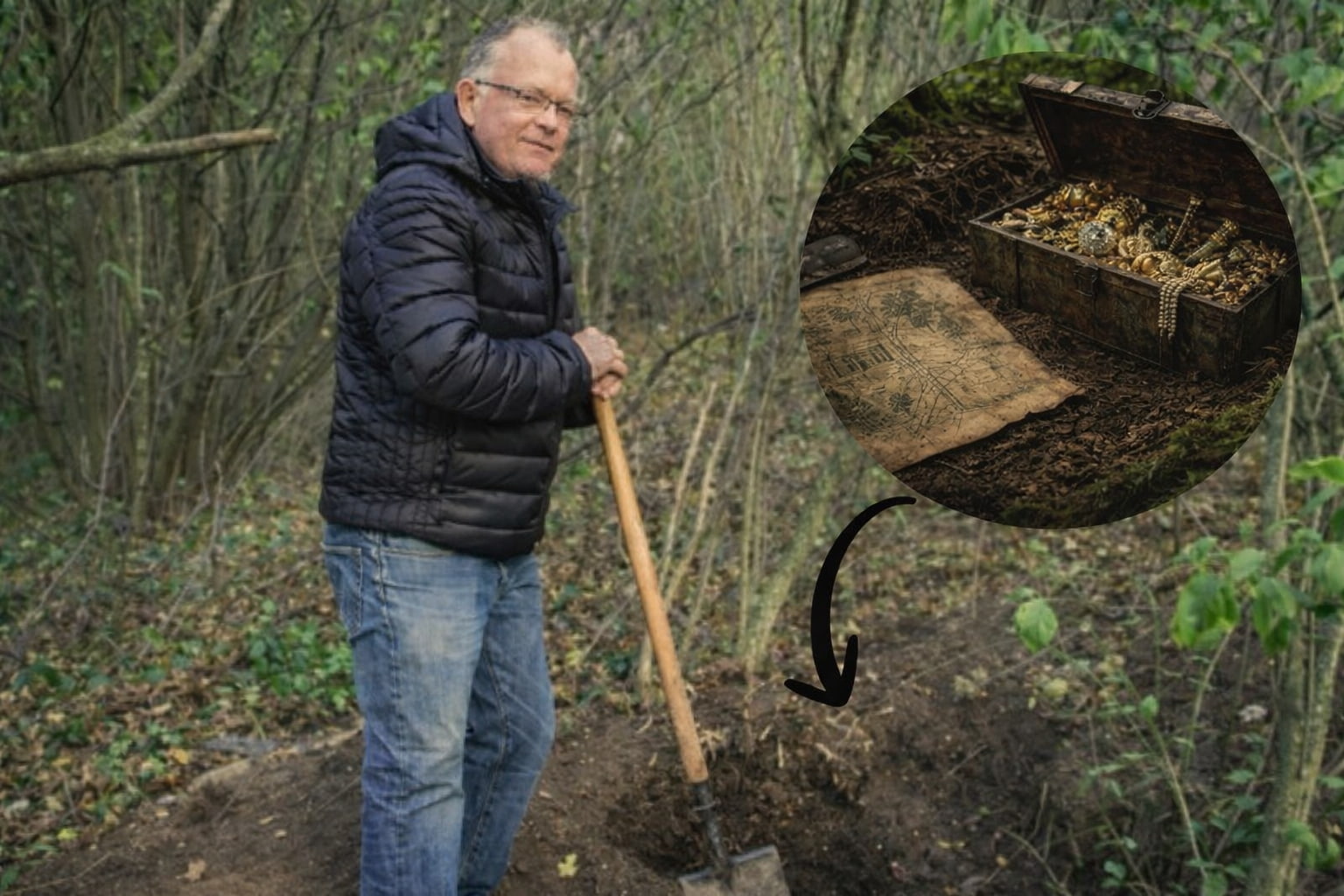


A Memory Map Led a 69-Year-Old Man to Locate Items Buried by His Family During World War II in an Area That Changed Boundaries and Landscapes Over Decades Marked by Conflict and Forced Displacement.
Family Search Guided by Past Memories
At 69 years old, Jan Glazewski located items belonging to his family by following a map drawn by his father decades after they were all forced to leave their former property in Eastern Europe.
The sketch led the elderly man to a rural area currently covered by vegetation and agricultural fields, near the edge of a forest in the Lviv region of western Ukraine.
There, the belongings had been buried since World War II.
-
21-Year-Old Brazilian Student Turns Homemade Popsicle Hobby into $100,000-a-Month Business

-
Australia Dumps Hundreds of Thousands of Tons of Gravel into Rivers to Restore Natural Barriers and Reverse 150 Years of Erosion

-
Bird-Inspired Robot Glides on Air Currents up to 10 m/s, Balances Itself, and Aims to Save Energy in Industrial Inspections and Meteorological Balloons
-
Eight Artists Secretly Lived in a Hidden 70m² Apartment Inside a Shopping Mall in Brazil for Four Years



The case has been reported by international outlets and draws attention for the nearly eight-decade gap between the burial of the items and their recovery.
According to available information, the search was based solely on memories preserved within the family and references that no longer existed at the site.
Decision to Hide Belongings During Soviet Advance
The decision to hide the belongings was made at the beginning of the conflict when the family assessed that they could not safely transport their valuables.
At that time, the Glazewski family lived in an area then considered part of eastern Poland, territory that underwent boundary changes after the war.
With the advance of the Soviet Army, burying jewelry and other items was seen as a way to try to preserve them until a possible return.
This return never occurred.
The family property was destroyed during the conflict, and the region underwent transformations over the following decades.
Buildings disappeared, the land was incorporated into agricultural areas, and vegetation advanced over sites previously occupied by buildings, according to historical records about the area.
Oral Stories Kept the History Alive
With the loss of physical references, the existence of the hiding place became dependent solely on stories passed down within the family.
For years, the exact location remained undefined, as there were no official documents or maps indicating where the items had been buried.
The attempt to locate the site gained new momentum when Jan decided to turn to his father to transform old memories into a practical guide.
As an elderly man, the father mentally redrew the layout of the former property and produced a map based solely on memory.
In the sketch, he indicated the approximate position of the farm, the house, and the line separating the open field from the forest.
The Map Drawn Decades Later
In an interview reproduced by Futura Sciences magazine, Jan reported that his father drew the map about fifty years after leaving the area, relying only on memories from his youth.

According to him, the material contained enough indications to guide the search, even without guarantees of absolute accuracy.
Upon reaching the indicated area, Jan found a much different scene from what his father described.
The former property no longer existed, and the land showed signs of agricultural use and uncontrolled vegetation growth.
Even so, the map allowed him to narrow the search to a specific area near the forest.
Metal Detectors and Directed Digging
To increase the chances of locating the items, he used metal detectors and focused the digging in the area indicated by the drawing.
The strategy was to keep the work limited to the forest edge where, according to the map, the belongings would have been buried before the family’s flight.
The main find was a box containing jewelry associated with Jan’s mother, who died when he was still a child.
The recovery of the items was described by him as a moment of strong personal significance, a statement that appears in interviews given after the discovery.
According to Jan, “Touching the items wrapped by my mother decades ago had an emotional impact.
Finding the objects corresponded to an idea cultivated since childhood, related to family stories about the hiding place.”
Recovered Items and Preservation of Memory
In addition to the jewelry, the excavations revealed other items, such as silverware and personal belongings.
According to reports, these items have significant financial value in the current market, with estimates suggesting figures in the thousands of dollars.
The total value, however, was not detailed precisely.
After the recovery, Jan stated that he intends to preserve the items and keep them within the family.

His intention, he said, is to use the items as a way to record and transmit the family history to future generations, with no immediate plans to sell.
Forced Displacement and Material Memory
The episode is frequently cited as an example of the lasting consequences of forced displacements during World War II.
Historians point out that many families resorted to similar strategies to try to preserve belongings in the face of the uncertainty of whether and when they could return home.
In the case of the Glazewski family, the map served as an informal record of memory, allowing orally transmitted information to be transformed into a concrete guide decades later.
The discovery was only possible because these memories were preserved and reinterpreted in the present.