Portuguese
  Spanish


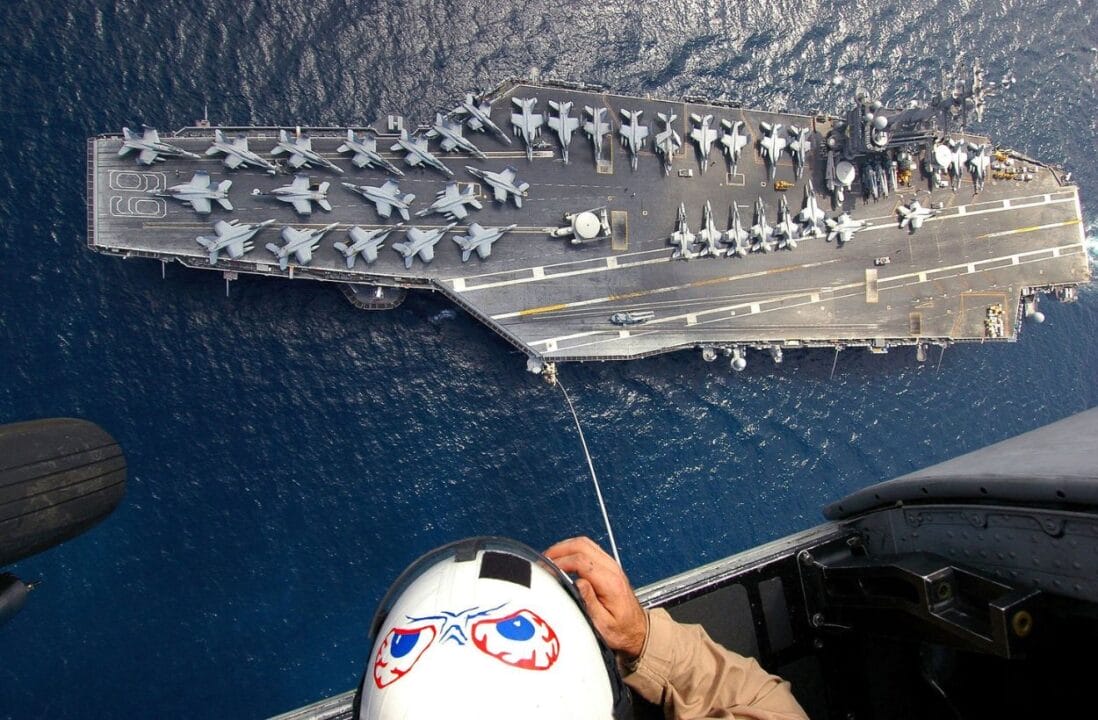

Exploring The Engineering And Technology That Allow Fighter Jets To Take Off From Shorter Aircraft Carrier Runways, The News Unveils The Use Of Catapults And Ski Jump Ramps, Detailing Their Mechanisms, Advantages, And The Reason Behind The U.S. Choosing Catapults Over Ramps Despite Their Apparent Simplicity And Lower Cost.
The mechanics behind a fighter jet’s takeoff, which typically requires a runway of 500 meters, are reinvented on aircraft carriers, which have only 333 meters of deck. This dilemma is resolved with the use of catapults and ski jump ramps, technologies that allow for the rapid and efficient takeoff of aircraft in confined spaces.
In the United States, the preference for catapults, whether steam or electromagnetic, over ramps is due to their effectiveness in launching heavier and less powerful aircraft. Catapults facilitate operation in adverse environmental conditions and save fuel, which is crucial during takeoff. Despite their high cost and complexity, their efficiency is undeniable, with extremely low failure rates.
Ski Jump Ramps For Aircraft Carriers


Alternatively, ski jump ramps are utilized by other nations due to their simplicity and low cost. They allow aircraft to take off with larger payloads, leveraging the additional lift generated by the ramp’s incline, which compensates for the lack of space for acceleration.
-
Abandoned Factory in Rio’s North Zone Becomes Urban Hazard with Standing Water and Debris

-
The U.S. Navy Conducts Submarine Tests in Idaho Lake to Detect Underwater Noises Hidden by the Ocean

-
British Factory Transitions from Mechanical Parts to Producing 420,000 Electric Power Units Annually, Supplying 70% of Ford’s Electric Cars Sold in Europe
-
France Launches Network to Recycle 20 Million Cookware Pieces by 2027, Accepting All Brands for Aluminum and Coating Separation


The history of ramps on aircraft carriers dates back to 1944, being improved during the Cold War to accommodate heavier and armed aircraft. Today, countries like the United Kingdom, Russia, China, and India adopt ramps on their aircraft carriers, optimizing takeoff without the cost and complexity of catapults.
Thus, the choice between catapults and ramps depends on a variety of factors, including aircraft type, operational conditions, and economic considerations. While American aircraft carriers opt for catapults due to their efficiency and versatility, ramps offer a viable alternative for countries with different requirements or budget constraints.
How Many Planes Can An Aircraft Carrier Carry?
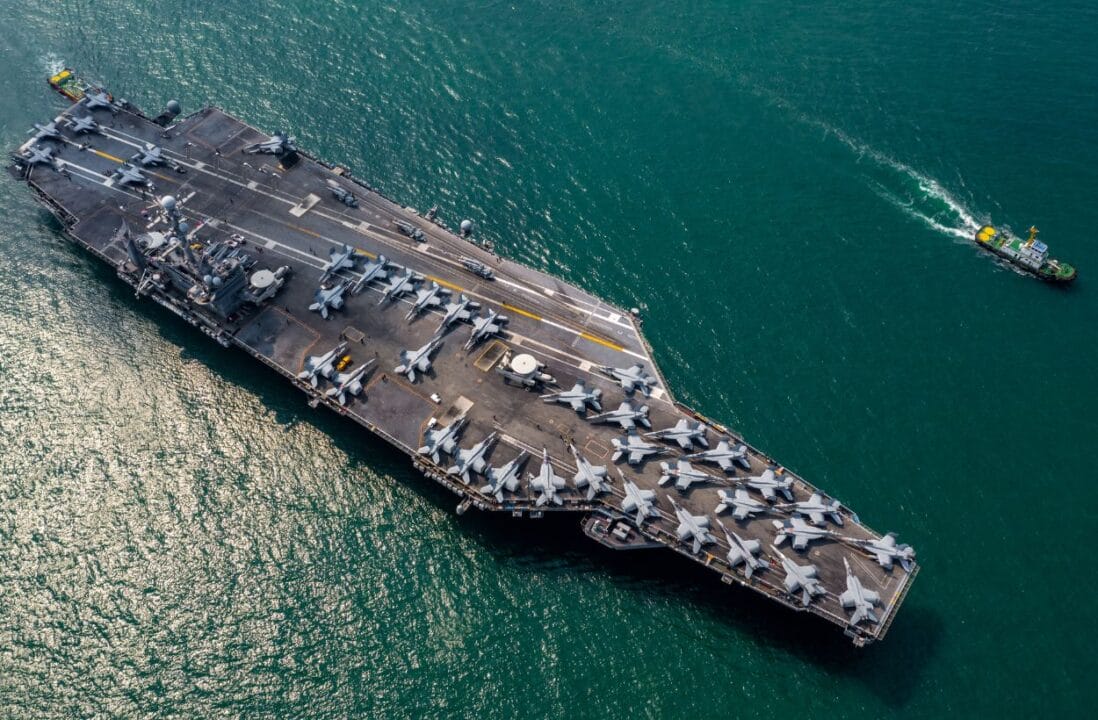
The air capacity of an aircraft carrier is a critical facet of its operational effectiveness. While the colossal Nimitz-class carriers of the United States can embark around 85 to 90 aircraft, ranging from fixed-wing fighters to helicopters, ships of other classes and nations may have different capacities. For example, the USS Gerald R. Ford, the latest addition to the U.S. Navy, can carry over 75 aircraft, so how many planes an aircraft carrier can carry depends on the size and purpose of each ship. (Learn more about the USS Gerald R. Ford in the full article).
The naval strategy of aircraft carriers is reinforced by the formation of an aircraft carrier strike group, which usually includes destroyers, cruisers, and even submarines, in addition to support ships like tankers and supply vessels, to ensure prolonged operations without the need to return to port. This fleet offers a comprehensive spectrum of defensive and offensive capabilities, from air and anti-submarine defense to projection of air and naval power.
What Types Of Fighters Can Take Off From Aircraft Carriers?
Thus, aircraft carriers are centers of maritime air power, whose capacity and effectiveness are amplified by the number and type of aircraft they can transport, along with the support of a multifaceted naval group.