






 Portuguese
  Spanish
  3 min of reading
  0 comments


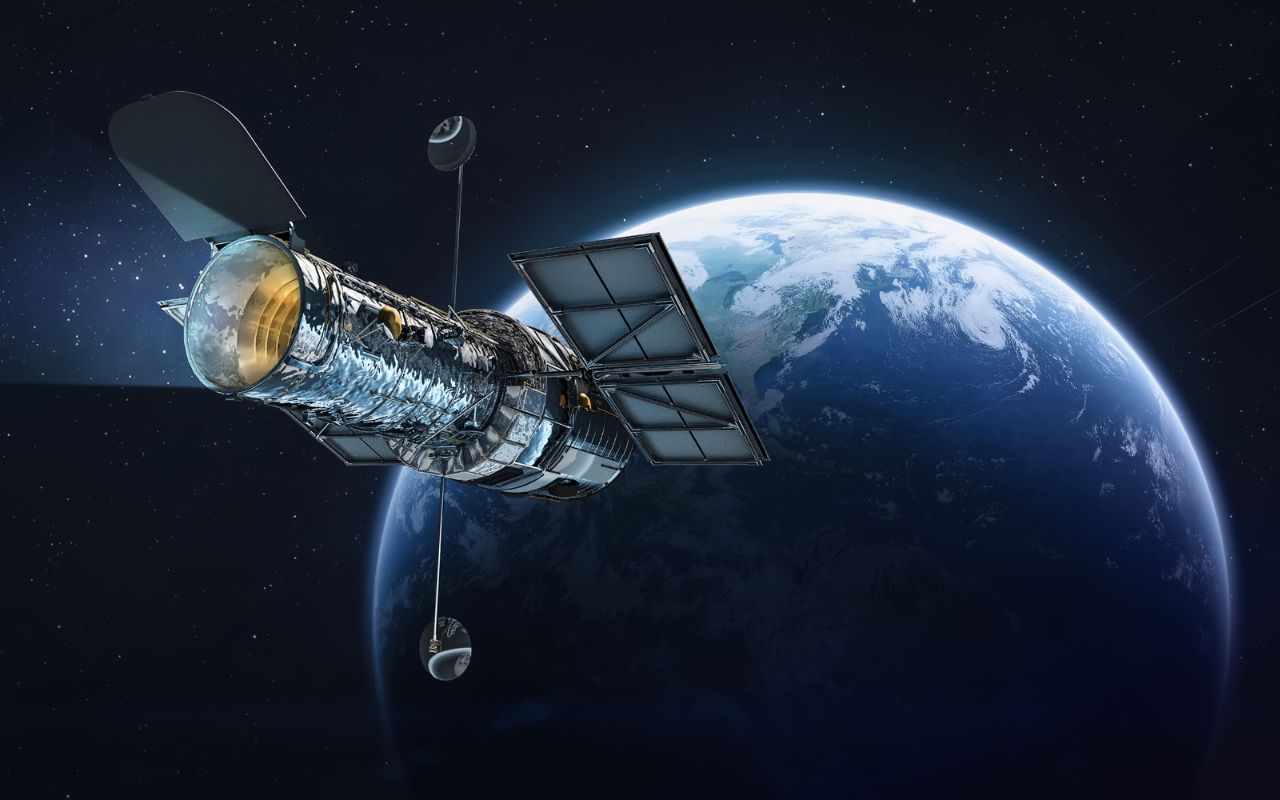
Designed in 1990, the Hubble Space Telescope — famous orbital observatory — is losing altitude and is expected to re-enter Earth’s atmosphere between 2029 and 2033, according to NASA analyses; meanwhile, it continues to contribute important images of space.
The Hubble Space Telescope, one of the most iconic space telescopes ever built, faces a gradual end to its mission in low Earth orbit.
The National Aeronautics and Space Administration (NASA) estimates that, without a reboost mission, the observatory may re-enter Earth’s atmosphere between 2029 and 2033, possibly disintegrating or leaving fragments upon reaching the ground.
This forecast comes after more than three decades of scientific contributions, dating back to its launch mission in 1990, and highlights the challenge of dealing with aging space technology and the risks associated with its descent.
-
Goodbye traditional laundry: Roborock launches washer and dryer with super hydrolysis, microbubbles, 99.99% sterilization, low-temperature drying, automatic detergent, app control, and cycles to remove stains, odors, mites, and bacteria from clothes.

-
It is now possible to generate energy without batteries: new flexible material transforms body heat into electricity and paves the way for more efficient, autonomous, and comfortable wearable devices, with the potential to revolutionize personal electronics in the coming years.

-
Leaving the charger plugged in without a phone consumes energy or is it a myth? Experts call the phenomenon “phantom consumption” and warn that dozens of devices on standby can add up on the bill over the year.
-
It accompanies Earth, but it is not a moon: Chinese probe reaches Kamo’oalewa and begins an unprecedented mission to investigate where the strange asteroid came from, what its internal structure is like, and whether its origin is linked to an ancient collision that launched fragments of the lunar surface into space.


What Does Hubble’s Re-entry Mean?
Hubble has been orbiting Earth at an altitude of about 580 kilometers since its installation, but friction with the upper atmosphere causes its orbit to decay over time.
Experts explain that, without a mission to elevate its position — something that depended on retired space shuttles — the trend is for the telescope to progressively lose altitude until it can no longer sustain its orbit.
A uncontrolled re-entry means that parts of Hubble may heat up and fragment upon entering the atmosphere, resulting in the burning of much of its structure.
More robust components may, in theory, reach the ground as debris, although the risk to the population is considered statistically low.
Why Is Hubble Approaching Earth?
The telescope was launched and placed into orbit with the help of space shuttles that conducted maintenance and trajectory adjustments.
After the end of these programs in 2009, the instrument was left without a regular means of raising its orbit.
Over time, Earth’s upper atmosphere exerts drag even on high orbits, slowly reducing Hubble’s altitude.
This “altitude loss” accelerates as the Sun heats the atmosphere, expanding it and increasing friction on the object in orbit.
Although the discussion of its re-entry is prominent in current analyses, Hubble remains active and continues to provide valuable data on galaxies, stars, and the distant universe.
Since its first mission in 1990, the observatory has made millions of observations, helping astronomers advance studies on the expansion of the cosmos, galaxy formation, and black holes, among other topics.
What Do Experts Say?
NASA and researchers continually monitor Hubble’s altitude and trajectory to refine projections about its re-entry.
Even though atmospheric entry is projected for the 2030s, there is no exact date, and predictions may vary based on solar activity and other space conditions.
As Hubble approaches the end of its orbital mission, NASA and other agencies are investing in more modern space telescopes.
Programs such as the Habitable Worlds Observatory — designed to observe exoplanets and potential signs of life — are under development and may continue to expand our understanding of the universe after Hubble.
Despite the distant re-entry forecast, experts emphasize the need for more precise models to ensure safety and assess how to manage debris from large satellites in the future.
In the meantime, the scientific community continues to use Hubble’s data to advance research and support the next generation of space observatories.
Source: Olhar Digital






-

-

-

-

6 people reacted to this.