Portuguese
  Spanish


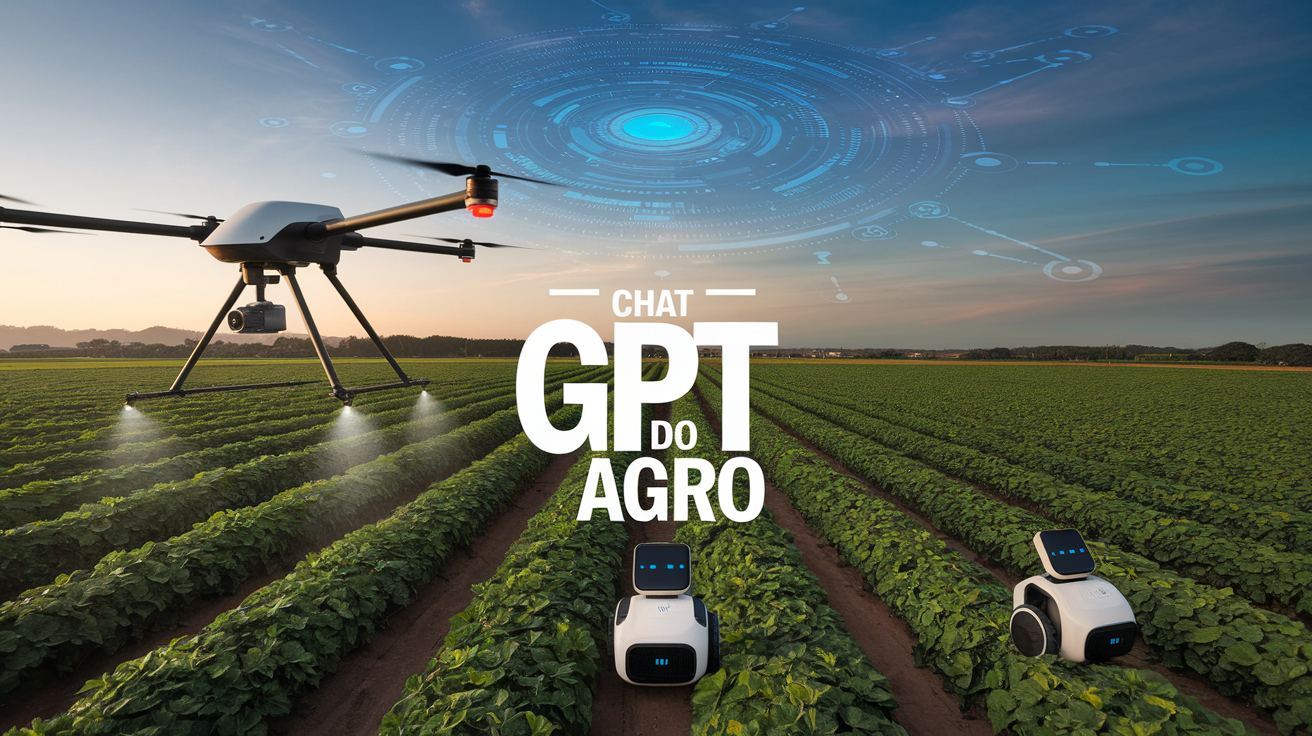


Creator of the World’s Largest Spraying Drone Announces Its AI “Turing” for Agriculture. With an Expected Investment of R$ 100 Million, the Startup Plans to Build a Mega Factory for Large-Scale Production of Robots and Drones, Elevating Precision and Efficiency in Rural Management.
The Brazilian agribusiness is about to undergo a technological revolution that can transform the way crops are monitored and managed.
A national startup, which had already surprised the market by creating the world’s largest spraying drone, is now betting on an artificial intelligence that promises to be a true game-changer for rural producers. The impact may be even greater than expected.
According to the website Globo Rural, Psyche Aerospace, a company based in São José dos Campos (SP), announced the opening of a new round of investments to finance its latest innovation: the AI “Turing,” nicknamed “ChatGPT of Agriculture.”
-
Brazil Constructs First Japanese SABO Barrier in Nova Friburgo to Prevent Landslides, a $3 Million Concrete Trap for Rocks, Logs, and Mud

-
Brazilian Navy’s Technology Plays Strategic Role in Future of Small Modular Reactors, Boosting Nuclear Energy Capacity with Innovative Solutions for Power Generation and Industrial Applications

-
China Surpasses U.S. and Russia Combined in Submarine Production
-
Xiaomi Unveils Smart Glasses in Brazil with 12MP Camera, 4K Video, and AI Features, Challenging Ray-Ban Meta


The goal is to raise over R$ 100 million and build a factory of 100,000 square meters in the interior of São Paulo, at a location still to be determined among Campinas, Itupeva, or Cajamar.
Expansion and High Technology
The factory, which is expected to cost between US$ 40 million and US$ 60 million, will be responsible for large-scale production of six robots specialized in monitoring and analyzing crops.
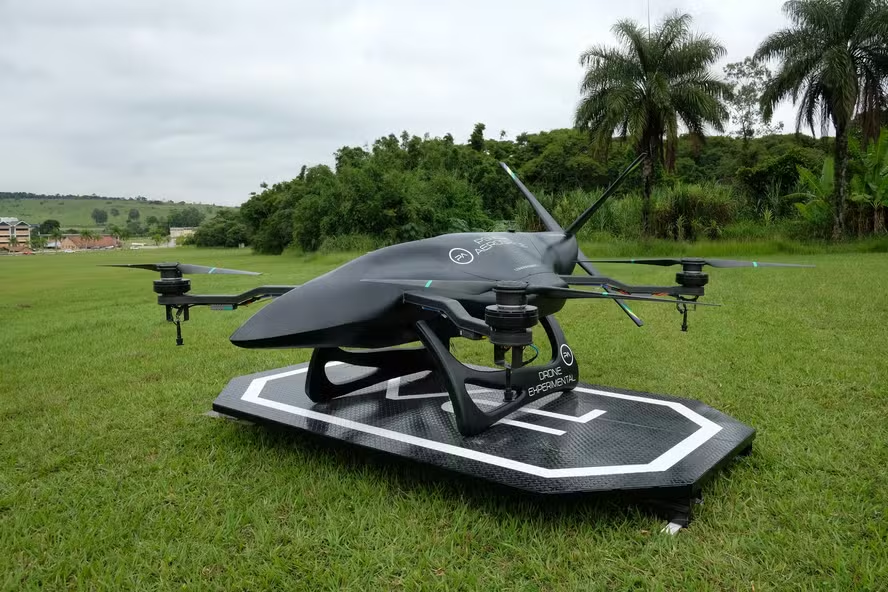
The company has already made a name for itself in the sector with the development of the Harpia P-71, considered the largest agricultural spraying drone in the world.
This model was funded by a round of investments of R$ 17 million completed in April 2024, in addition to an initial investment of R$ 4 million in October 2023.
The product line of Psyche Aerospace includes:
- Harpia P-71: Spraying drone with one hour of autonomy and the capacity to cover 40 hectares per hour;
- Harpia Hexa: Another spraying model optimized for different types of crops;
- Sabiá: Aerial monitoring drone focused on crop analysis;
- Carcará: Equipment aimed at detecting fires and environmental occurrences in the field;
- Rover Tatu: Ground robot specialized in soil sample collection;
- Rover Golias: Capable of measuring soil moisture and temperature with high precision.
Psyche Aerospace’s new industrial plant will have the capacity to produce three Harpia drones (P-71 or Hexa), three Sabiás, one Carcará, five Rovers Tatu, and three Rovers Golias per day.
Advanced Testing and Innovation
The drones from Psyche Aerospace are already in the final testing phase.
On December 29, 2024, the Harpia P-71 completed its first 100% autonomous flight, taking off, following the route, and landing automatically.
The tests took place on a farm in Mato Grosso, while the Carcará and Sabiá models are being tested in São José dos Campos. The Rovers will undergo validation in the coming weeks.
Artificial Intelligence and High Precision
Psyche’s main focus now is the Turing artificial intelligence, which aims to integrate real-time data collected by all the company’s equipment.
To develop the technology, CEO Gabriel Leal, 24, recruited Professor Anderson Rocha, the coordinator of the Artificial Intelligence Laboratory at the Institute of Computing at Unicamp.
According to Rocha, the difference of Turing lies in its ability for direct interaction with rural producers.
“It is capable of adapting to each farm, understanding the specific needs of each producer to offer customized solutions,” he explains.
The technology also stands out for the precision of the captured images.
While common satellites work with pixels of 40×40 cm, Psyche’s sensors operate with pixels of 4×4 cm, providing a 200 times higher resolution.
This means more accuracy in data analysis and more effective decision-making for the farmer.
Leal compares Turing to the original ChatGPT, but highlights an important difference: while OpenAI’s AI relies on public data, Turing combines this information with data collected in the field, offering a highly specialized service.
The system will be free for producers and is set to launch in the next six months.
The Brazilian agribusiness is on the verge of entering a new era of efficiency and productivity with these innovations.
Do you believe that the use of AI in agriculture can revolutionize food production and increase global food security?