Portuguese
  Spanish


Unprecedented visibility in the 2026 World Cup increased attention on Cape Verde, as the archipelago advances in electric mobility, public charging stations, and solar projects that bring together soccer, clean energy, and national development.
After debuting in the 2026 World Cup with a historic draw against Spain, Cape Verde began to gather two themes of great international appeal: the sporting surprise of the Blue Sharks and a public agenda focused on the electrification of transport.
The sporting result created a new entry point to get to know the African country, but the energy transformation had already been planned before the World Cup, with measures aimed at electric vehicles, solar energy, and charging infrastructure.
-
Man Finds 1,469 Ancient Roman Silver Coins While Metal Detecting in Romania

-
Young Brazilian Siblings Go Viral for Catching Giant Fish, Launch Sport Fishing Project
-
72-Year-Old Retired Professor from Rural Brazil Recites 247 Digits of Pi in One Minute, Setting National Memory Record
-
Scientists Discover Microbial Structures Beneath a 42,000-Year-Old Crater in Korea, Shedding Light on How Asteroid Impacts Could Create Life-Friendly Lakes


Therefore, the connection between soccer and energy is not a decision made because of the World Cup, but rather the visibility the tournament gave to an archipelago that is trying to reduce structural dependencies through public policies.
Cape Verde gains global showcase in the World Cup
The draw against Spain placed Cape Verde in a rare position in international sports news, mainly because it was the African team’s first participation in a World Cup.
With a strong defensive performance, the Blue Sharks resisted Spanish pressure and had goalkeeper Vozinha, 40 years old, as one of the main figures of the match played in Atlanta.
According to Agência Brasil, Spain had greater ball possession and made 27 attempts, but found it difficult to turn dominance into clear chances against an organized Cape Verdean defense.
At the end of the game, Vozinha was named the best player of the match, in a debut that also marked Cape Verde’s first point in World Cup history.
From this performance, the country gained exposure that went beyond soccer and led part of the audience to observe its reality as an archipelago, with its own logistical, economic, and energy challenges.
Electric mobility enters the center of the energy strategy
In the energy sector, Cape Verde had already started a movement to transform electric mobility into public policy, with measures aimed at creating a national charging network for electric vehicles.
The equipment is part of the Electric Mobility Promotion Project in Cape Verde, known as ProMEC, and was planned to increase confidence in the use of electric vehicles on different islands.
The planned distribution includes 13 stations in Santiago, ten in São Vicente, eight in Sal, three in Boa Vista, two in Santo Antão, and one unit in São Nicolau, Maio, Fogo, and Brava.
This design avoids concentrating the infrastructure only in the main centers and shows an attempt to bring public charging to the entire territory, something essential in a country made up of islands.
In addition to the concession of chargers, the Cape Verdean government adopted fiscal and customs incentives through successive State Budget Laws, aiming to facilitate the acquisition of electric vehicles.
5 MW Solar Plant Strengthens Plan in Sal
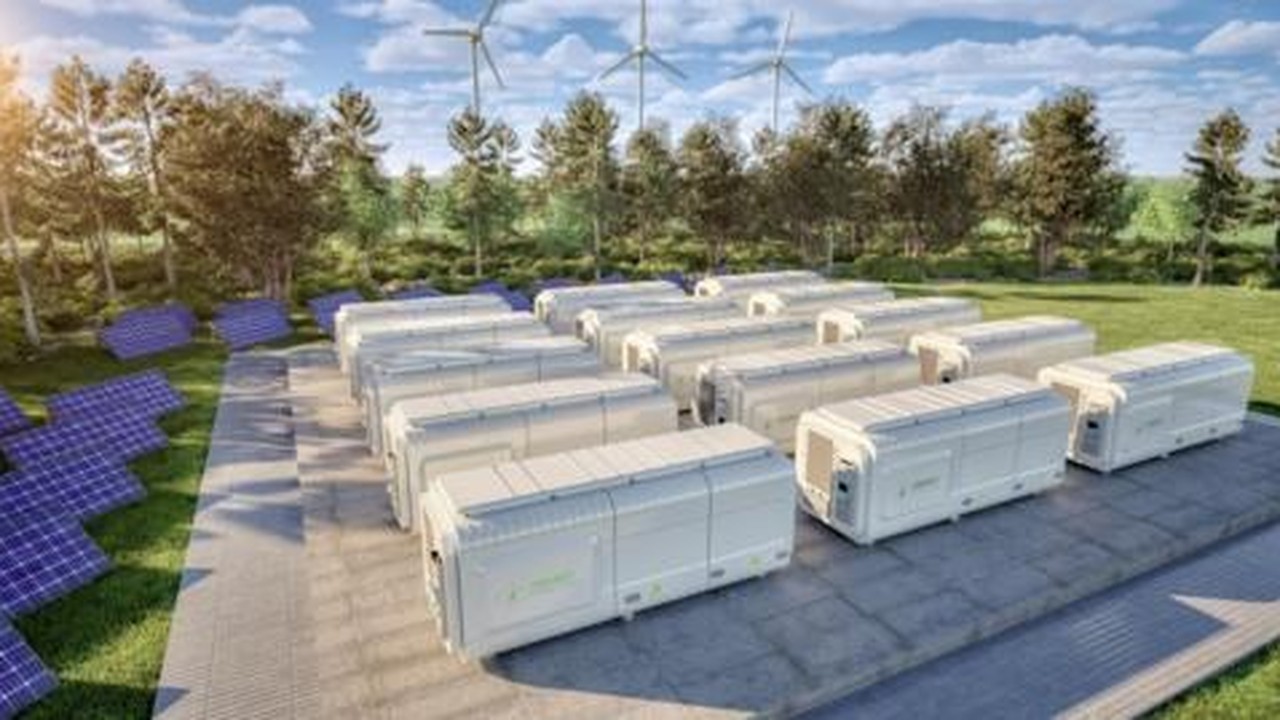
The transition also includes new sources of renewable generation, because the electrification of transport depends on available, predictable energy aligned with the proposal to reduce the reliance on conventional fuels.
In the same statement, ALER reported that Águas de Ponta Preta, in consortium with Impulso Solar and Elmya, won tenders to develop two photovoltaic solar plants of 5 MW.
One of the solar plants was planned for the island of São Vicente, while the other was planned for the island of Sal, precisely one of the territories included in the expansion of public charging stations.
The connection between the solar plant and vehicle charging is one of the most important points of the plan, as it brings renewable electricity generation closer to the infrastructure needed for the electrified fleet.
Instead of treating electric cars as an isolated action, Cape Verde is trying to build a base composed of photovoltaic generation, supply points, and incentives for conventional and commercial vehicles.
Charging Stations Should Reach All Islands
The installation of the stations was planned to occur gradually across all islands, with the first public chargers expected by ALER to be available from the second half of 2023.
The public investment of the project was budgeted at about 30 thousand Cape Verdean escudos, with funding from the Mitigation Action Facility and technical assistance from GIZ, the German agency for international cooperation.
This type of structure is crucial because a driver is only likely to consider an electric vehicle when they find reliable charging points, especially in regions where travel depends on planning and regularity.
On the other hand, the infrastructure also needs vehicles in circulation to gain scale, which explains the combination of tax incentives, public concessions, and solar projects in the same energy package.
The Minister of Industry, Trade and Energy, Alexandre Monteiro, stated that the contract represents a milestone in the implementation of the Electric Mobility Plan in Cape Verde.
According to the government’s assessment, the expansion of charging helps create an environment where electric vehicles are seen as a reliable, sustainable, and practical alternative for the Cape Verdean population.
Clean energy gives new context to Cape Verde’s prominence
The phrase in the title about abandoning oil should be read as a reference to the direction of energy policy, not as an immediate rupture already completed throughout the country.
What exists, based on the announced measures, is a transition strategy that combines electric cars, public charging stations, purchase incentives, and photovoltaic solar plants.
The 2026 World Cup made Cape Verde more visible to readers from different countries, but the electric mobility plan belongs to a previous agenda, structured by contracts, public tenders, and government measures.
This distinction corrects the reading of the topic and avoids mixing events from different moments, keeping football as a current hook and clean energy as the main axis of the ongoing transformation.
With the implementation of chargers and the advancement of 5 MW solar plants, Cape Verde is trying to transform the electrification of transport into part of a national development policy.
The practical outcome will depend on the effective installation of the infrastructure, consumer adherence, and the ability to integrate renewable energy into the daily use of vehicles on the Cape Verdean islands.