






 Portuguese
  Spanish


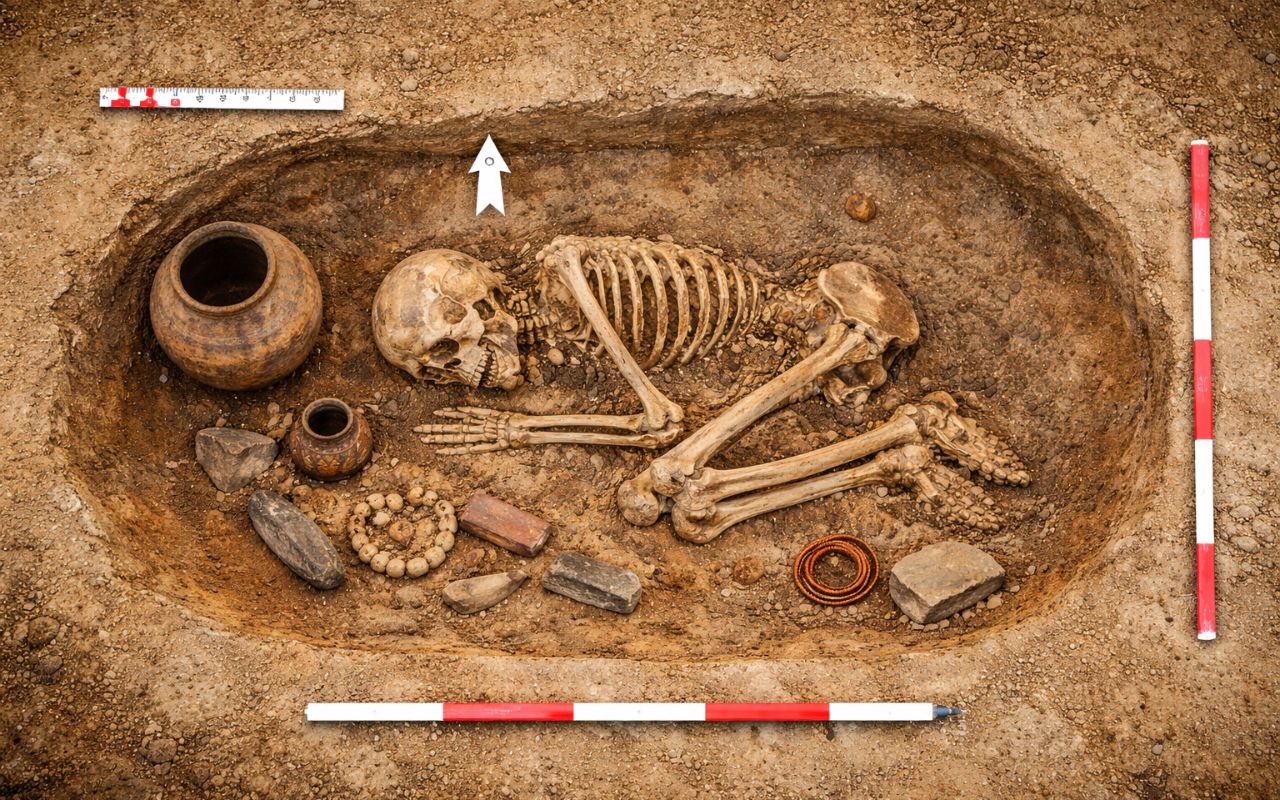

Archeologists discover intact tomb of 4,500 years in Romania with artifacts of the Yamnaya culture. The burial reveals rituals, adornments, and a genetic legacy that influenced modern populations.
During excavations for the construction of the new A8 highway in Neamț County, northeastern Romania, archeologists found an intact tomb of about 4,500 years.
The find drew attention due to its exceptional preservation and the personal and ritual artifacts deposited with the body, offering clues about funerary rituals and social hierarchies of the Bronze Age.
The official announcement occurred in March 2026 by archeologist Vasile Diaconu, who is responsible for the field team.
-
Bruno Guimarães, 28, Misses Crucial Penalty Against Norway in World Cup After Replacing Vinicius Jr.

-
Inspired by a school lesson on Africa’s water crisis, a young boy raised money through chores to fund a well that transformed a Ugandan community.

-
Brazilian Construction Worker Moves to France, Earns Up to €2,500 Monthly with Home Renovations, Gains Social Media Attention

-
US Navy Sinks USS Oriskany with 230 kg of C-4, Creating World’s Largest Artificial Reef in 37 Minutes





The tomb was discovered in the fall of 2025 during the preparation of the land for the future highway, which will connect Târgu Mureș to Târgu Neamț.
Artifacts and rituals surprise archeologists
The body found was lying in a deep fetal position and was covered by an intense layer of red ochre, a pigment used in funerary rituals.
Along with the individual, various objects were deposited, including weapons, personal adornments, and items of sentimental value.
According to the archeologists, the wealth of artifacts indicates the social importance of the individual and reveals clear distinctions between genders: while men were buried with bronze weapons such as spears, daggers, and arrowheads, women received jewelry, bracelets, rings, and braided bronze ornaments.
This differentiation reflects the hierarchy and cultural roles of Yamnaya society.
Additionally, the researchers found kurgans — large earth mounds built over the burials — showing that the burials were carefully planned and symbolically significant.
Historical context and way of life
The Yamnaya culture developed between 3,300 and 2,600 B.C., in the vast steppes that today correspond to southern Russia, Ukraine, and western Kazakhstan.
These nomads were great herders, specialized in cattle breeding and horse domestication, used for transport and riding.


The way of life included regular consumption of dairy and meat, as well as a patriarchal social organization with a strong military component.
The intact tomb allows archeologists to understand how these groups structured their communities, daily routines, and the valuation of individuals of high social importance.
Genetic and linguistic legacy
The discovery of the intact tomb also provides evidence of the genetic influence of the Yamnaya culture on modern populations.
Laboratory studies indicate that the DNA of these nomads shaped the genome of many Europeans and contemporary Brazilians.
Furthermore, historical and linguistic analysis reinforces the hypothesis that these peoples were precursors of the proto-Indo-European group, whose dialects migrated through Asia and Europe, influencing the formation of modern languages, including Portuguese.
Thus, the tomb is not only an archaeological record but also a link between the distant past and the genetic and cultural present of modern societies.
The importance of preventive excavations
Excavations carried out along infrastructure routes, such as the A8, show how contemporary projects can reveal unexpected historical secrets.
Finds like this intact tomb offer archeologists information about artifacts, rituals, social organization, and genetic heritage, strengthening the understanding of ancient cultures and their connection to contemporary society.
This type of discovery reinforces the need for rigorous archaeological monitoring during large works, ensuring that emerging history is not lost beneath modern asphalt.
With information from Revista Oeste





