





 Portuguese
  English
  Spanish
  4 min of reading
  0 comments



Discovery at Kalambo Falls, in Zambia, revealed a wooden structure 476 thousand years old and may be the oldest construction ever made by human ancestors.
Long before the pyramids, the first cities, and even the emergence of Homo sapiens, human ancestors were already capable of transforming wood into a planned structure. In Kalambo Falls, Zambia, researchers found two intentionally modified and fitted logs, preserved in waterlogged sediments and dated to at least 476 thousand years. The study, led by Larry Barham from the University of Liverpool, was published in Nature and describes the oldest known evidence of structural use of wood.
The discovery changes the scale of human technology history. Instead of simple branches used as loose tools, researchers identified wood that was cut, scraped, and adapted to form a joint between two pieces. The most accepted interpretation is that the assembly was part of a platform, walkway, or raised base, indicating planning, technical mastery, and the ability to deliberately modify the environment.
Kalambo Falls preserved wood where almost everything normally rots
What made the find possible was the exceptional condition of the archaeological site. Wood almost never survives for so long, especially in tropical environments, but at Kalambo Falls it was buried in permanently waterlogged sediments, with little oxygen, which slowed decomposition and preserved the marks of human work. This preservation allowed researchers to observe details that normally disappear completely in the archaeological record.
-
A Brazilian city has been swallowed by the sea for decades, having already lost more than 500 houses and even a building in a 2 km strip, while coastal erosion threatens beaches in Chile, Colombia, Argentina, Uruguay, Peru, and the Caribbean, transforming streets, businesses, and memories into areas taken over by water.

-
For the first time in a thousand years, the two main faults in Southern California would be under maximum tension at the same time, according to a model from the University of Bern, an alignment that in the past preceded joint ruptures, although the study does not establish any date.

-
Entire floors of the Pentagon were evacuated this Thursday (06/11) and a specialized hazardous materials team rushed to the scene, in a scare that, according to CNN, stemmed from a threat, while the building only mentioned an air quality issue.
-
In 30 minutes, a 25-liter pilot reactor cooks mixed plastic and transforms it into oil that recreates plastic identical to that made from fossil fuel, and the decisive test with real urban waste begins this summer in Spain.


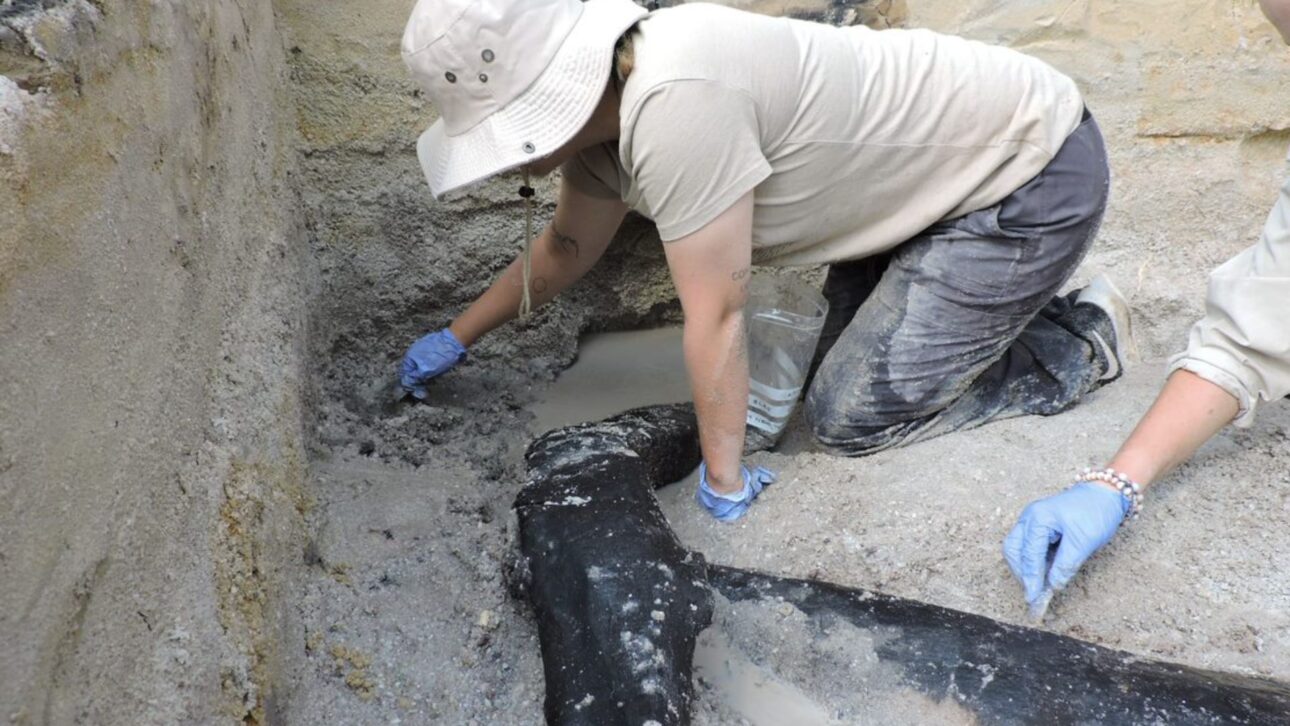
The site had been known for decades for its archaeological importance, but the new excavation elevated this status to another level. According to the team, the combination of favorable geological context and new dating techniques demonstrated that there was not just ancient wood, but an intentionally constructed structure from a much more remote time than previously imagined.
The fitted logs show cutting, scraping, and planning
The central point of the discovery is not just the age of the wood, but the way it was worked. The study describes a clearly intentionally produced cross notch, made so that one log would fit over the other.
The surfaces show signs of cutting and scraping consistent with the use of stone tools, not with natural breakage or random wear.


This detail is what makes the find so important. It is not a piece of wood used by chance, but material modified with a structural purpose. In other words, someone not only cut wood but thought about how two pieces could work together to support some form of simple construction.
The structure predates Homo sapiens and changes the image of early hominins
The minimum age of 476 thousand years places the discovery long before the emergence of our species, generally situated around 300 thousand years ago. This means that another group of hominins, predating Homo sapiens, already mastered sophisticated primitive carpentry techniques enough to produce a combined wood structure.
This point challenges an old image that these groups lived only with simple stone tools and constant movement.
The find suggests the capacity for planning, material selection, technical execution, and intentional transformation of the landscape, which greatly expands the understanding of cognition and technological behavior in much older phases of human evolution.
Luminescence dating pushed the history of construction to nearly half a million years
The wood was not directly dated. The team used luminescence dating on the sediments around the find, a technique that measures when the minerals were last exposed to sunlight. According to the researchers, this method showed that the deposits associated with the structure are at least 476 thousand years old, with a margin compatible with the interval published in the study.
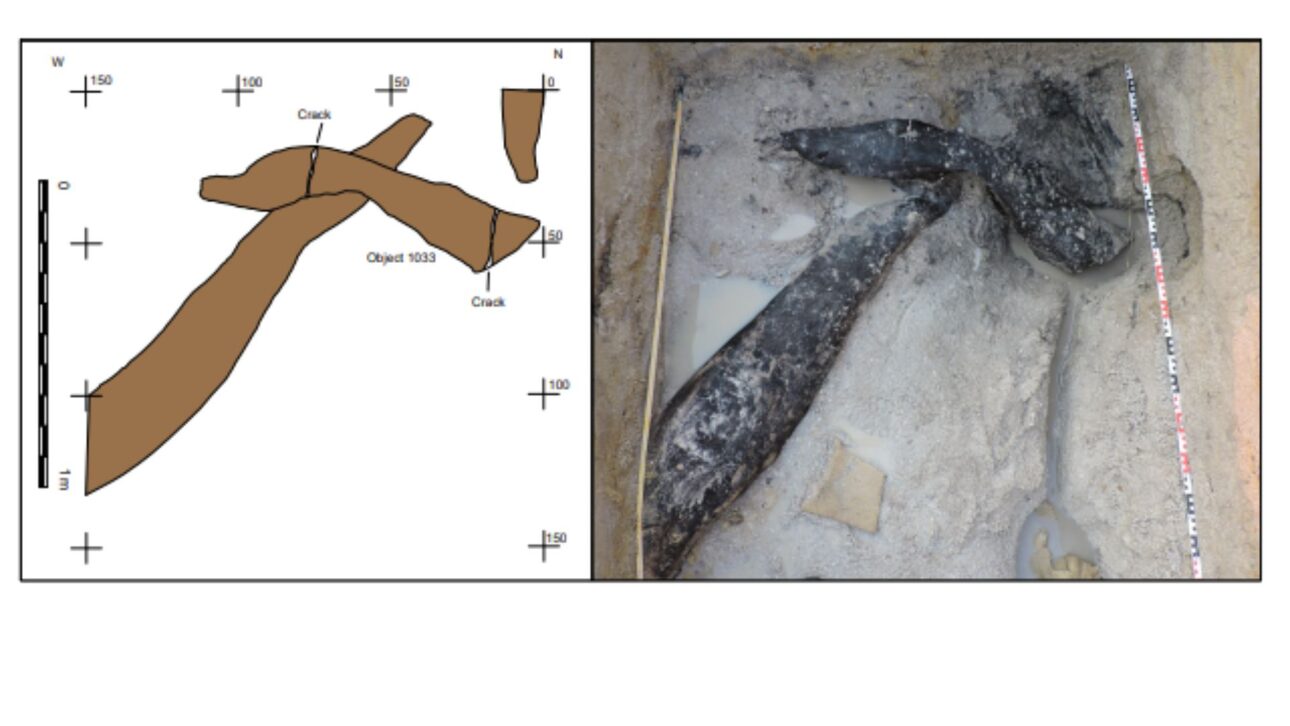
This procedure was decisive because organic materials so ancient exceed the range of methods like carbon-14. Luminescence allowed the discovery to be placed in a period much earlier than what usually appears in finds of worked wood, which turned Kalambo Falls into a world reference for the study of the origins of human construction.
A simple structure, but with enormous impact on the history of human technology
The most impressive aspect of the discovery is precisely the simplicity of the form. There was no complete house, no village, no monument. Two interlocked logs appeared. But this interlock is enough to profoundly alter the chronology of the use of wood as an engineering material.
Until now, most of the debate about very ancient technology revolved around stone tools. Kalambo Falls shows that wood also played a central role, but almost never survived to be found.
This suggests that an important part of the technological history of hominins may have been lost simply because it was made in a material that normally decays.
Before cities and before our species, someone was already building with wood
The strength of the discovery lies in the contrast. Before agriculture, before writing, before the first civilizations and even before Homo sapiens, someone cut logs, made a notch, and assembled a functional structure.

The gesture was simple, but the implication is enormous: the ability to build with intention exists much further back in time than previously thought.
Therefore, the find in Zambia is not just another archaeological curiosity. It pushes the history of human construction back almost half a million years and suggests that our ancient ancestors were already capable of imagining, planning, and assembling structural solutions with materials available in the environment.





Be the first to react!