






 Portuguese
  Spanish
  4 min of reading
  0 comments


See What It’s Like to Live in the Most Technological Cities in the World in 2025, Where Innovation and Science Have Already Defined the Future.
Technology and Innovation Transform Cities and Change the Way of Life in the World
Technology is redefining how people live, work, and connect all over the world. From Shenzhen in China to San Francisco in the United States, innovation is present in every detail of urban life.
The Global Innovation Index 2025 (GII), published by the World Intellectual Property Organization (WIPO), revealed which cities are leading this transformation. The criteria include scientific advancements, research investments, technological adoption, and socioeconomic impact.
Collectively, the top 100 science and innovation hubs account for 70% of the planet’s patents and venture capital, making them the epicenter of the global technological future.
-
Lasers penetrate the dense forest of the Chocó Andino and reveal more than 200 mounds, 100 terraces, and ancient roads in just 600 hectares, suggesting a much larger pre-Hispanic landscape hidden near Quito.

-
Fossils millions of years old reveal that giant capybaras once dominated Chile, a country where the largest rodent on the planet simply no longer exists today.

-
Former coal mining area in the central United States receives nearly 17,000 solar panels generating 9.8 megawatts, serving over 650 subscribers and including about 200 low-income families without installing anything on rooftops.

-
Hidden beneath a small entrance in Namibia’s underground, the largest underground lake in the world is the size of 2 football fields, 264 meters deep, and even has rare animals that survive without sunlight.


Shenzhen, Hong Kong, and Guangzhou: The Heart of Chinese Innovation
Leading the world is the Shenzhen-Hong Kong-Guangzhou hub in China. The country reached the top 10 for the first time, thanks to an increase in the number of patents, the strength of tech companies, and scientific advancement.
In Shenzhen, everything revolves around technology and creativity. The city houses giants like Huawei and Tencent, as well as hundreds of startups that are shaping the country’s digital future.
Resident Jamie River describes the city as “a place where the new and the old mix naturally.” According to him, “nobody is afraid to try new things.”
Moreover, the former fishing village became a global innovation center after the government created the Special Economic Zone in 1980. Today, spaces like OCT Loft and the Shekou Design Society allow anyone to experiment with cutting-edge technologies like virtual reality and 3D printing.
Tokyo and Yokohama: Practical and Human Technology
The second place went to the Tokyo-Yokohama hub in Japan. There, technological advancements are deeply integrated into daily life.
Resident Dana Yao states that the Japanese secret lies in simplicity. “Technology here isn’t a futuristic spectacle, but something useful and human,” she explains.
Smart cards, autonomous trains, and robot-operated hotels are part of the routine. The Henn Na Hotel, for instance, has robotic receptionists and smart rooms that automatically adjust temperature.
Meanwhile, attractions like the teamLab Planets digital museum and the Yurikamome train offer immersive experiences that blend art, mobility, and innovation.
Silicon Valley: The Cradle of Modern Innovation
In the United States, the San José-San Francisco hub, known as Silicon Valley, ranks third. It is the global center of venture capital and technological innovation.
Companies and startups focused on artificial intelligence (AI) and autonomous cars are multiplying rapidly.
For Ritesh Patel, founder of Ticket Fairy, the atmosphere is one of excitement. “It’s like reliving the internet boom. Brilliant people meet and create ideas that change the world,” he states.
There, it is possible to test groundbreaking technologies before they reach the rest of the planet. Services like Uber, Lyft, and Waymo autonomous cars emerged there before conquering the global market.
Beijing: The Balance Between Tradition and High Technology
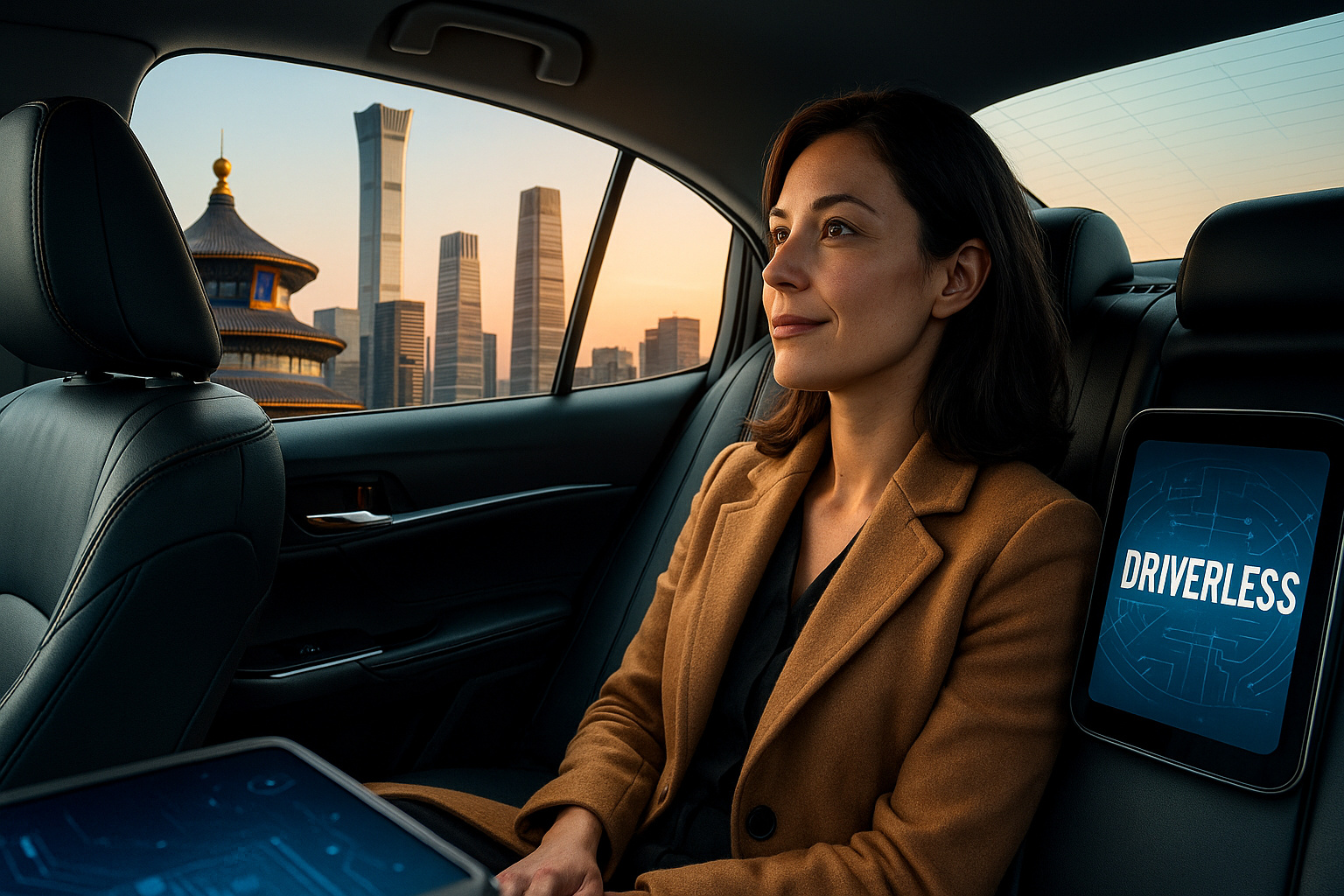
In fourth place, Beijing stands out for combining technological innovation and cultural tradition. The city is a global leader in scientific research and uses artificial intelligence to make daily life simpler and more efficient.
Moreover, apps like WeChat and Alipay centralize almost everything—from payments to translations and quick deliveries. According to futurist Elle Farrell-Kingsley, who lives in the Chinese capital, “Beijing shows that modernity and tradition can coexist in harmony.”
On the other hand, visitors to the city can feel this future up close. The suggestion is to try the Apollo robotaxi from Baidu, a 100% autonomous and steering wheel-less car—one of the most impressive technological experiences in Asia.
Seoul: Innovation Born of Necessity
Closing the top 5 is Seoul, in South Korea. The city is now a symbol of technological innovation and ranks second globally in venture capital.
According to blogger Chris Oberman, who lives there, the secret of the country is simple: “creativity is born out of necessity.” After all, South Korea has few natural resources but a strong desire to innovate and grow.
In Seoul, almost everything is automated. Doors open via digital codes, and mobile payments are the norm. Additionally, cashierless stores operate day and night with AI systems that ensure security.
On the other hand, visitors can experience this technology up close. Just walk along the Cheonggyecheon river, where even electric autonomous buses circulate with futuristic precision and silence.




Be the first to react!