






 Portuguese
  Spanish




Could A Simple Second Be Enough To Cause A Global Catastrophe? Understand What Science Says About One Of The Most Frightening (And Fascinating) Scenarios On Our Planet.
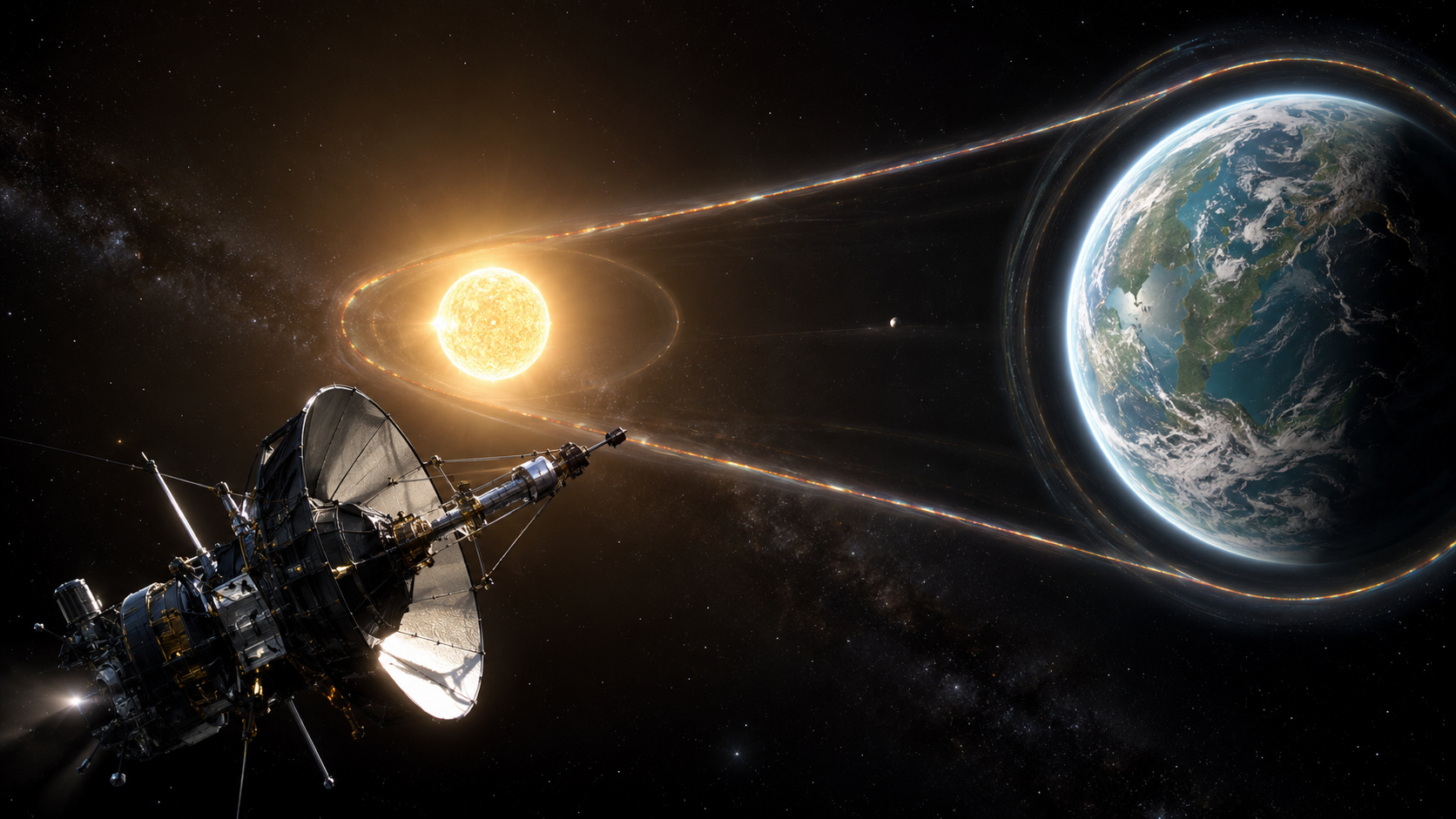
Imagine that, for some unknown reason, the Earth stopped rotating for just one second. It seems like a little, right? But that instant — just one second of pause in the Earth’s rotation — would have catastrophic consequences that would completely change the face of the planet.
This idea may sound like science fiction or a disaster movie script, but it is a good scientific exercise to better understand how the movements of the Earth work and their influence on absolutely everything we know: climate, gravity, tides, tectonic structure… and even our survival.
Next, we will explore what would actually happen if the planet suddenly stopped rotating, even for just 1 second.
-
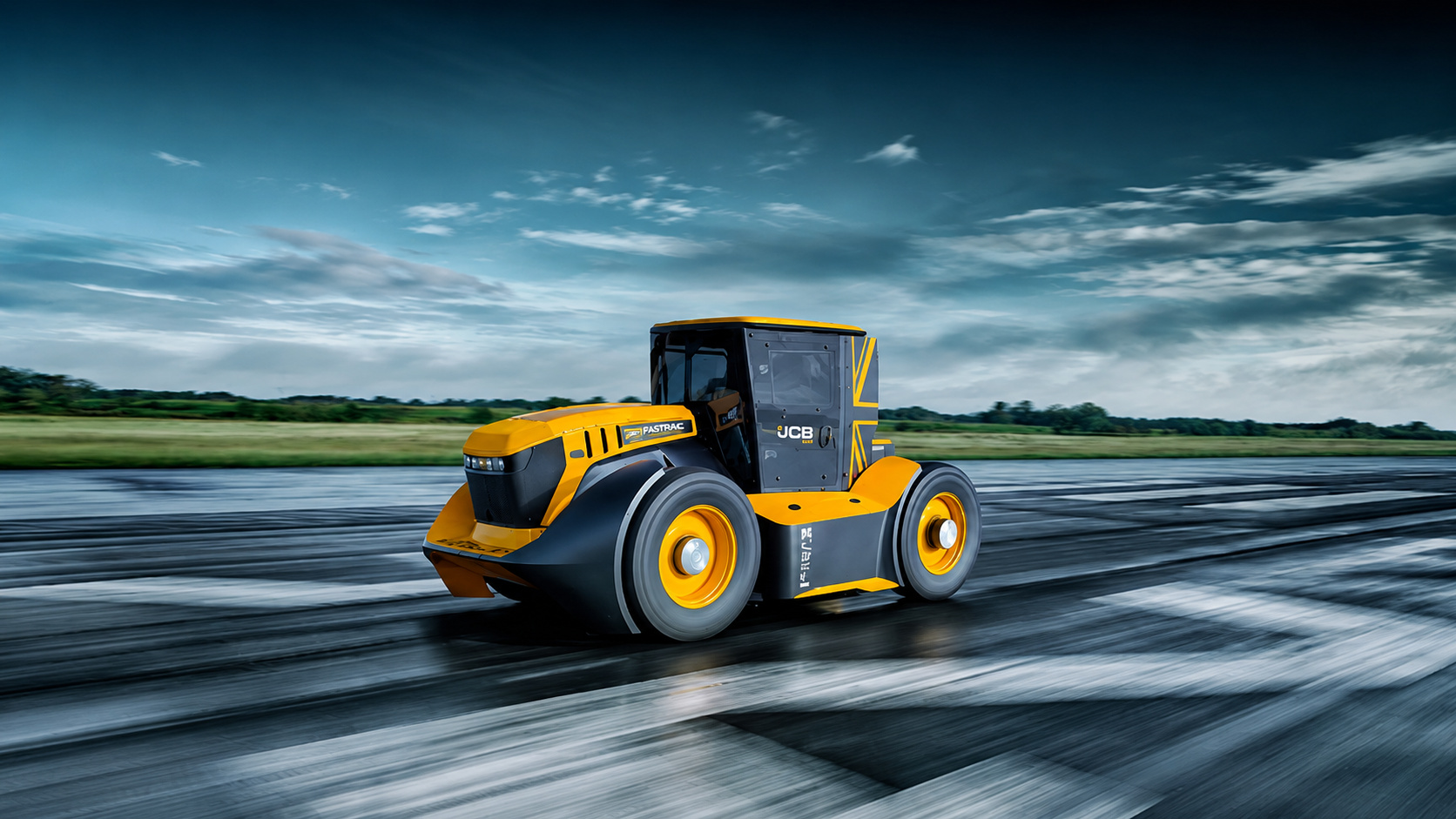
World’s Fastest Tractor, the JCB Fastrac Two, Hits Nearly 247.5 km/h with Over 1,000 Horsepower

-
At 86, mountaineer Carlos Soria becomes the oldest person ever to summit an 8,000-meter peak, reaching the top of Manaslu in Nepal.

-
Brazil Secures Spot in International Mathematical Olympiad as Students Excel in One of the World’s Most Competitive Selections, Highlighting Growth in STEM Education Among Young Talents
-
June 2026 Heatwave in France Depletes “Blanc de Meudon” as Residents Use Chalk Powder to Cool Homes by 3 to 7°C Without Air Conditioning


The Earth Spins… And A Lot!
First of all, it’s necessary to understand the speed of the Earth’s movement. Our planet rotates around its own axis at a speed of approximately 1,670 km/h at the equator. This rotational movement is responsible for days and nights, and for various physical and atmospheric phenomena that occur all over the globe.
This movement is constant. We, human beings, just like the oceans, the atmosphere, and everything on the Earth’s crust, are spinning along with the planet at this speed — but we don’t notice it because everything moves in a synchronized manner.
That’s why, if the Earth suddenly stopped, physics would come into play in a brutal way.
Inertia Would Come Into Play
If you have ever been inside a moving car and it braked suddenly, you know what inertia does to your body: you tend to be thrown forward. The same would happen on a global scale if the Earth suddenly stopped for a second.
All the objects that are not “anchored” to the Earth’s core would continue moving at 1,670 km/h. This includes: people, animals, trees, cars, houses, oceans, and even the atmosphere.
The result? A sort of “tsunami of air and matter.” Buildings would be swept away, continents would suffer huge tremors, oceans would overflow, generating megatsunamis, and the planet would be engulfed in a chain collapse of unimaginable proportions. All that just from one second of interruption in the movement.
Megatsunamis And Continental Destruction
The movement of the oceans follows the rotation of the Earth. If this rotation stopped, the waters of the seas and oceans would continue moving, invading coastal areas with gigantic waves traveling at speeds comparable to meteor impacts. These megatsunamis would sweep entire cities away.
According to physical studies and computational simulations conducted by planetary scientists, the impact of the water could reach hundreds of kilometers inland.
Catastrophic Winds
The Earth’s atmosphere also spins with the planet. If the Earth stopped, the air would continue moving at incredible speeds. According to an analysis published by the magazine Earth Science Researchers, if the Earth suddenly stopped spinning, the atmosphere would continue in motion, creating winds of up to 1,500 km/h that would devastate the surface.²
These winds would tear apart everything in their path, including forests, cities, deserts, and even mountain ranges.
Earthquakes, Volcanoes, And The End Of Tectonics As We Know It
The Earth’s core spins slightly differently than the crust, and the liquid mantle also relies on the rotation to maintain its balance. If the Earth stopped for a second, this delicate relationship between geological layers would be brutally broken.
This would cause a global seismic wave. Massive earthquakes would spread across all tectonic plates, activating dormant geological faults and even supervolcanoes. The Earth’s crust could literally “tear” in several regions.
Would The Earth Start Spinning Again?
If the Earth stopped for a second and then resumed its movement, the damage would already be done. But, hypothetically, making the planet “start spinning again” would entail breaking fundamental laws of physics, because there is no known force that could decelerate and accelerate a body the size of the Earth in such a short time.
The most likely scenario is that if the planet did indeed stop, it would remain that way — without rotation, which would bring additional long-term consequences.
And What About Day And Night?
Without rotation, the Earth would cease to have days and nights as we know them. One side of the planet would be constantly facing the Sun, experiencing intense heat, while the other would be in total darkness, with below-freezing temperatures.
Life, as we know it, would become unviable in much of the globe. Plants would cease to photosynthesize, the climate would collapse, and biodiversity would suffer a mass extinction.
Can This Really Happen?
The short answer: no — at least, not naturally.
According to NASA and current geophysical studies, the Earth’s rotation is indeed slowing down gradually, but at a very small rate: about 1.7 milliseconds per century.
This occurs due to gravitational interaction with the Moon and the distribution of internal masses within the planet. This process is so slow that it would take billions of years to stop completely — and, even then, it would be gradual, without catastrophe.
Therefore, a scenario in which the Earth suddenly stops spinning is purely theoretical — but very useful for understanding the complexity and fragility of our planet.
The Planet Is In Fragile Balance
The Earth, although immense and seemingly solid, depends on an extremely sensitive dynamic balance. Its rotational movement is a vital component for maintaining life as we know it.
Imagining the Earth stopping for just 1 second may seem like an exaggeration, but it reveals how much we depend on invisible forces that work all the time, silently.
The good news? Scientists are alert and constantly monitoring all geological and astronomical phenomena that involve our planet. And for now, the Earth’s rotation continues — stable, constant, and crucial.





Impressionante, assustador.