Portuguese
  Spanish


Long stays in microgravity can make feet more sensitive, alter balance, and make walking difficult in the first days back on Earth. Astronauts’ reports and NASA data show how subtle body changes impact the planning of missions to Mars.
Astronauts subjected to long periods in microgravity may return to Earth with more sensitive feet, loss of calluses on the soles and initial difficulty walking, a little-remembered adaptation that helps explain the physical challenges of prolonged space missions.
Outside Earth’s gravity, the continuous pressure of the body against the ground ceases to exist, while locomotion on the International Space Station relies on supports, bars, and internal structures used for movement in a floating environment.
Astronaut Scott Kelly, from NASA, reported in a public Q&A session that the calluses on the feet “eventually fall off” in space, leaving the sole very soft, while the upper part becomes rougher due to the use of support rails.
-
Ghanaian Teen Builds Sports Car from Scrap Metal, Drawing Comparisons to Elon Musk Before Finishing School

-
Golden Lion Tamarin: 8 Fascinating Facts About the Resilient Primate of Brazil’s Atlantic Forest

-
Kenyan Engineer Converts River Plastic Waste into Fuel for Daily Use
-
Brazilian State Sets Example by Replacing Asphalt with Concrete Roads, Offering Durability Over 40 Years in Challenging Mountain Terrain




Although it seems like an isolated curiosity, the phenomenon shows how the human body reorganizes when basic tasks are no longer performed under the action of gravity, such as standing, supporting one’s own weight, walking in a straight line, or changing direction.
Why feet change in space
On Earth, the skin of the sole thickens in response to friction and mechanical load from routine activities, whether during a regular walk, a run, climbing stairs, or simply standing still for a few minutes.
During the stay in orbit, this stimulus practically disappears, because astronauts do not walk as they would on Earth and start to propel their bodies with their hands, secure their feet in supports, or float between station modules.
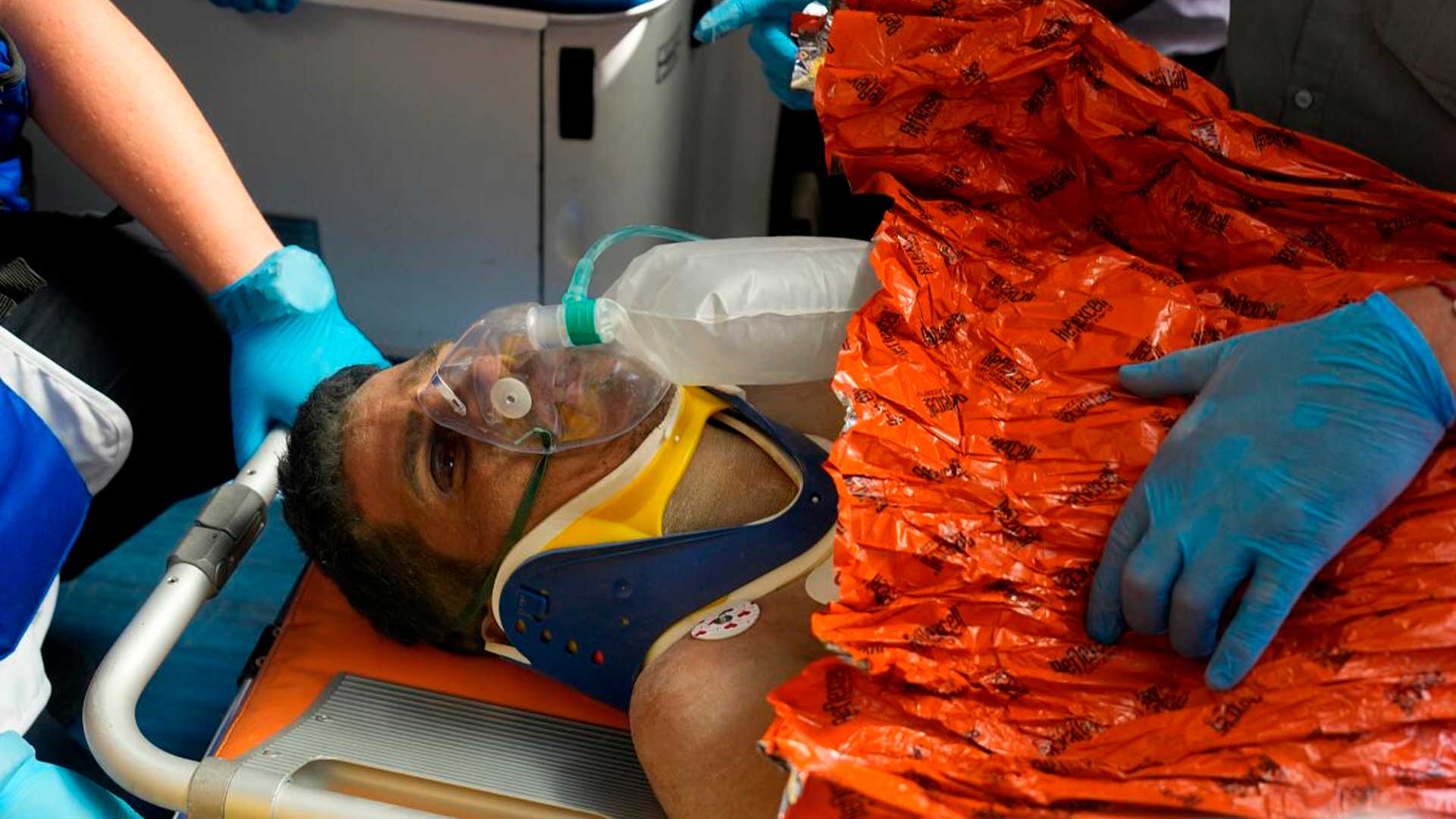
Upon return, gravity demands immediate support again, and regions that were less stressed for months need to quickly reassume an essential function for locomotion, stability, and body perception.
This readaptation is not limited to the skin of the feet, as muscles, bones, circulation, and balance also undergo adjustments during spaceflight and require medical and physical follow-up after landing.
Readaptation to gravity after space missions
According to the NASA, astronauts can lose muscle mass more quickly in microgravity when they do not follow an adequate diet and exercise routine, in addition to suffering a reduction in bone mineral density during prolonged space missions.
The agency also reports that body fluids shift towards the head in this environment, a change that can affect the eyes and require countermeasures to reduce health risks during and after the flight.
For this reason, returning to Earth is often treated as a stage of the mission, and not as a detail after landing, as the body needs to recombine information from the feet, muscles, vision, and inner ear.
Sensation of heavy legs, initial difficulty walking, and instability when standing are part of a broader picture of physical reconditioning, especially after long stays in low orbit.
Even with training equipment on the International Space Station, the absence of natural load on the body is not completely replaced, because the organism continues to respond to an environment very different from the one in which it evolved.
The physical challenge of trips to Mars
The discussion takes on another dimension when it leaves Earth’s orbit and involves trips to Mars, where astronauts could arrive after months in transit and need to perform complex tasks shortly after arrival.
Kelly presented his long-duration mission on the International Space Station as a stage linked to future missions to Mars and beyond, reinforcing that studying the effects of staying in space is part of the preparation for more distant explorations.
Even though Martian gravity is less than Earth’s, it requires support, movement, posture control, use of suits, operation of tools, and response to unforeseen events in an environment without a medical structure comparable to Earth’s.
With foot pain, sensitivity on the sole, loss of balance, or decreased muscle performance, an astronaut would have less margin for error during critical activities, especially on a mission without quick return and without an external team to take over essential functions.
Microgravity affects more than muscles and bones
The exercise routine helps reduce some of the physical damage, but it does not eliminate all the effects of microgravity, as the body economizes on structures and responses that are no longer used with the same intensity for months.
In this context, the loss of calluses functions as a visible sign of a larger transformation, as it shows that even a simple skin adaptation depends directly on continuous contact with the ground and the need to support weight.
A similar reasoning applies to less apparent systems, such as deep muscles, balance mechanisms, and cardiovascular response, which also need to resume functioning in an environment where each movement regains direction, weight, and resistance.
Space exploration is often associated with rockets, heat shields, capsules, and navigation systems, but the feasibility of a manned mission also depends on the ability to keep people fit to walk, work, and react upon reaching the destination.
When a simple walk once again requires effort, balance, and pain tolerance after months in orbit, the question for future missions becomes inevitable: how to prepare astronauts to step on Mars and work safely right after such a long journey?