Portuguese
  Spanish





Planet 34 light-years away with magma ocean, toxic atmosphere, and extreme heat redefines what science understands about rocky worlds.
In 2026, an international study published on March 16, 2026 in the journal Nature Astronomy revealed one of the most extreme planetary environments ever described outside the Solar System. The exoplanet L 98-59 d, located about 34 light-years from Earth in the constellation Volans, was interpreted by researchers as a world marked by a permanent ocean of magma and an atmosphere rich in sulfur compounds. The discovery was also detailed in a report by Reuters, published on March 16, 2026, based on results obtained from observations by the James Webb Space Telescope and ground-based telescopes combined with physical models of planetary evolution.
The study indicates that the planet has temperatures above 1,500°C, a level sufficient to keep rocks in a liquid state, and suggests that its atmosphere contains sulfur gases such as hydrogen sulfide and sulfur dioxide, reinforcing the image of a chemically aggressive environment with no known equivalent in the Solar System. Instead of a conventional rocky planet, the authors describe a body with a largely molten interior, without a clear separation between crust and mantle as occurs on Earth.
The most relevant finding of the discovery is that L 98-59 d combines relative astronomical proximity with extreme physical conditions, allowing for a much more detailed scientific reconstruction of its history and composition. For researchers, the planet may represent a new class of volcanic and sulfur-rich world, expanding what is currently known about the limits of planetary formation and evolution.
-
Scientists Convert Food Waste into Aviation Fuel, Successfully Test 50% Blend with Conventional Kerosene to Cut Emissions and Promote Sustainable Flights

-
OnePlus N6 Smartphone to Launch in India with 8,000mAh Battery and 45W SuperVOOC Charging, Lasting Up to Three Days
-
Scientists Plan to Release Air Bubbles Underwater to Protect Antarctica’s “Doomsday Glacier” from Melting

-
Chinese R6000 Drone Combines Airplane and Helicopter Features, Carries Up to 12 People for Multiple Missions



Proximity of the L 98-59 system turns the planet into a natural laboratory for science
The stellar system L 98-59 was already known to host multiple rocky planets, but what differentiates this set is its relatively close position to Earth. In astronomical terms, a distance of 34 light-years is considered short, allowing modern instruments to extract a much more detailed amount of data than would be possible in more distant systems.
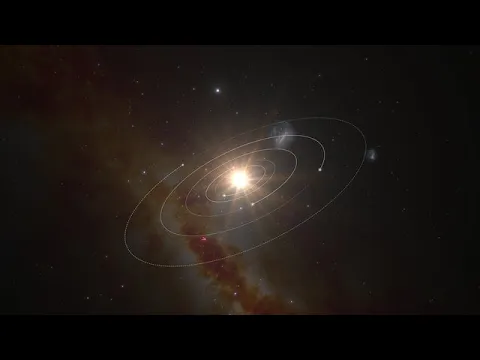

This proximity means that the light analyzed by telescopes contains clearer signals from the planet’s atmosphere, enabling more reliable inferences about its chemical composition and physical conditions. This factor turns the planet into one of the most valuable targets for studies on extreme worlds.
The closer the system, the less interference and greater data accuracy, placing L 98-59 d in a strategic position for modern astronomy.
Global magma ocean indicates a planet without a stable solid surface
The most striking feature of the planet is the presence of a global magma ocean, meaning its surface does not have continents, solid crust, or any type of geological stability as observed on Earth.
This phenomenon occurs when the amount of energy received from the host star is so intense that it prevents the solidification of the surface. The constant heat keeps the minerals in a molten state, creating a liquid rock layer that covers almost the entire planet.

This type of environment represents an extreme stage of rocky planet evolution, where thermal equilibrium never allows the formation of stable geological structures.
Moreover, the presence of large-scale magma suggests intense internal activity, possibly with continuous convective movements that transport heat from the interior to the surface.
Temperatures above 1,500°C place the planet in an extreme physical regime
Thermal estimates indicate that the surface of L 98-59 d operates above 1,500°C, a value that exceeds the melting point of most known minerals. Practically, this means that the entire planet functions as a gigantic active geological mass, where the distinction between surface and interior becomes diffuse.
This temperature level is much higher than that found on Earth, even in intense volcanic regions. The direct consequence is an environment where any solid structure is quickly melted, preventing the formation of traditional geological features.
This extreme thermal regime completely alters the planet’s dynamics, influencing not only the surface but also the atmosphere and the chemical processes occurring around it.
Sulfur-rich atmosphere reveals an aggressive and continuous chemical cycle
The analysis of the planet’s atmosphere revealed the presence of sulfur-rich compounds, including hydrogen sulfide, a gas known for its toxicity in terrestrial environments. In the context of L 98-59 d, these gases are likely continuously released from the magma, creating a dynamic chemical cycle between the surface and the atmosphere.

This type of environment suggests that the planet has a system in which materials evaporate from the surface at high temperatures, rise to the atmosphere, and, in some cases, may recombine or precipitate again. This process creates a kind of unique “geological-atmospheric cycle,” where rocks and gases interact constantly.
The atmosphere is not static, but rather continuously fed by internal processes, reinforcing the idea of a highly active planet in constant transformation.
Internal structure may be dominated by heat and absence of defined solid crust
Theoretical models indicate that the absence of a well-defined solid crust may mean that the planet has a more gradual transition between surface and interior. Instead of well-separated layers, as occurs on Earth, L 98-59 d may present a structure where magma extends deeply, creating a continuous zone of partially melted material.
This type of configuration raises important questions about heat dissipation, core formation, and the structural stability of the planet over time.
This data is essential for revising planetary formation models, especially for bodies that orbit very close to their stars.
Discovery expands the known limits of planetary diversity
The identification of a planet with these characteristics reinforces a trend already observed by modern astronomy: the universe hosts a diversity of worlds much greater than previously imagined.
Before the discovery of exoplanets, models were based exclusively on the Solar System. Today, with thousands of worlds identified, scenarios arise that include everything from extremely hot gas giants to rocky planets covered in magma.
L 98-59 d represents one of the extremes of this diversity, helping to expand the limits of what science considers possible.
Modern observation techniques allow identification of atmospheric composition from a distance
The ability to identify gases such as hydrogen sulfide on a distant planet is a direct result of technological advances in astronomy. Spectroscopy allows for the analysis of light that passes through the planet’s atmosphere and identifies specific patterns associated with different chemical elements.
This type of analysis requires extreme precision and depends on highly sensitive equipment capable of detecting minimal variations in light. Without these technologies, it would be impossible to obtain this level of detail about a planet outside the Solar System.
Extreme environment reinforces limits of habitability in the universe
Although the discovery does not indicate any possibility of life on L 98-59 d, it is fundamental to defining the limits of habitability. By studying extreme environments, scientists can better understand which conditions are incompatible with life and which could, in theory, allow for its existence.

In this case, factors such as extreme temperature, absence of stable liquid water, and toxic atmosphere make the planet completely inhospitable.
This type of analysis helps refine the search for potentially habitable worlds by establishing more precise criteria.
System should continue to be studied with next-generation telescopes
The proximity of the L 98-59 system makes it a priority target for future missions and observations with more advanced telescopes, such as the next-generation ones that are still under development.
These instruments will deepen the knowledge about:
- Detailed composition of the atmosphere
- Thermal variations over time
- Possible interactions between the planets of the system
The trend is that new information will continue to emerge, further refining what is already known about this extreme world.
Discovery shows that the universe still holds scenarios beyond human imagination
The existence of a planet with magma oceans and a toxic atmosphere relatively close to Earth reinforces one of the most consistent conclusions of modern astronomy: the universe is much more diverse and extreme than initial models suggested.
Each new discovery expands the understanding of how planets form, evolve, and interact with their environments. L 98-59 d is not just an isolated case, but part of a growing body of evidence that radically different worlds from Earth are common in the cosmos.