





 Portuguese
  English
  Spanish
  3 min of reading
  0 comments


Scientists Believe They Have Found a Planet Covered by Intense Volcanic Activity. This Discovery Could Reveal New Secrets About Planetary Formation and the Extremes of the Universe. Learn More About This Hellish World!
NASA astronomers and partner institutions have identified a planet that may be the most volcanic ever recorded. L 98-59 b, located 35 light-years from Earth, exhibits constant and intense eruptions, a phenomenon unprecedented among known exoplanets.
This discovery challenges concepts about the formation and sustenance of atmospheres on planets so close to their stars.
A World in Constant Explosion
L 98-59 b orbits its red dwarf star every 2.25 days, a proximity that, in theory, should have dissipated its atmosphere long ago.
-
Curious teenagers enter the underground of a school near the Colosseum and discover a 1,800-year-old Roman house hidden beneath the school.

-
James Webb Telescope reveals a “dormant” black hole with a mass equivalent to 6 billion suns, which is more than 10 billion light-years from Earth and may help explain the evolution of the Universe’s first galaxies.

-
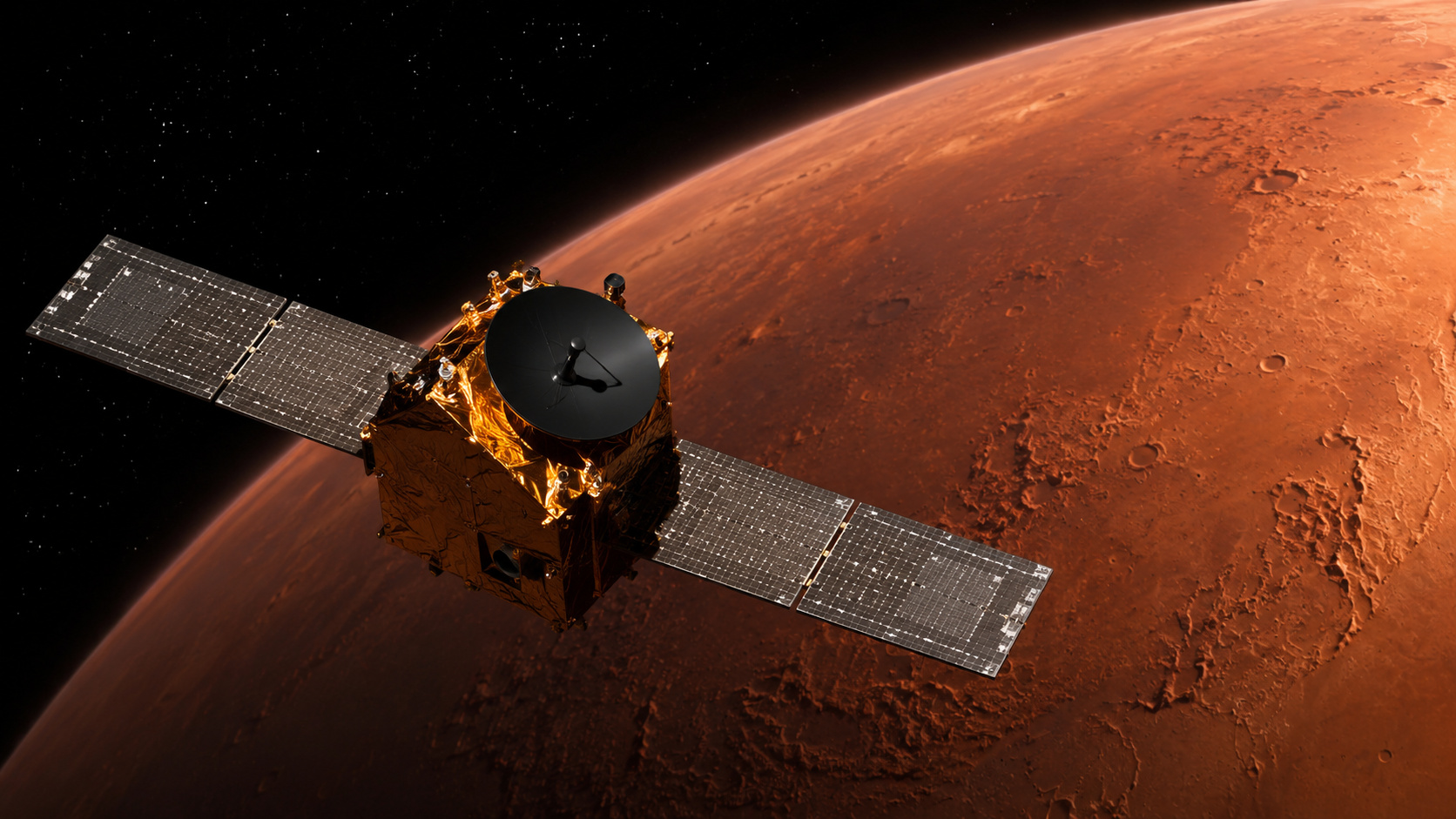
Russia saw sanctions close doors on orbital cooperation, but the most unlikely detail came from the Gulf: the United Arab Emirates had no space program in 2014, created the Hope mission from scratch in six years, reached Mars’ orbit, and became the first Arab interplanetary probe.

-
Venezuela has 303 billion barrels of oil, but its production is five times lower than Brazil’s due to technical obstacles.



However, data from the James Webb Space Telescope revealed the presence of sulfur dioxide in its atmosphere, a clear indication of intense volcanic activity.
On Earth and Jupiter’s moon Io, this gas is one of the main indicators of volcanism. With this, scientists speculate that L 98-59 b is a world in constant geological reshaping, with frequent eruptions renewing its surface incessantly.
Additionally, the planet may feature landscapes of molten lava and continually transforming volcanic mountains, making it one of the most fascinating objects ever studied in astronomy.
The Effect of Gravitational Tides
Just as Io experiences intense gravitational stretching due to interactions with Jupiter and other moons, L 98-59 b may be undergoing a similar process.
The proximity to its star and the gravitational influence of neighboring planets could be generating extreme internal heat. This heat would maintain its volcanic activity in an uninterrupted cycle of eruptions and gas release.
This phenomenon, known as tidal heating, could result in vast underground lava oceans, which emerge to the surface in violent explosions. If this hypothesis is confirmed, L 98-59 b could provide valuable information about the geology of worlds outside the Solar System.
A Small but Innovative Planet
Although smaller than Earth, L 98-59 b may be the first exoplanet of reduced dimensions to exhibit clear signs of an atmosphere.
This challenges previous models suggesting that small rocky planets close to active stars would quickly lose any gaseous layer. The hypothesis raised by scientists is that, instead of maintaining a stable atmosphere, this planet continuously renews it through incessant volcanism.
This opens new possibilities for the study of planetary evolution and the search for habitable worlds, as it suggests that atmospheres may be more resilient than previously thought.
Despite the evidence obtained by the JWST, more observations are needed to confirm the volcanic nature of L 98-59 b. Future research will seek other gases and thermal signatures that may indicate magma just below the surface.
These investigations could redefine our understanding of atmospheres and geological processes in exoplanets. More in-depth studies may even allow for the creation of detailed models about the geological behavior of extremely volcanic worlds.
With information from ZM.








-

1 person reacted to this.