Portuguese
  Spanish


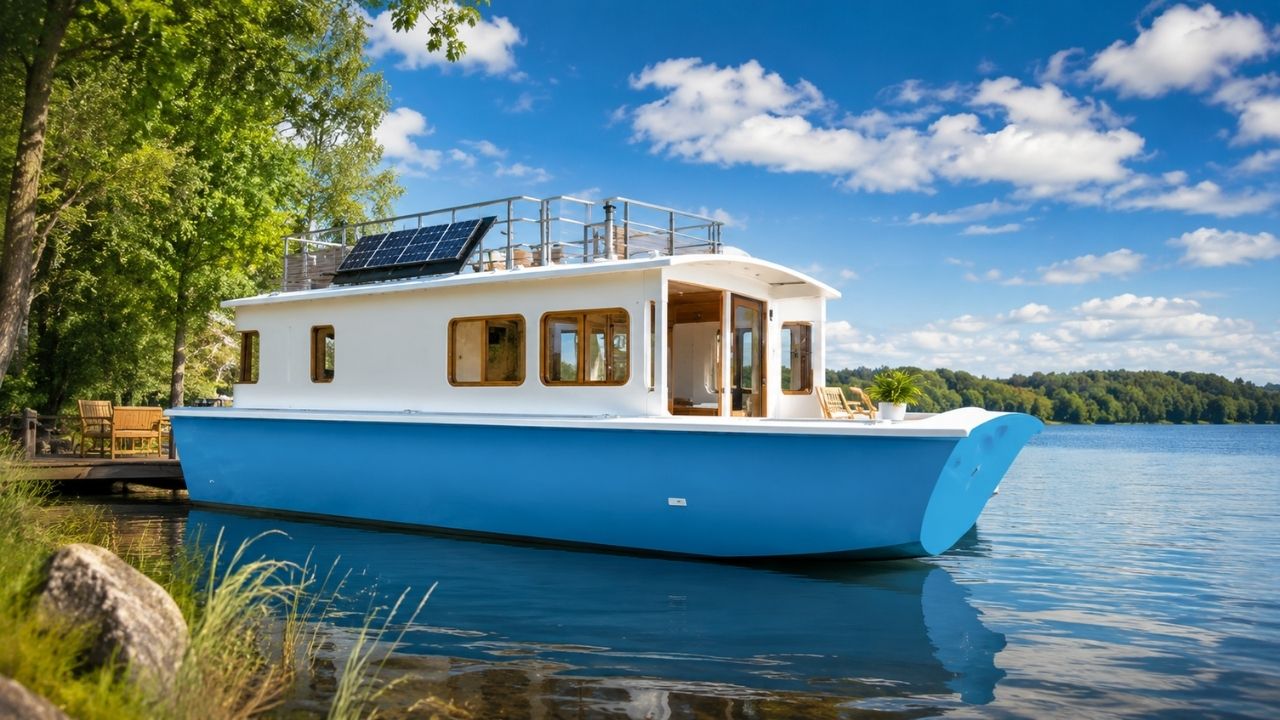

Documented by the channel LiveDontWatch, in the project GT27 Houseboat, and republished by Machine Stage in May 2026, Wesley built a floating wooden house for the family. Amid sanding, fairing, and several coats of epoxy, he faced heat, cold, and lack of shelter until the boat became a home.
A builder identified as Wesley decided to build with his own hands the house in which the family would live, and this house floats. Instead of buying a ready-made boat or hiring a shipyard, he built from scratch a floating wooden house, sanded, sealed with epoxy, and finished with paint, transforming loose pieces into a habitable vessel.
The process was documented in a series by the channel LiveDontWatch, on YouTube, in the project named GT27 Houseboat, and gained new reach when republished by the channel Machine Stage, in a video on May 19, 2026. From the series’ images, the construction appears to have taken place in the United States, in a residential area, with the vessel later transported on a trailer, although the channel does not publicly disclose the exact city where Wesley worked.
Wood and epoxy: the true foundation of the floating house
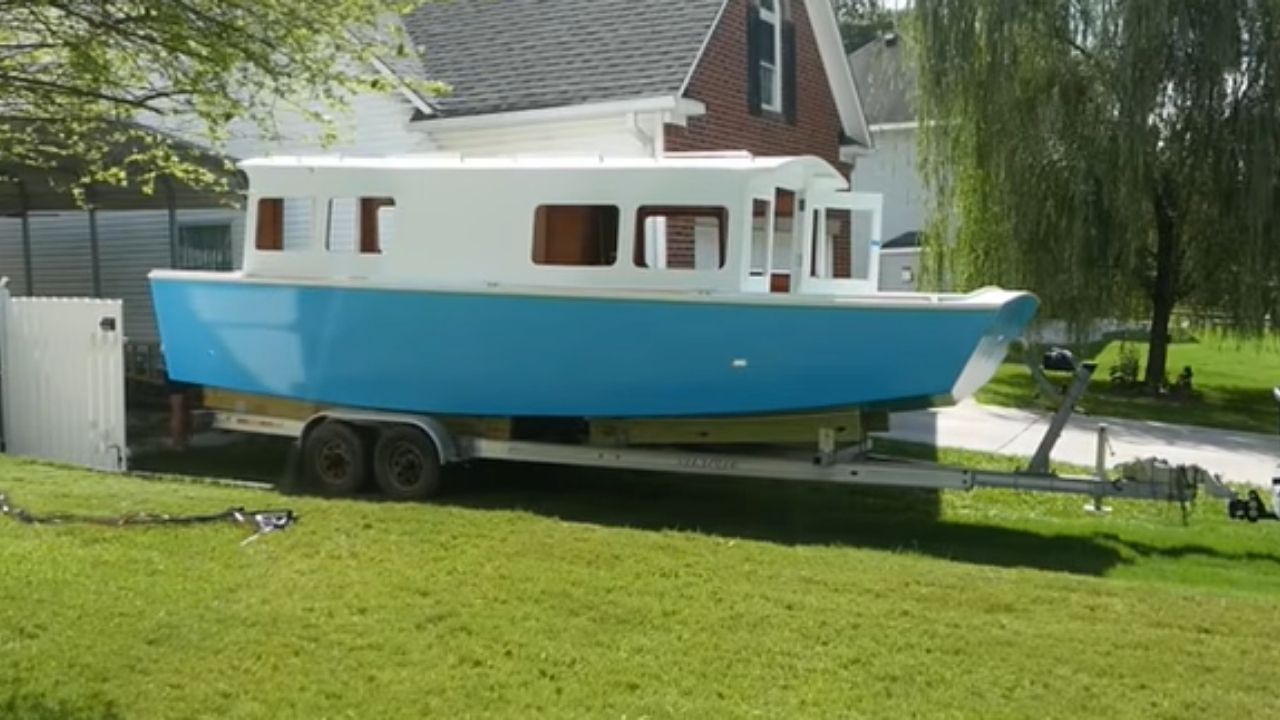
Contrary to what some republished versions suggested, what the original series shows is not a metal hull, but a wooden construction. The backbone of the work is the trio of sanding, fairing, and epoxy, with all bare wood surfaces receiving three coats of the material, as well as doors and hatches, sealed in the same way to resist moisture.
-
While the World Opens New Airports and High-Speed Trains, Brazil Rushes to Complete Projects Stalled for 40 Years

-
Brazil Invests in Massive Waterway to Transport Soybeans by Barge, Reducing Costly Truck Reliance
-
Bridge Rebuilt in Just One Year Reconnects Two Brazilian States
-
Custom Furniture Costs in Brazil Expected to Range from $350 to Over $1,450 per Square Meter by 2026, with Kitchens, Closets, and Laundries Highlighting the Impact of Premium Features


This attention to sealing appears as one of the most labor-intensive stages of the entire work. The bunks, for example, were reinforced to support weight and shaped with curves and bevels to fit the hull’s shape. In a floating house, it is this type of hidden detail that, according to what the videos document, usually determines if the vessel will last, not the visible finish.
A work dictated by the seasons
One aspect that the original record makes very clear is how much the climate dictated the pace. At the height of summer heat, it was too hot to work on the boat, so sanding and hull work were done in the shade, and smaller parts, like the cockpit, took shape in the workshop.
In winter, the situation was reversed. Without shelter over the vessel and sanding with cold water, Wesley was forced to halt work for part of the season, resuming when the weather warmed up. This alternation, repeated over several seasons, helps explain why a houseboat made by one person takes so long to materialize.
The nautical details that make the boat work
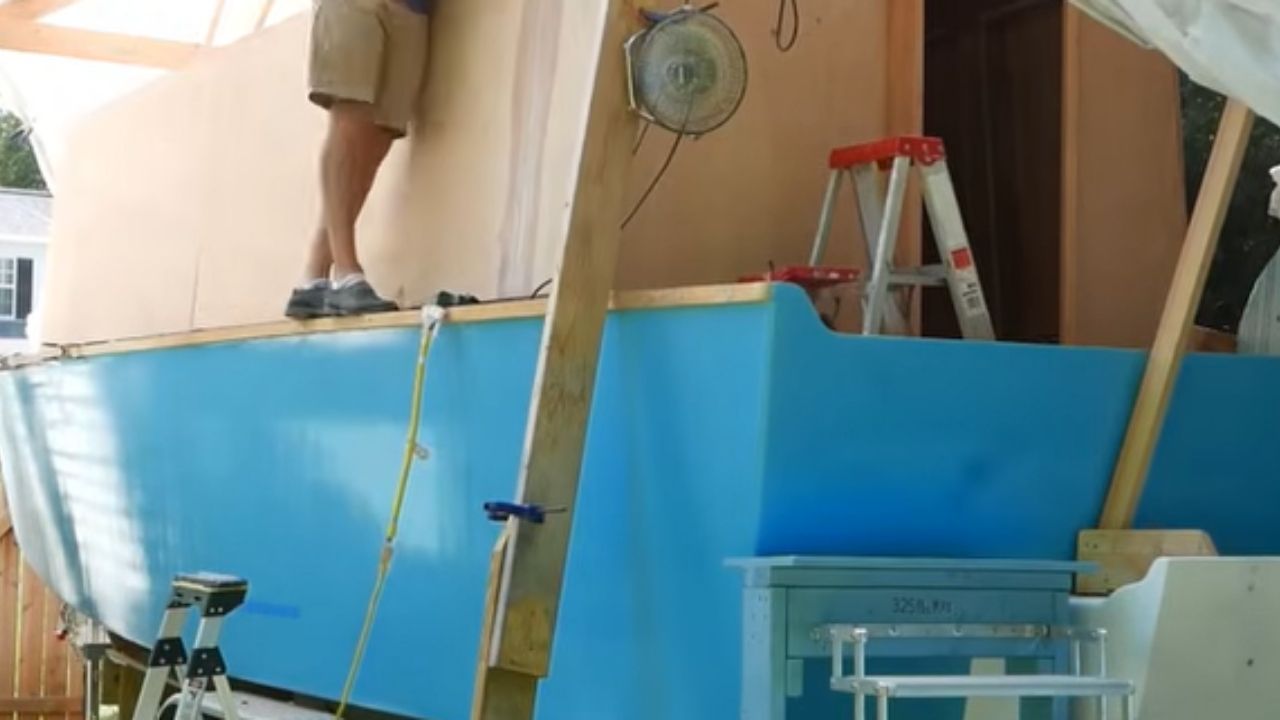
As the structure advanced, the items that differentiate a boat from a simple wooden box were added. The cockpit rails were sealed with epoxy and installed, along with the gables, and the holes for the hardware were carefully drilled. Each door and hatch went through the three coats of protection again.
Then came the accessories for real use on the water. Wesley installed a boarding ladder, a power base at the bow to power the navigation light, side chocks to pass the mooring lines to the central cleat and tie the anchor, as well as a keyed security lock on the wall, a solution adopted because the rear structure was narrow. These choices show that the houseboat was designed to navigate, not just to float stationary.
Painting and the interior that transforms the boat into a home


The final stretch of the exterior involved protection and aesthetics. The surfaces received primer and paint on the upper sides, and the hull also got a new coat, visually completing the exterior. With that done, the builder’s attention turned to the interior space, a stage where the boat stops being a structure and starts becoming a home.
From there, according to the series documentation, the interior was clad in wood, with partitions, living areas, and wide openings for light entry. This wood finish is what gives the houseboat the cozy and modern look that has drawn comparisons to an architect’s design, even though some of these details appear more prominently in republished versions than in the original technical record.
What This Project Shows for Those Who Dream of Building

Projects like this have existed for decades in communities of independent builders around the world, but they are rarely documented with this level of detail and visual progression. Seeing each phase, from the raw skeleton to the final finish, helps to take an idea that is usually daunting due to its complexity out of the abstract. The material released does not present Wesley as a naval engineer or professional carpenter; what is recorded is work done in stages, with patience and respect for the time each one takes.
Regarding the cost, caution is advised: the range of R$ 50,000 mentioned comes from the republished version of the video, not from a detailed budget by the builder himself. Even so, the essence of Wesley’s floating house remains a concrete argument that, with planning and dedication, it is possible to tackle a large project without professional structure behind it.
Now it’s your turn. Would you have the patience to undertake such a project over several years, facing heat, cold, and rework? What impresses you the most: the wooden construction, the nautical details, or the stubbornness not to give up? Comment below with your opinion, tell us if you’ve ever dreamed of building something big with your own hands, and share this article with those who love unconventional projects.