Portuguese
  Spanish


Discovery under the Liceo Scientifico Cavour revealed remains of a 1,800-year-old Roman domus, with frescoes, mosaic, and possible connection with an area occupied by the elite near the Colosseum
A Roman house about 1,800 years old was identified under the Liceo Scientifico Cavour, a high school in Rome located a few steps from the Colosseum. The discovery emerged after students found bricks and arches in the school’s underground areas and alerted teachers, who called archaeologists to validate the structures.
Roman house found under high school in Rome
The find occurred in an area that, for years, fueled stories among students about mysterious structures hidden in the school’s underground parts, including under the gym floor.
The explorations made by students led to the identification of ancient elements different from the school construction.
-
Former Merchant Marine Captain Invents Fuel-Free Barrier, Removes 20,000 Tons of Trash from Chennai Rivers

-
14-Year-Old Maxim Harris Turns School Project into Anti-Rage Gaming Accessory, Sells 1,000 Units Across 46 U.S. States, Donates 20% of Profits to Charity
-
Brazilian Health Agency Approves First Oral Medication for Cancer Patients
-
11-Year-Old Boy and His Mother Discover 1.8-Million-Year-Old Elephant Tooth on English Beach Eroded by the Sea





After notifying the teachers, archaeologists were called to analyze the site. The evaluation confirmed that the structures belong to a domus, a type of large Roman residence associated with families of greater economic power.
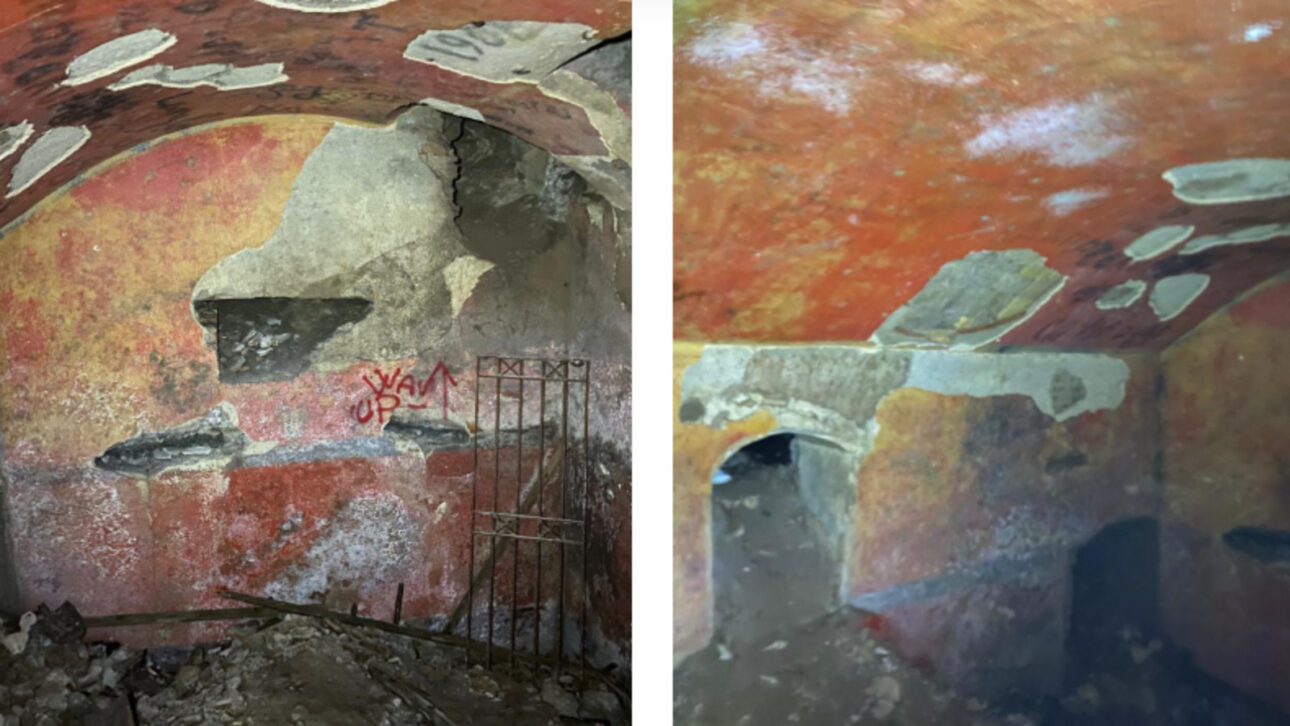
Structure located in area linked to Roman elite
The building housing the Liceo Scientifico Cavour originates from the 19th century, when Catholic missionaries built the structure later used by the school.
Upon transfer of ownership, there was no known record of Roman constructions under the property.
The excavations revealed parts of the so-called Domus Liceo Cavour. According to archaeologists, the residence was part of a historically significant neighborhood, occupied by members of the Roman upper class.
Given the area’s profile, the base material suggests that historical figures such as Cicero, Pompey, and Octavian, the future Emperor Augustus Caesar, may have passed through the region.
The structures, however, have difficult access due to later constructions built over the ancient remains.
Frescoes, mosaic, and graffiti appeared in the excavations
The investigation of the Roman house began at the start of the year, but the discovery was widely publicized on May 28 by Professor Claudia Marino and archaeologist Filippo Coarelli from the University of Perugia.
So far, researchers associate the residence with the 2nd century and point to the possibility that it belonged to the Umbrius family.
The base material informs that little is known about this family, but there are theories that its origin was in central-southern Italy.
According to Live Science, the interior of the domus preserves figurative and floral frescoes on the walls and along the ceiling vaults.
A mosaic with large irregularly shaped tiles was also found, described as part of a luxurious pattern of the time.
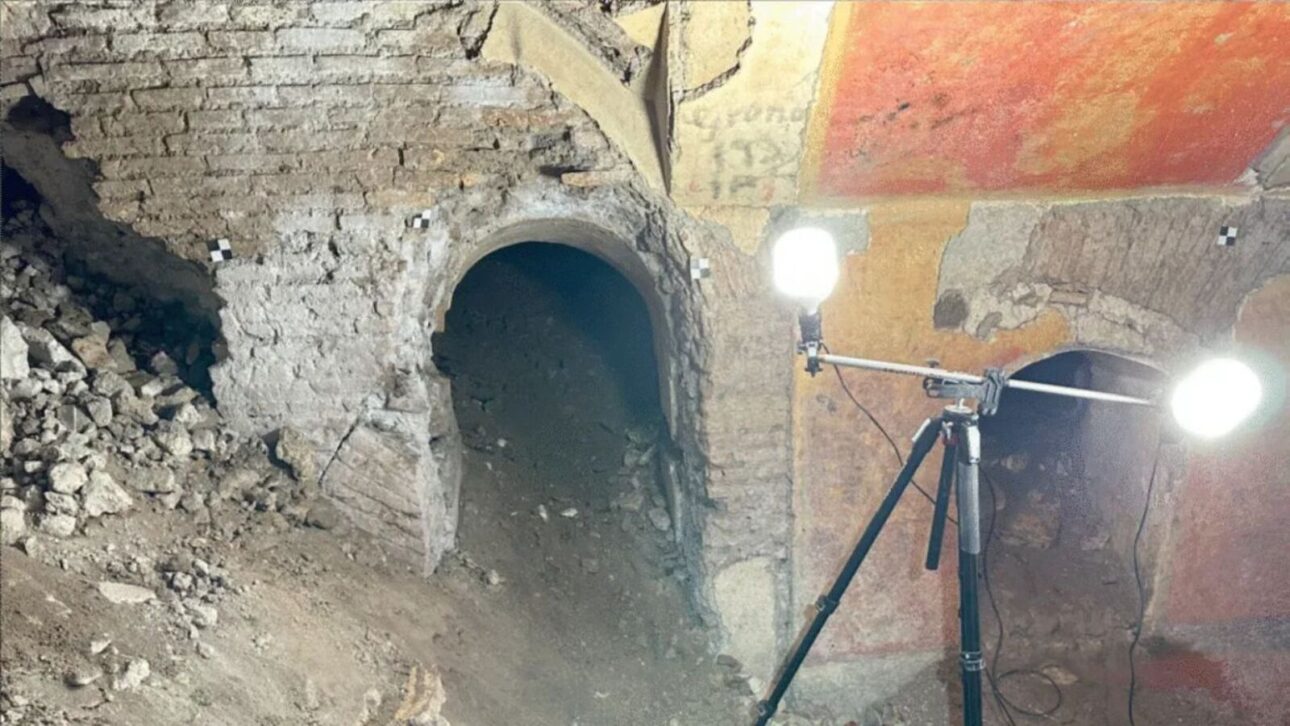
(Image credit: Cantieri Narranti/Special Superintendency of Rome)
School plans to continue research and organize visits
In addition to the Roman elements, archaeologists identified graffiti made by students, tourists, and other underground explorers in the 20th century.
The finding indicates that part of the structures had already been accessed before, although it had not been formally reported to the authorities.
Only part of the Roman house has been explored so far. Given the size of the site, the school in Rome plans to continue the research and organize exhibitions, with students acting as tour guides in the space.
This article was prepared based on information from the provided base material and Live Science, with data, numbers, and statements preserved as per the consulted material.