






 Portuguese
  Spanish


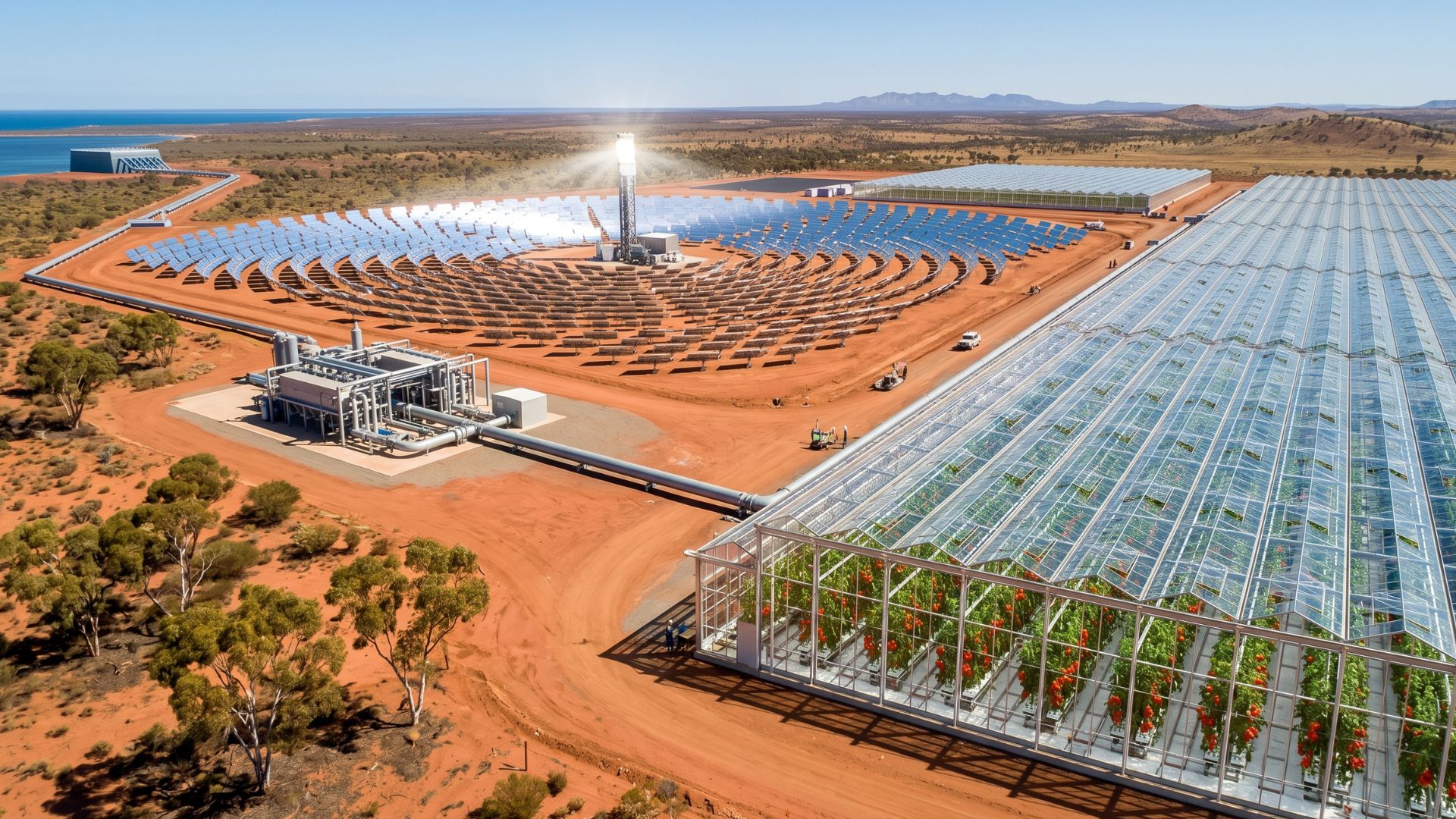

Sundrop Farms uses seawater, concentrated solar power, and hydroponics to produce tomatoes on an industrial scale in the Australian desert.
In southern Australia, Sundrop Farms operates near Port Augusta with a proposal that seems more like energy engineering than conventional agriculture. Instead of relying on regular rainfall, fertile soil, and freshwater rivers, the structure combines seawater, concentrated solar power, and hydroponic cultivation to maintain production in an arid area.
The farm was commercially opened in 2016, after a pilot project of about six years, and has become one of the most well-known cases of high-tech agriculture in a desert environment. In a report by WIRED, CEO Philipp Saumweber states that the unit produces more than 15,000 tons of tomatoes per year, which is equivalent to about 15% of the Australian tomato market.
Sundrop Farms in Port Augusta uses the desert as a productive advantage
Port Augusta is about 300 kilometers north of Adelaide, in a hot and dry region of South Australia. Precisely for this reason, the location seems unlikely for a large-scale farm, as it presents conditions that would normally limit conventional agriculture.
-
Paraná Farmer Refuses to Sell 48 Cows Despite Challenges, Launches Cheese Factory with Just 4 Liters of Milk, Bounces Back, and Wins Super Gold and 11 National Medals

-
After losing 500 chickens to extreme heat in one summer, a farmer in Japan begins midnight feedings, while in Spain, workers pick grapes at 3 AM to dodge temperatures over 104°F

-
China Resumes U.S. Soybean Purchases, Secures 272,000 Tons for 2026/27, While USDA Confirms 206,500 Tons for Unspecified Destinations; Nearly 480,000 Tons Boost Chicago Market
-
Farmer Swaps Coffee for Cultivation of Just 20 Avocado Trees in Paraná, Buys a Brand-New Fiat Uno from First Harvest and, Three Decades Later, Reaches 600 Trees and Over 400 Tons Annually While Preparing 400 More Seedlings to Exceed 1,000 Trees


The logic of Sundrop Farms is to reverse this reasoning. Instead of seeking an abundance of freshwater and high-quality agricultural land, the project takes advantage of what the desert offers in excess, such as intense solar radiation, heat, and proximity to the Spencer Gulf, from which the company draws seawater for the central part of the system.
This design transforms a hostile area into a productive asset. The operation shows that, with adequate infrastructure, regions seen as unproductive can sustain intensive agriculture as long as there is climate control, energy, and treated water for irrigation.
Concentrated solar power with 23,000 mirrors drives the heart of the farm
The most striking image of the complex is the field of mirrors surrounding the solar tower. According to ABC News, the commercial installation includes more than 23,000 mirrors that reflect sunlight to a receiver at the top of a 127-meter tower.
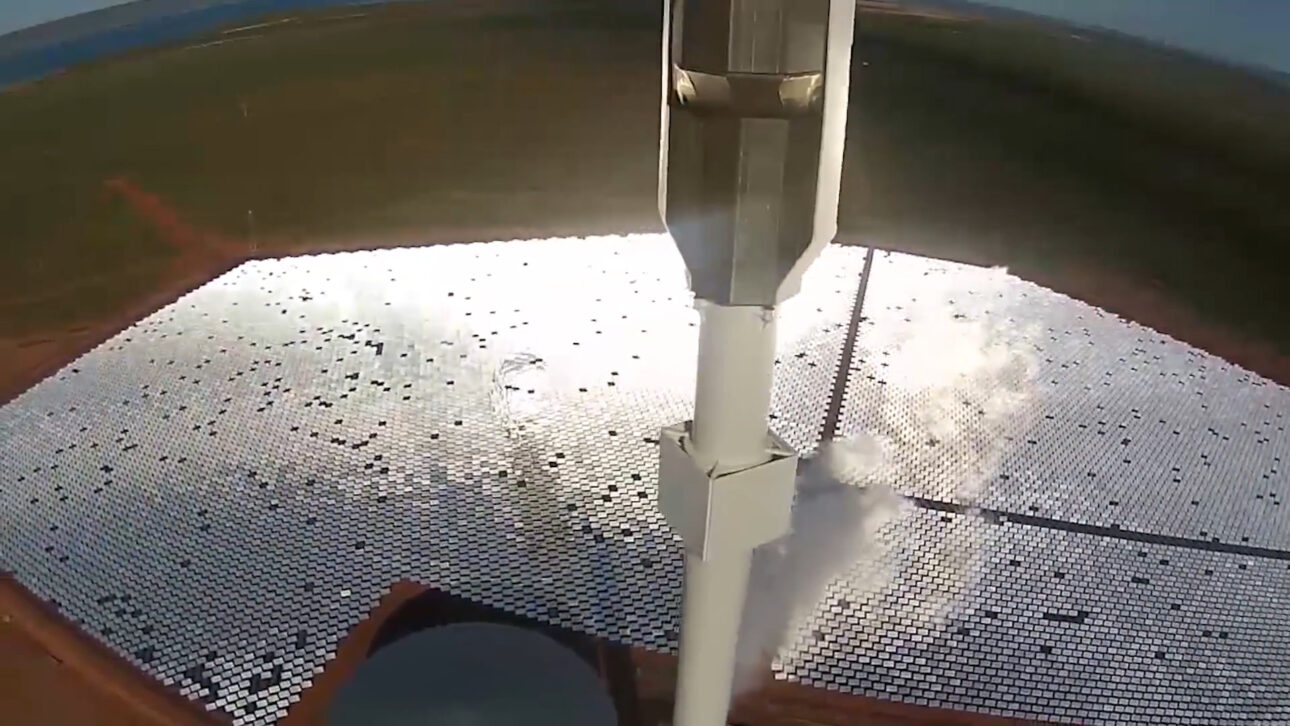
This arrangement of concentrated solar energy provides heat for central processes of the operation. On the company’s official website, Sundrop states that it uses this energy to produce freshwater for irrigation, generate electricity, and help heat and cool the greenhouses.
In practice, the farm functions as an integration between a greenhouse, solar plant, and desalination system. It is this technological coupling that allows agricultural production to be maintained in an environment where open-field farming would be more vulnerable to extreme heat and water scarcity.
Desalinated seawater and hydroponics sustain tomato cultivation
The tomatoes at Sundrop Farms do not grow in common soil. WIRED reports that the plants are cultivated in hydroponics, without soil, in an aqueous solution with nutrients and a substrate based on coconut husk, which increases control over water, nutrition, and the productive environment.
Seawater is pumped from the Spencer Gulf to the desalination unit. According to the same report, the intake occurs through a 450-millimeter pipeline over 5 kilometers, and the system transforms about 1 million liters of seawater per day into freshwater.

On the official website, the company says it uses the heat from the solar system and seawater to power a multi-effect desalination process, producing water for irrigation.
Sundrop itself also states that the freshwater generated on-site can be supplemented by urban supply, which adds an important layer of technical precision to the operation’s functioning.
Industrial-scale tomato production supplies the Australian market
What sets Sundrop Farms apart from experimental projects is the scale. The WIRED report points out that the commercial unit in Port Augusta produces more than 15,000 tons of tomatoes per year, a level sufficient to place the operation among the most ambitious cases of controlled agriculture in arid areas.
ABC News describes the complex as a 20-hectare facility, with climate-controlled structure and integrated energy system. This helps explain why the farm has gone from being just a technological curiosity to being treated as an example of industrial agricultural production supported by heavy infrastructure.
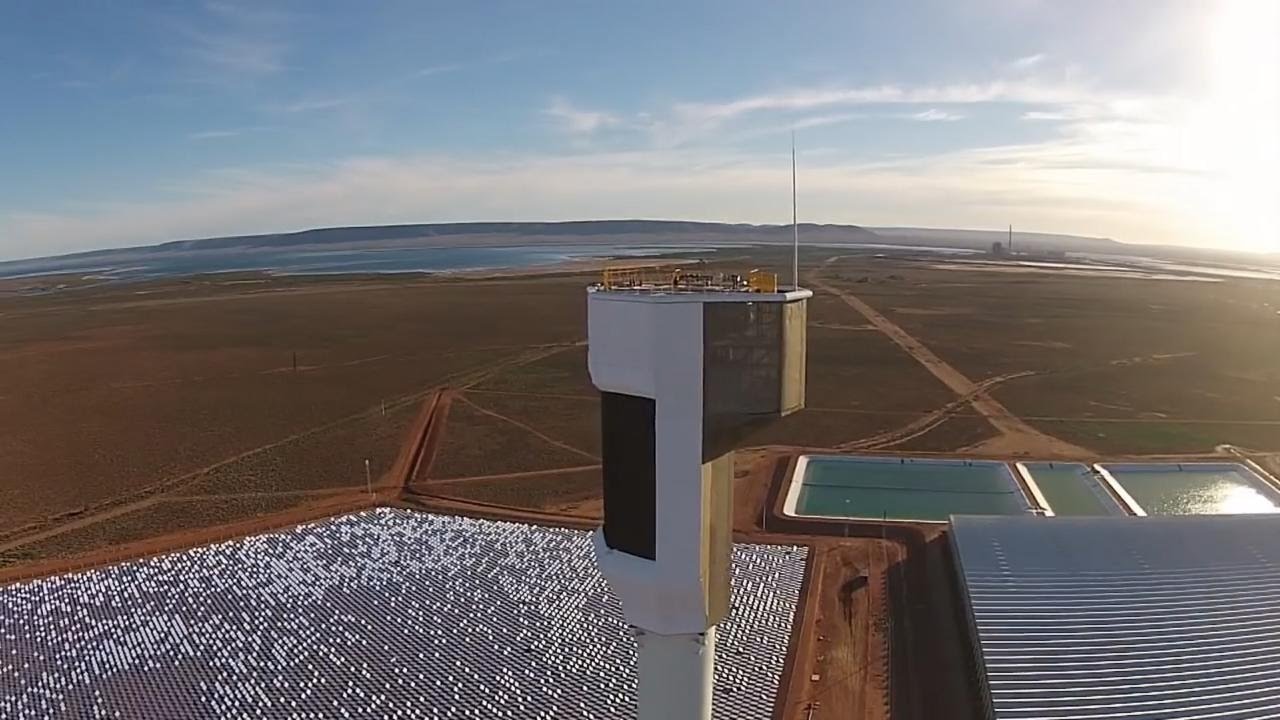
This scale changes the debate about viability. Instead of just demonstrating that it is possible to farm in the desert, Sundrop Farms tries to prove that it is possible to do so regularly, with volume and commercial standards in a competitive national market.
Agriculture in the Australian desert requires high capital and complex engineering
The operation did not start as a simple or cheap solution. WIRED reports that the Port Augusta project cost about 200 million Australian dollars, with an investment of 100 million Australian dollars from the manager KKR, which shows that the model depends on high capital and sophisticated infrastructure.
This helps to put the case in real size. Sundrop Farms is not an immediate alternative for any producer because it requires specialized engineering, environmental control, desalination, energy generation, and logistical proximity to the coast.
Even so, the project stands out for tackling three historical bottlenecks of agriculture in dry areas: dependence on fresh water, climate vulnerability, and limitation of fertile soil. For this reason, the Australian farm has become a global reference when it comes to producing food in arid regions with intensive technology support.
Sundrop Farms points the way for agriculture in dry regions
The symbolic strength of Sundrop Farms lies in the contrast. Where one would expect to see only heat, salt, and scarcity, the company installed greenhouses, a solar tower, desalination, and hydroponics to maintain a continuous production of tomatoes.

The case of Port Augusta does not prove that every desert area can become a profitable farm with the same formula. But it shows, on a real commercial scale, that part of the future of agriculture in dry regions may depend less on traditional agricultural land and more on energy, treated water, and controlled environment.
If the advance of drought and pressure on fresh water continues to reshape food production worldwide, projects like Sundrop Farms are likely to gain even more attention. What today seems like a futuristic exception already functions, in practice, as a showcase of agriculture shaped by high-precision engineering.


