






 Portuguese
  Spanish




New Solar-Powered Car Has A Giant Range Of 625 Kilometers Per Charge And Can Go Months Without Plugging In
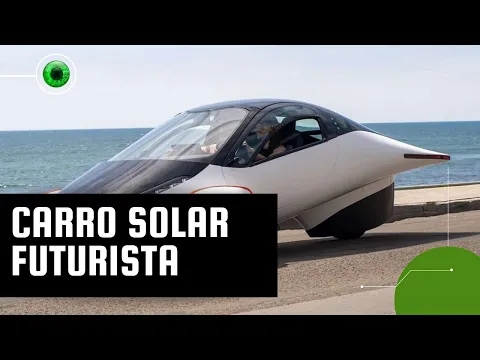
Valmet Automotive announced this week that it has begun the production of its new electric car, considered the most aerodynamic in history and with a giant range. Branded by the company as the world’s first solar car, the model has a central goal, according to Valmet, to insert the transformation of global mobility, according to the Canaltech website.
“A new era of electric mobility is here, and the launch of the Lightyear 0 brings us closer to our mission of clean mobility for everyone, everywhere,” stated Lex Hoefsloot, CEO and co-founder of Lightyear.
The companies Lightyear and Valmet Automotive joined forces to produce the world’s first solar-powered car in 2021. After effectively starting the process and gathering more than 100 guests and representatives from the automotive sector at the facilities in Uusikaupunki, Finland, Olaf Bongwald, CEO of Valmet Automotive, also highlighted the importance of the new electric car.
-
Nikola, once valued at $29 billion for its hydrogen truck promise, files for bankruptcy after prototype scandal.

-
Volkswagen to Invest Up to $5.8 Billion in Rivian, the American Electric Car Startup, Securing Software Expertise for Future Vehicles
-
Surge in Solar-Powered Homes in Brazil Leads to Grid Strain and Connection Restrictions in Three States

-
End of the Affordable Car Era: Fiat Argo 1.0 2026 Offers 14.7 km/l Efficiency and Easy Maintenance, but $18,000 Price Raises Cost-Benefit Concerns




Pre-Sale of the Solar Car

What Will The New Car With A Giant Range And Powered By Solar Energy Be Like?
The Lightyear 0 solar car features the main novelty of a range of 625 kilometers per charge and the ability to go up to months without plugging in. Despite its small 60 kWh battery, the car is designed to have a range of up to 70 kilometers using only solar light.
The car is charged through the photovoltaic panels installed on the roof, and the company producing the new vehicle assures that there is no need to drive for hours exclusively under the sun. According to Valmet, capturing solar energy generates an extra range of 37 kilometers for each hour.
In terms of performance, the Lightyear 0 isn’t particularly impressive, but it also doesn’t fall short. According to the numbers provided by the brand, the solar car accelerates from 0 to 100 km/h in about 10 seconds.
When Will The New Solar Car Be Launched?
In terms of price, taking the Lightyear home won’t be cheap. The first 150 units of the new solar car will cost US$ 260,000 each, with deliveries set to begin in the first quarter of 2023.
In addition, Automotive also reported that the goal is to produce one solar car per week, and that a larger model, called Lightyear 2, will be produced with more range, more power, and, logically, it will be priced higher, with production expected to start in 2025.


