Portuguese
  Spanish


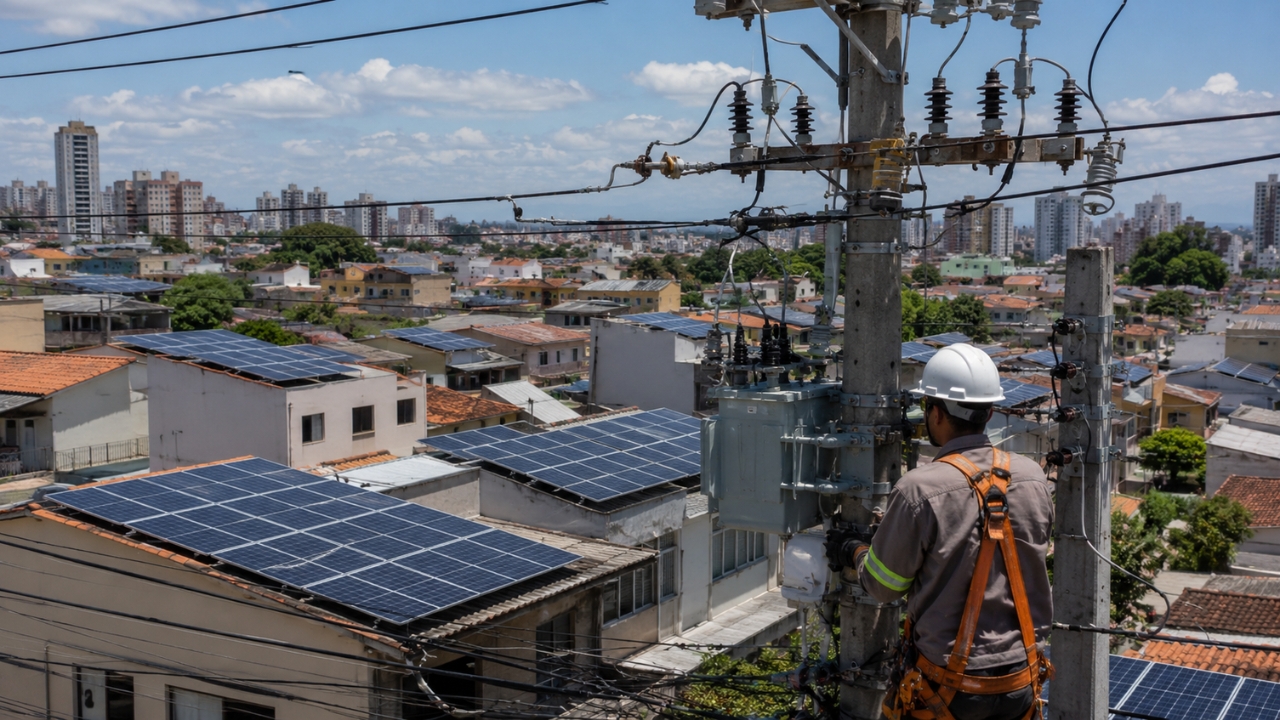

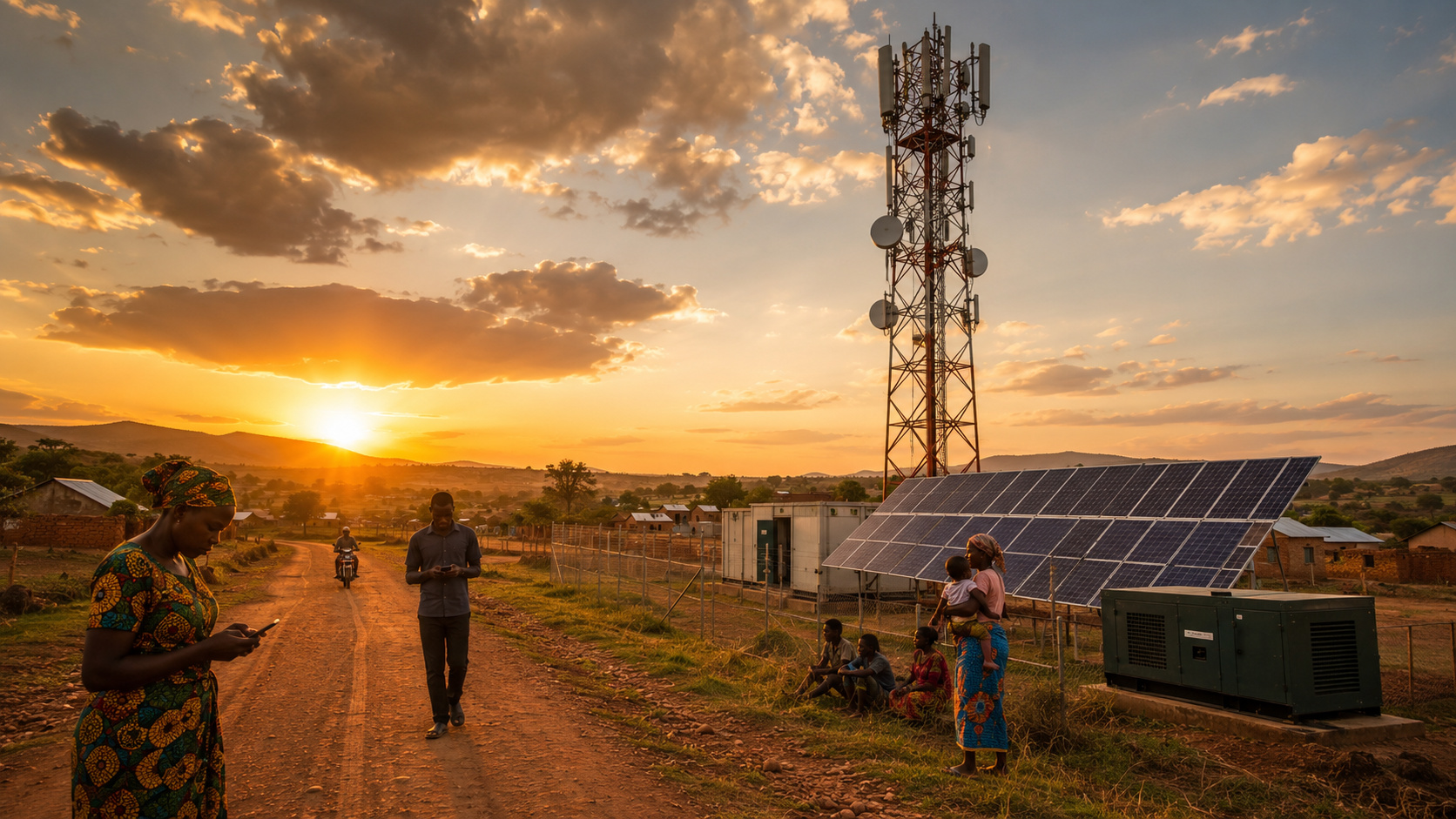
The expansion of solar panels in homes, businesses, and rural properties has changed the logic of energy distribution in Brazil and is already putting pressure on networks in Mato Grosso, Acre, and Rondônia, where new connections face technical restrictions.
The solar energy that entered homes, small businesses, and rural properties as a promise of savings has begun to reveal a problem that doesn’t appear on the panel installed on the roof. According to Folha de S.Paulo, Mato Grosso, Acre, and Rondônia face restrictions for new photovoltaic connections in some regions, with Mato Grosso at the center of the pressure.
The strongest data lies in the size of the expansion itself. Mato Grosso already totals more than 2.8 GW installed and could surpass 3.5 GW by 2030. At certain times, the surplus can exceed 900 MW around noon, when solar production is high and local consumption doesn’t always match this supply.
The case matters because it shows a paradox of the energy transition in Brazil. The technology that reduces the electricity bill and puts the consumer in the role of generator also depends on an electrical grid capable of receiving this energy. And this grid, in various parts of the country, was not built to function in this way.
-
Solar Chimney in Spain Harnessed Sun to Generate Electricity for 7 Years Without Burning Fuel

-
Solar energy reaches 55 GW, becoming the second largest power source in Brazil’s energy mix

-
Solar energy can increase property value by up to 10% and become a selling point.
-
Solar and wind energy surpass natural gas for the first time in the world and accelerate energy revolution


The energy that once only arrived now also returns to the grid
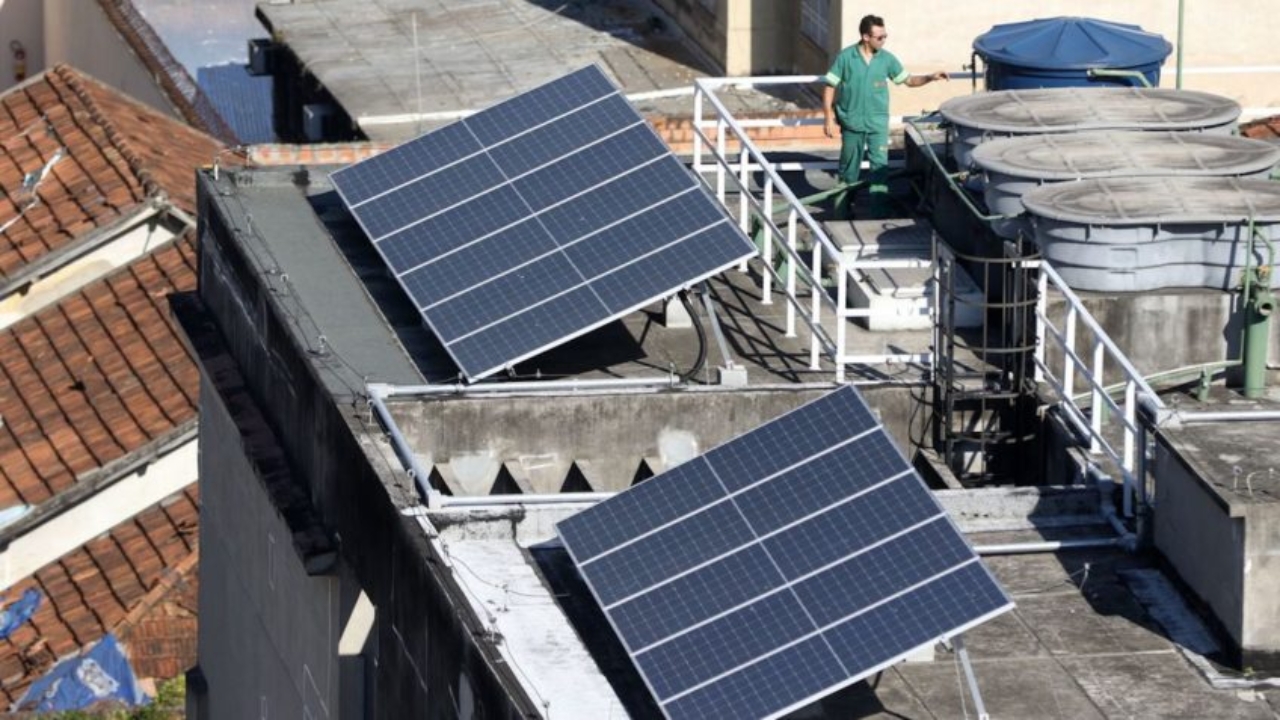
For decades, the logic of the electrical system was simple. Large plants produced energy, transmission carried this electricity over long distances, and distribution delivered the service to consumers.
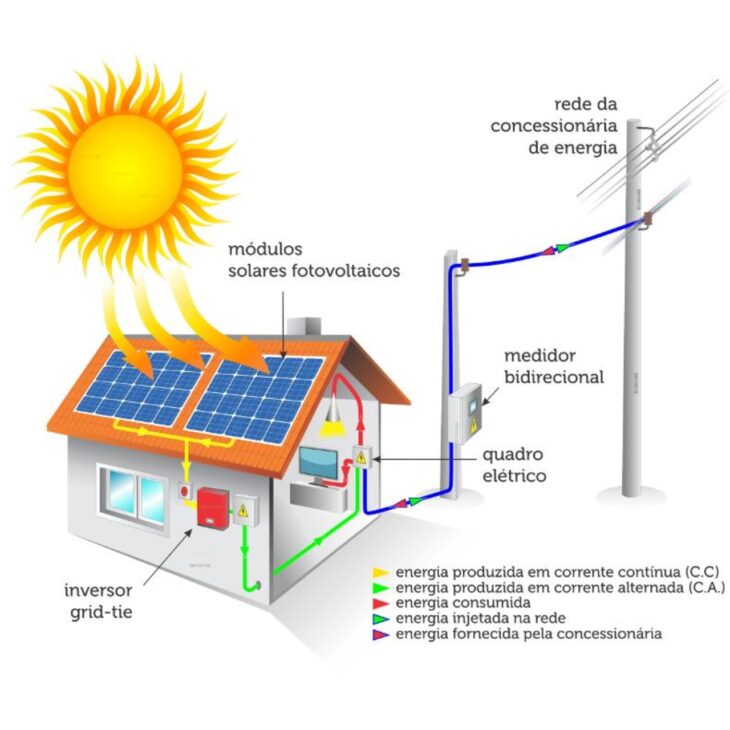
With distributed generation, this logic changed. Homes, businesses, and rural properties began to produce part of their own energy, mainly with solar panels. When they produce more than they consume, they inject the surplus into the grid and receive credits to use later.
ANEEL explains that this model works within the Electric Energy Compensation System. It was decisive in popularizing micro and mini distributed generation, but it also increased the complexity of the distributors’ operations.
The problem arises when many consumers inject energy at the same time. Instead of just delivering electricity, the local grid needs to receive the surplus. This phenomenon is known as flow inversion.
Mato Grosso has become the most sensitive case
According to Folha de S.Paulo, ONS identified a structural restriction in Mato Grosso. The assessment is that new connections of generating plants may not be viable until the technical conditions of the network change.
The concern is not just administrative. The pointed risk involves instability and large-scale shutdowns in severe transmission situations. In other words, it is not a lack of energy, but a localized excess at specific times.
Acre and Rondônia appear in the same context of restrictions. Mato Grosso do Sul was also mentioned as a state that could move towards a similar situation. The central point, however, is not to state that solar energy is prohibited in these locations.
What is under discussion are new connections and expansions in areas where the distributor and the operator identify a technical limit to receive more generation. Small residential systems may still be able to connect in stressed regions, depending on the size and impact on the network.
Brazil has reached millions of connected systems
The growth helps explain why the topic moved from technical discussion to a national issue. According to ANEEL, by July 31, 2025, Brazil had 3.77 million distributed micro and mini-generation systems connected to the grid.
The power totaled about 42.28 GW. Residential consumers represented approximately 80% of the plants in operation, with about 3 million systems. Commerce and rural areas also have significant participation.
ABSOLAR reported that solar energy exceeded 60 GW of installed capacity in Brazil in 2025, considering self-generation and large plants. Of this total, 42.05 GW came from small and medium self-generation systems, while 17.95 GW were in large solar plants.
In 2026, surveys by ABSOLAR itself indicated about 64 GW of operational solar power in the country, with the source representing 24.5% of the Brazilian electricity matrix. The number shows the speed of change.
ONS had already been warning about excess during critical hours
The ONS had already pointed out that distributed generation is growing faster than demand. According to Folha de S.Paulo, micro and mini distributed generation already exceeded 43 GW in December 2025 and could reach around 65 GW by 2030.
The alert involves moments of high solar production and low load. On August 10, 2025, Folha reported that distributed generation accounted for almost half of the demand at a certain moment, forcing the ONS to cut centralized renewable generation to avoid overload.
Another example appeared on June 29, 2026, during the Brazil vs. Japan game. According to eixos, the drop in consumption during the match, combined with high distributed solar generation, led the ONS to restrict about 20 GW of renewable generation to preserve system stability.
These episodes help to understand why the problem is not with the isolated solar panel. The challenge arises when thousands of systems produce a lot at the same time and the grid needs to balance supply, demand, and operational security.
ANEEL tries to adjust rules while the sector demands solutions
ANEEL approved measures in July 2024 to simplify the connection of small systems and reduce conflicts over flow inversion. Among the changes, it created a simplified path for systems up to 7.5 kW used for compensation in the consumer’s own unit.
The agency also waived inversion studies for systems that do not inject energy into the grid, known as grid zero. In April 2026, it opened Public Consultation 009/2026 to address energy surpluses and operational flexibility in distribution.
The proposal includes systemic restrictions, surplus management, inspection, and irregular practices. ANEEL also set an emergency deadline of 60 days for distributors to audit possible unauthorized power increases.
On the other hand, representatives of the solar sector advocate for energy storage, clearer rules, and modernization of infrastructure. ABSOLAR also argues that irregularities exist but would be a minority within a universe with millions of consumers generating their own energy.
The limit is not in the sun, it’s in the grid


Solar expansion remains relevant for the country, but the pace has slowed. According to eixos, based on data from ABSOLAR, the expansion fell by 29% in 2025, with 10.6 GW added in the year, compared to 15 GW in 2024.
Distributed generation accounted for 7.8 GW of the 2025 expansion. Meanwhile, large solar plants added 2.8 GW. Part of the slowdown was associated with connection obstacles due to claims of grid incapacity and flow inversion.
The case of states with restrictions shows that the energy transition does not only depend on installing more panels. It also requires a prepared grid, transparent rules, supervision, and the ability to store or control surpluses.
Solar energy has not become a problem due to its growth. What Brazil is beginning to face is the cost of having millions of small generators connected to an infrastructure that still follows the old logic of just delivering energy. The rooftop changed quickly. Now, the grid needs to catch up.