






 Portuguese
  Spanish
  4 min of reading
  0 comments


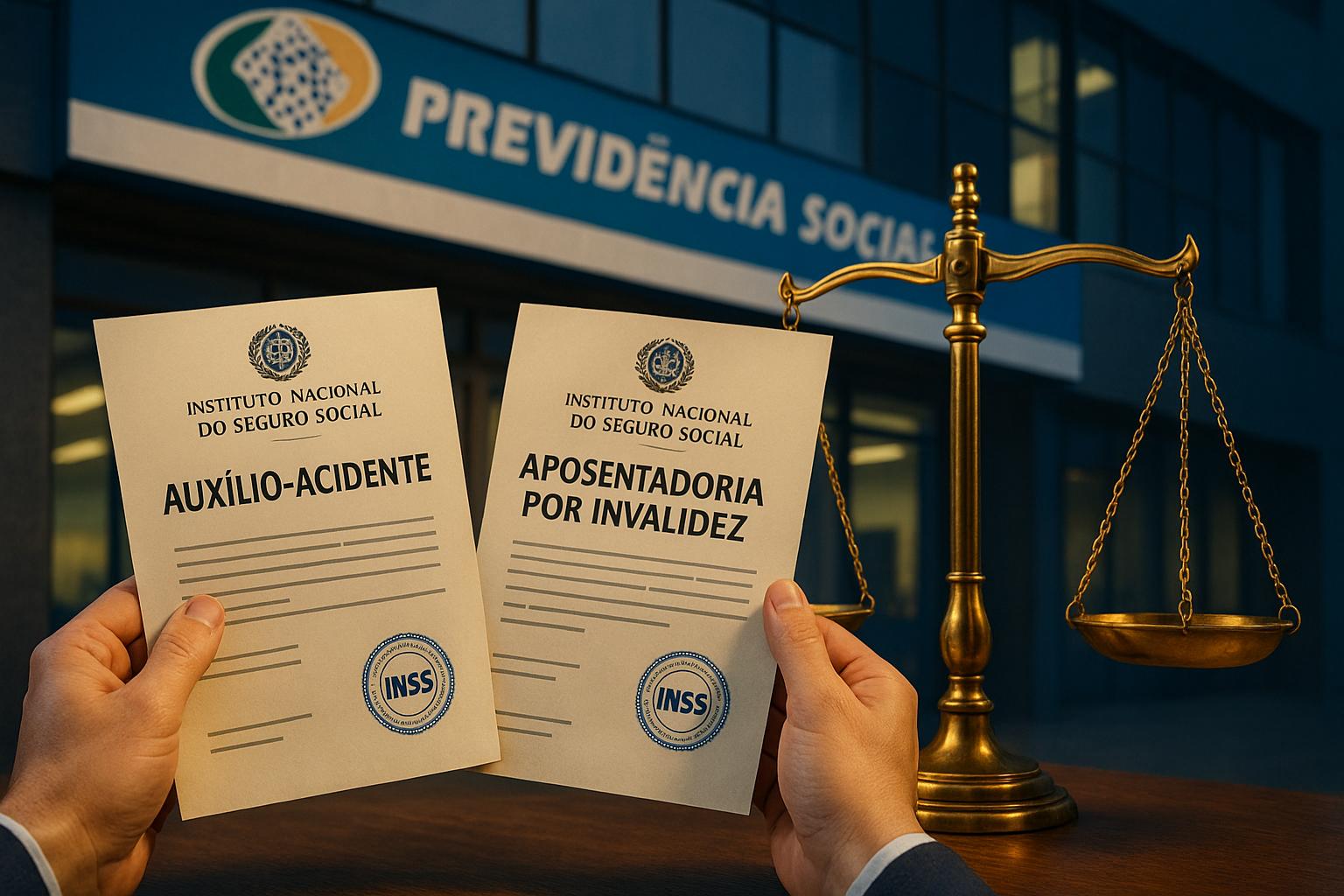
STJ Defines Rules: It Is Only Possible to Accumulate Accident Aid with Disability Retirement for Benefits Granted Before 1997. Understand the Details.
Millions of Brazilian workers rely on INSS benefits to maintain their income when they suffer accidents or disabling illnesses. Among them, two stand out: accident aid, paid as compensation to those who suffer permanent reduction in work capacity, and disability retirement (now called retirement for permanent incapacity), intended for those who can no longer perform work activities.
For years, the question remained the same: Is it possible to accumulate both benefits at the same time? The issue reached the Superior Court of Justice (STJ), which established an important understanding and limited the situations in which accumulation is permitted.
What the Court Decided
The STJ decided that it is only possible to accumulate accident aid with disability retirement when both benefits were granted before November 11, 1997.
-
Not even Trump convinces the market: U.S. companies state that Brazil has no substitute, pressure Washington against the 25% tariff, and warn that the measure could raise prices, cause layoffs, delay projects, and harm sectors that depend on stones, wood, seeds, and other Brazilian products.

-
It’s not just Bolsa Família: CadÚnico can provide access to seven little-known benefits, including cheaper electricity bills, free interstate travel, microcredit, cisterns, popular phone service, and exemption from fees in public exams and the Enem.
-
Boxer with a fortune of £162 million, Tyson Fury wants to spend £6 million on a private 6.5-acre island to dock his £42 million superyacht near a naval base in the UK.

-
Change in INSS reduces waiting time from 45 to 30 days, prioritizes pensions, revisions, and BPC, and could expedite over 100,000 stalled processes, while employees receive productivity bonuses and the government attempts to reduce a backlog that still exceeds 2.1 million requests.




The date is not arbitrary: it corresponds to the enactment of Law No. 9,528/1997, which amended the Social Security Benefits Law (Law No. 8,213/1991) and expressly prohibited accumulation.
This means that:
- Before 11/11/1997: those who were already receiving both benefits simultaneously retained their acquired rights.
- After 11/11/1997: it is no longer possible to receive accident aid and disability retirement at the same time.
How Accident Aid Works
The accident aid is a compensatory benefit paid to those who suffered an accident of any nature (whether at work or not) and were left with permanent sequelae that reduce work capacity.
- It is paid until the insured person’s retirement.
- It does not require absence from work — it can be accumulated with paid activities.
- The amount corresponds to 50% of the benefit salary.
For example: if a worker had a benefit salary of R$ 3,000 and suffered an accident that left sequelae, he can continue working but starts receiving R$ 1,500 per month in accident aid, until he retires.
How Disability Retirement Works
The disability retirement (or retirement for permanent incapacity) is intended for insured individuals who, after a medical examination by the INSS, are considered unable to perform any labor activity definitively.
- The benefit replaces the income from work.
- The amount is 60% of the average salary plus 2% for each year of contribution that exceeds 20 years (men) or 15 years (women).
- In some cases, it can reach 100% of the average salary, such as in work accidents.
The Conflict Between the Two Benefits
The controversy arose because accident aid is compensatory, while disability retirement substitutes income. Some courts understood that, due to their different natures, they could be paid together.
On the other hand, Social Security argued that accumulation would be a double payment for the same event — the accident that incapacitated the worker.
It was in this impasse that the STJ had to intervene, establishing the rule that only old cases (prior to 1997) have the right to accumulation.
What This Changes in the Lives of Insured Individuals
For those who were already receiving both benefits before the law change, nothing changes: these insured individuals have guaranteed acquired rights.
But for those who suffered accidents or became incapacitated after 1997, the rule is clear: they will have to choose between accident aid (if they can still work) or disability retirement (if they can no longer perform any activity).
In other words, there is no longer any possibility of accumulating both benefits in new requests.
Practical Examples
- Case Before 1997
A worker received accident aid in 1995 after losing part of the mobility of an arm. In 1996, he was retired due to disability. Since both benefits started before the new law, he has kept both until today. - Case After 1997
An insured individual suffered an accident in 2005 and began receiving accident aid. In 2010, he became completely incapacitated and was retired due to disability. In this case, the accident aid was canceled, leaving only the retirement.
The Importance of the Judicial Decision
The STJ ruling brings legal security. Many processes were stalled in court awaiting a definition on the possibility of accumulation.
Now, lawyers, insured individuals, and the INSS itself have a guideline:
- Yes, it is possible to accumulate — but only in specific situations, already consolidated for almost 30 years.
- No, it is not possible in new cases, even if the benefits have different natures.
The Future of Social Security Protection
The decision does not end the debate on protection for injured workers, but reinforces the need for the government and the National Congress to seek alternatives.
Social security experts point out that, with the rise in traffic and work accidents, accident aid could be reformed to ensure greater coverage, as many workers become partially incapacitated and have difficulty reintegrating into the job market.
Until that happens, the judicial understanding prevails: it is not possible to accumulate accident aid and disability retirement in new cases.
Accident Aid and Disability Retirement
The rule defined by the STJ sends a clear message: Social Security does not allow the overlap of these benefits since 1997.
For those with ongoing processes or doubts about recent requests, the answer will be negative for accumulation.
On the other hand, those who already benefited from both before the change retain their acquired rights. This legal milestone reinforces the importance of knowing the rules and seeking specialized guidance when making requests to the INSS.
In the end, the decision confirms: only in very old cases is it possible to accumulate accident aid and disability retirement. For new insured individuals, it will always be one or the other.







-

1 person reacted to this.