Portuguese
  Spanish


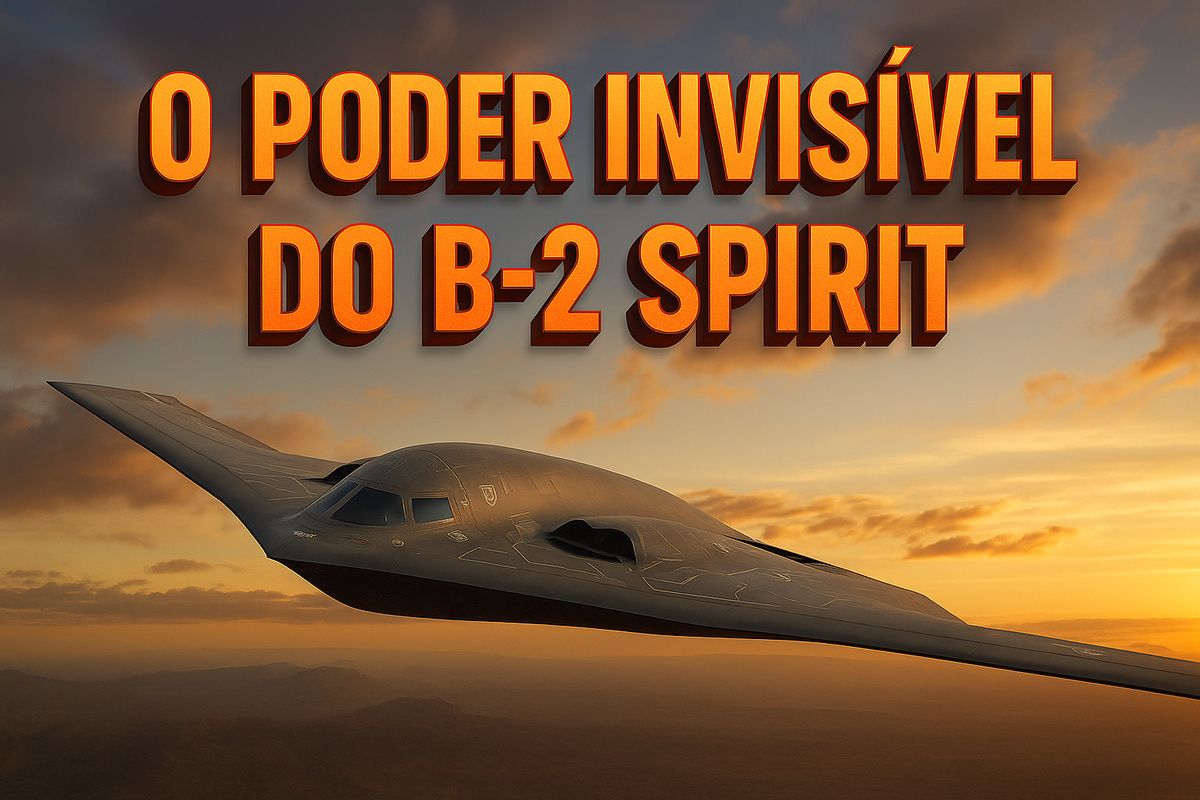


Stealth Technology Enables Strategic Action With State-of-the-Art Weaponry Capable of Penetrating Air Defenses and Hitting Underground Targets With Millimeter Precision
The B-2 Spirit, stealth bomber of the United States Air Force (USAF), has once again demonstrated its power on a strategic mission.
In June 2025, the aircraft attacked Iranian nuclear facilities, showcasing its unique capabilities for evasion and precise attack once again.
American engineers developed the bomber in the 1980s, which still remains one of the primary military assets of the U.S.
-
Brazilian mechanic invents simple solar lamp using water and chlorine in a PET bottle, providing up to 60 watts of light during the day

-
Swiss glaciers melting fast enough to fill an Olympic pool every 6 seconds, France confirms 3,700 heatwave deaths, and WMO predicts strong El Niño intensifying extremes until 2027

-
Sudden Sea Recession in São Paulo Sparks Tsunami Alert and Online Debate on Giant Wave Risks in Brazil

-
China Launches World’s First 307-Meter Floating Wind Platform to Supply Oil Rigs, Aiming to Cut 35,000 Tons of CO2 Annually


Thanks to its advanced stealth technology, the B-2 penetrates enemy defenses undetected, operating with high efficiency on long-range missions.
Stealth Technology Ensures Invisible Operation
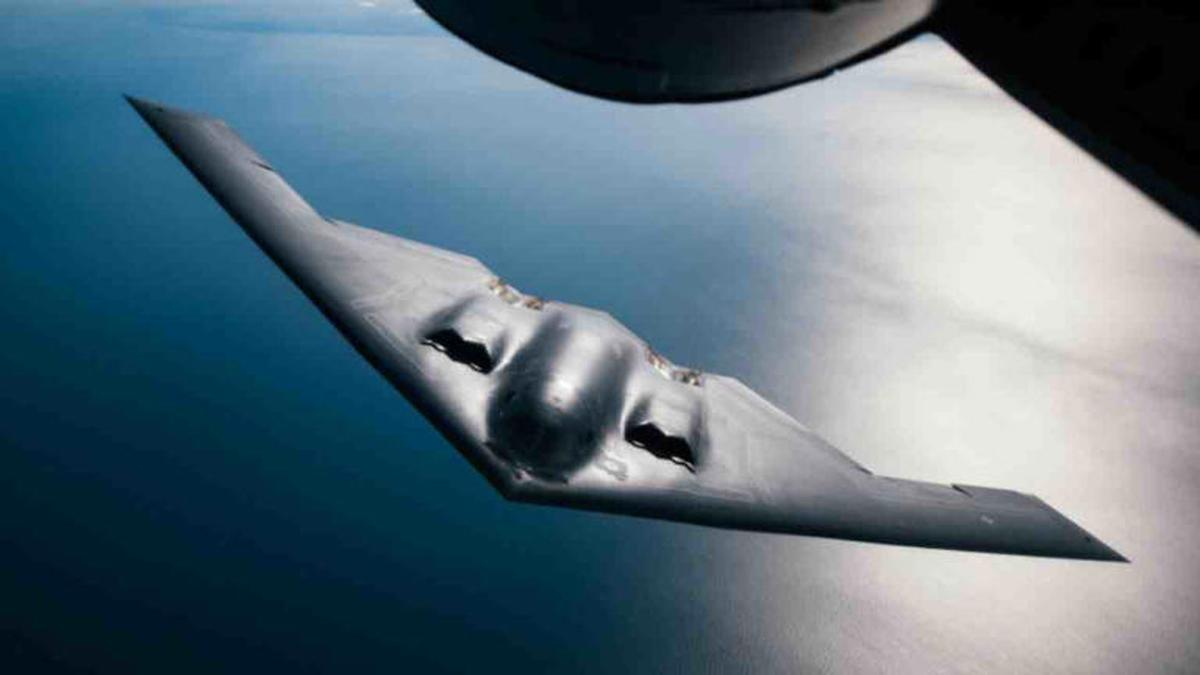
The designers created the B-2 Spirit to be virtually invisible to radar systems.
Its sophisticated “flying wing” design, combined with materials and technologies that absorb and deflect radar waves, makes this possible.
As a result, enemy radars confuse its signature with that of migratory birds, such as eagles or sparrows.
This level of stealth allows for surgical attacks, reducing risks to the crew and increasing the effectiveness of operations.
Additionally, the design and technology provide an essential tactical advantage in conflict scenarios.
Development and Modernization of the Project
The U.S. produced the B-2 between 1987 and 2000, totaling 21 units. Currently, 19 aircraft remain active in the USAF fleet.
The project cost approximately US$ 2.1 billion per unit, making it one of the most expensive in military aviation.
Initially, the designers developed the bomber for missions during the Cold War. Its goal was to penetrate the airspace of the Soviet Union.
After the end of the conflict in 1991, the government resized the project but maintained investments in upgrades.
According to the Pentagon, the modernizations will allow the use of the aircraft until at least 2058.
Thus, the B-2 will continue to be a pillar of U.S. strategic airpower in the coming decades.
Operational Characteristics and Offensive Capability
The B-2 Spirit has a wingspan of 52 meters and accommodates a crew of two pilots, with room for a third on long missions.
The designers equipped the interior so that a crew member can rest, prepare meals, or use the restroom during flight.
Although it is not a fast combat aircraft, its range exceeds 11,000 kilometers. With air refueling, it reaches an impressive 19,000 kilometers.
In the operation against Iran, six B-2s transported two GBU-57A/B bombs of the “bunker buster” type per aircraft.
Each bomb penetrates up to 60 meters of concrete or rock, hitting fortified underground targets with precision.
Strategic Importance of the Aircraft
The B-2 Spirit remains the only aircraft capable of effectively delivering this type of munitions.
This capability allows the U.S. to attack fortified facilities, regardless of depth or protection.
Furthermore, the bomber plays a crucial role in American military strategy, executing high-risk missions with a high probability of success.
The U.S. Department of Defense recognizes the B-2 as an essential tool for maintaining air superiority, even after nearly four decades of service.
Ongoing Planning and Technological Evolution
Currently, the U.S. Air Force and suppliers are developing the successor to the B-2: the B-21 Raider, which will incorporate even more advanced technologies.
In the meantime, the B-2 continues to lead strategic long-range missions.
Its successful track record and ongoing investments in upgrades reinforce its role as one of the most valuable assets in military aviation.
Moreover, the B-2 symbolizes the U.S. capability to project global power with discretion and effectiveness.
Prospects for the Future of Stealth Aviation
Defense experts highlight that the lessons learned from the B-2 will serve as a foundation for the new generation of stealth bombers.
Stealth technology and high-precision weapon systems will continue to be a focus for armed forces in the coming decades.
Meanwhile, the recent operation against Iran again confirms the effectiveness and relevance of the B-2 Spirit in the current geopolitical landscape.
The ability to conduct surgical strikes undetected keeps the aircraft as one of the greatest symbols of air superiority for the United States.
What do you think will be more important for the future of military aviation: investing in even stealthier aircraft or in cybersecurity technologies to neutralize emerging threats?