Portuguese
  Spanish


Archaeological Discovery Reveals That Mysterious Sutton Hoo Bucket, Decorated With Byzantine Symbols, Was Used As A Funeral Urn In The 6th Century
For nearly four decades, archaeologists have focused on a mysterious object found in Sutton Hoo, England. Fragments of a 6th-century bucket, decorated with Greek inscriptions and hunting scenes, seemed out of place in the Anglo-Saxon context of the famous archaeological site.
The so-called Bromeswell bucket has puzzled experts since 1986, when its first pieces came to light.
Other fragments were found in 2012 and, most recently, in 2024, during a new excavation led by the Time Team program, supported by FAS Heritage and the National Trust.
-
The Trap of Modern Technology: How Screen Overload and Digital Connections Can Impact Your Mental Health and Well-being

-
Wyoming Couple Grows Tropical Fruits Year-Round in -40°C Using Geothermal Greenhouse, Demonstrating Earth’s Heat Can Produce Oranges and Lemons in Snow Without Traditional Heating

-
Ship Returns from Brazilian Coast with Thirty Newly Discovered Life Forms
-
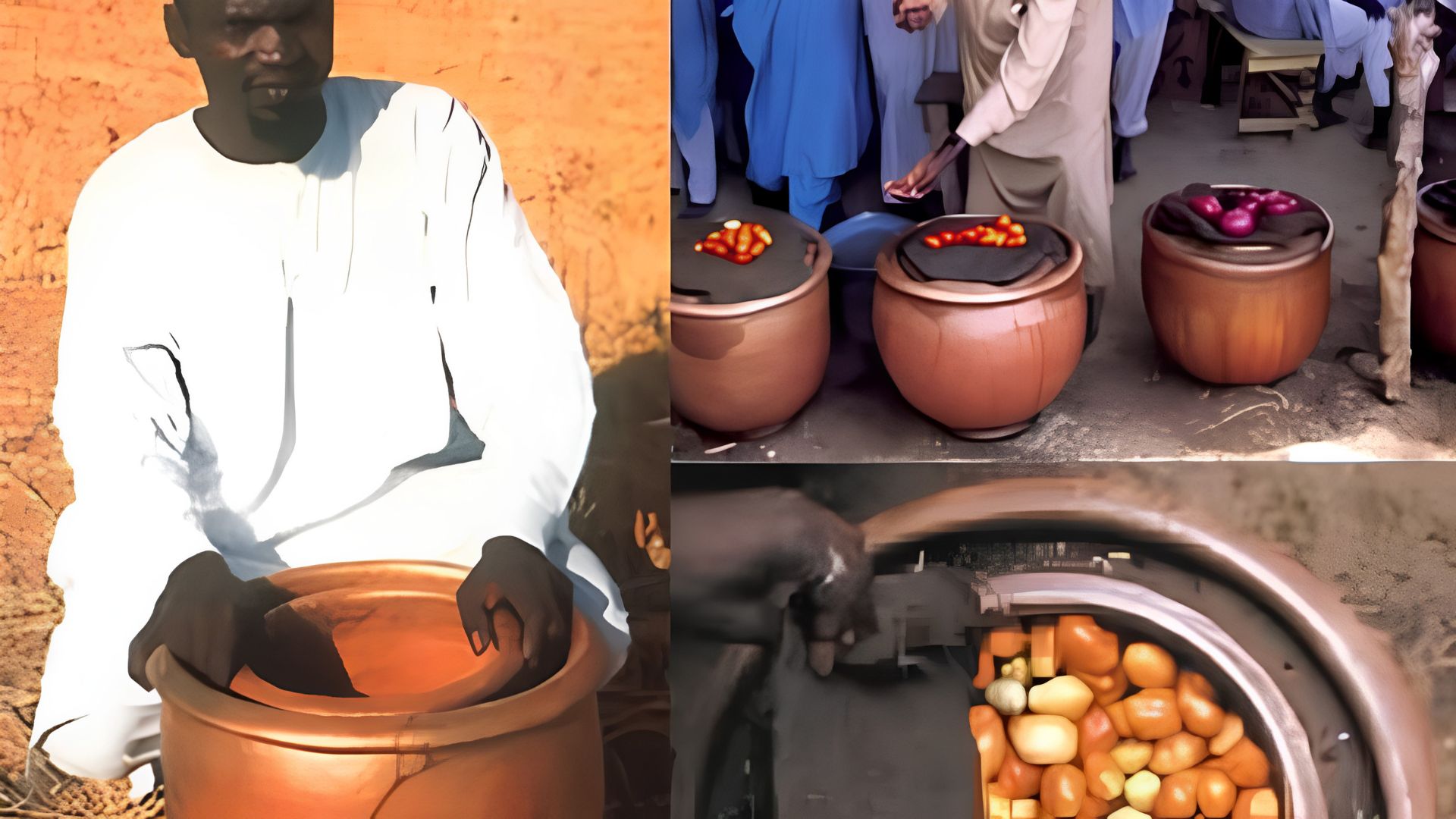
Nigerian Professor Invents Electricity-Free Refrigerator Using Clay Pots and Wet Sand, Extending Shelf Life of Vegetables to 27 Days; 7,000 Units Distributed in Energy-Deprived Villages


With the base intact and new sculptures revealed, such as animal legs, shields, and a human face, it was possible to reconstruct almost the entire object. From there, the long-awaited answer finally emerged.
Function Revealed
The mystery surrounding the bucket’s function was solved with the identification of cremated remains inside. Among the bones were fragments of a skull and part of an ankle bone, confirming that the bucket was used as a funeral urn.
The discovery indicates that the remains belonged to a person of high social standing in the local community.
Archaeologists consider the object the first known example of a Byzantine bucket used in an Anglo-Saxon cremation ritual. The mixture of elements from different cultures caught the attention of the scholars involved in the excavation.
Statements From Experts
Angus Wainwright, an archaeologist from the National Trust, stated that the find solves a riddle that has persisted for years. According to him, it was already known that the bucket was a rare and valuable piece in the Anglo-Saxon context, but the reason for its burial remained unknown.
“Now we know it was used to contain the remains of an important person from the Sutton Hoo community. I hope that further analysis reveals more about this very special burial,” Wainwright declared.
Helen Geake, an expert in Anglo-Saxon culture from Time Team, also commented on the discovery. For her, the contrast between the bucket’s origins and its function is what defines Sutton Hoo: “an impressive mix of worlds.”
She highlighted that the site brings together various practices, such as ship burials, with horses and now with bath buckets. “Who knows what else might still be hidden there?,” she questioned.
Other Finds
In addition to human bones, remains of a large animal, likely a horse, were found. This reinforces the idea that the burial had ceremonial significance and involved status.
A non-burned comb was also discovered, which may contain traces of ancient DNA. This material could be used to identify the buried individual.
Exhibition And Next Steps
The main fragment of the bucket is currently on display at Sutton Hoo, loaned by the Annie Tranmer Charitable Trust. The bucket’s base and the comb are being preserved for future studies.
The excavations were documented in the four-part series The Sutton Hoo Dig, available on YouTube.
With information from Aventuras na História.