





 Portuguese
  English
  Spanish
  4 min of reading
  0 comments


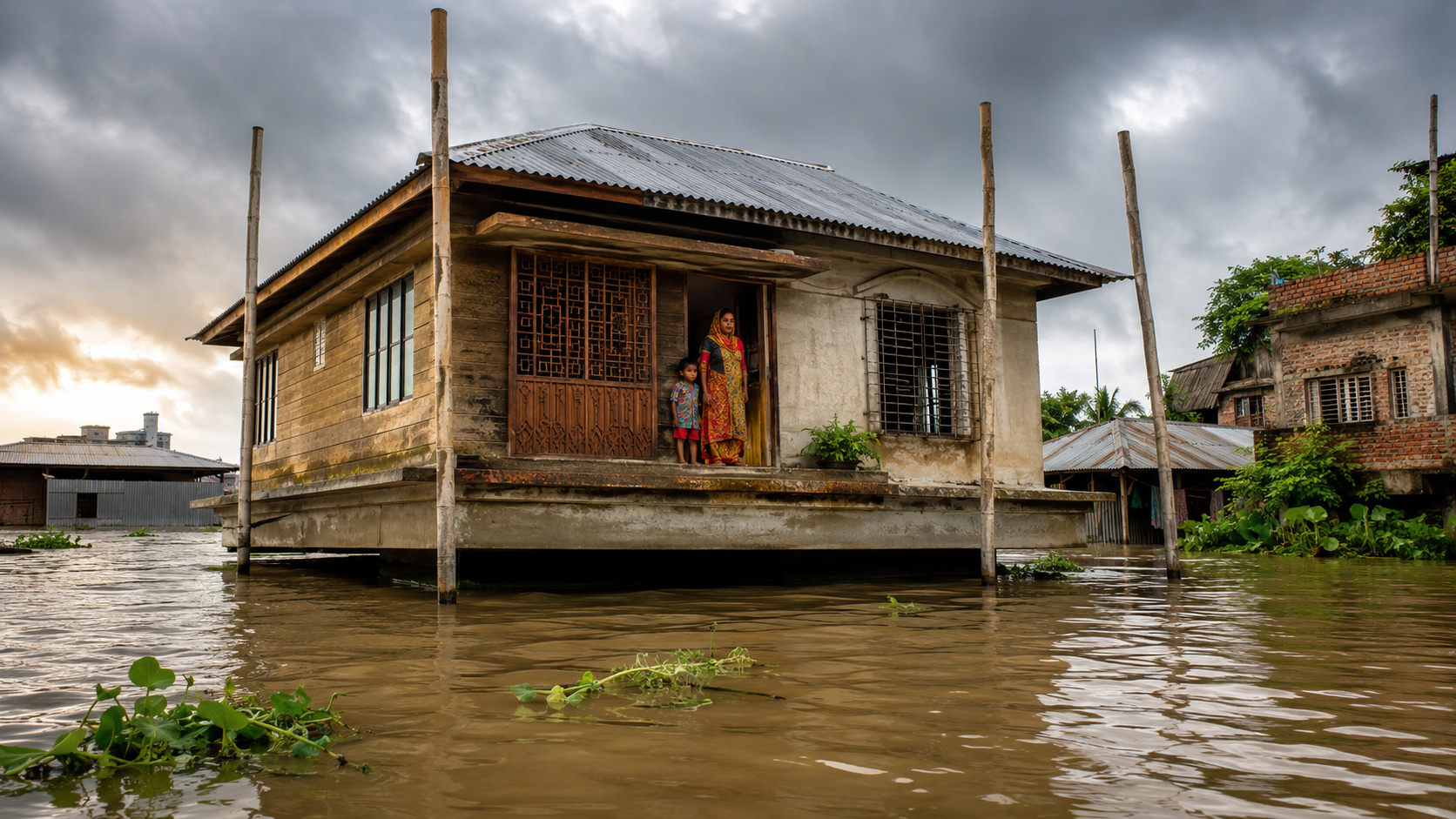
In Dhaka, the amphibious house was designed to withstand floods without letting the dwelling float away. It stays on the ground on dry days, rises when the flood level increases, and returns to the ground when the water recedes, with a floating foundation guided by vertical structures.
The amphibious house in Bangladesh was created to solve a common issue in flood-prone areas: keeping the dwelling in place when the flood arrives, without turning the house into a boat.
In Dhaka, the LIFT House prototype remains grounded under normal conditions. When the water rises, the structure can float and follow the flood level, as if it had hidden buoys beneath the construction.
The information was released by the Buoyant Foundation Project, a research project on amphibious foundations. The proposal showcases a flood-resistant house designed to rise with the water and return to ground level afterward.
-
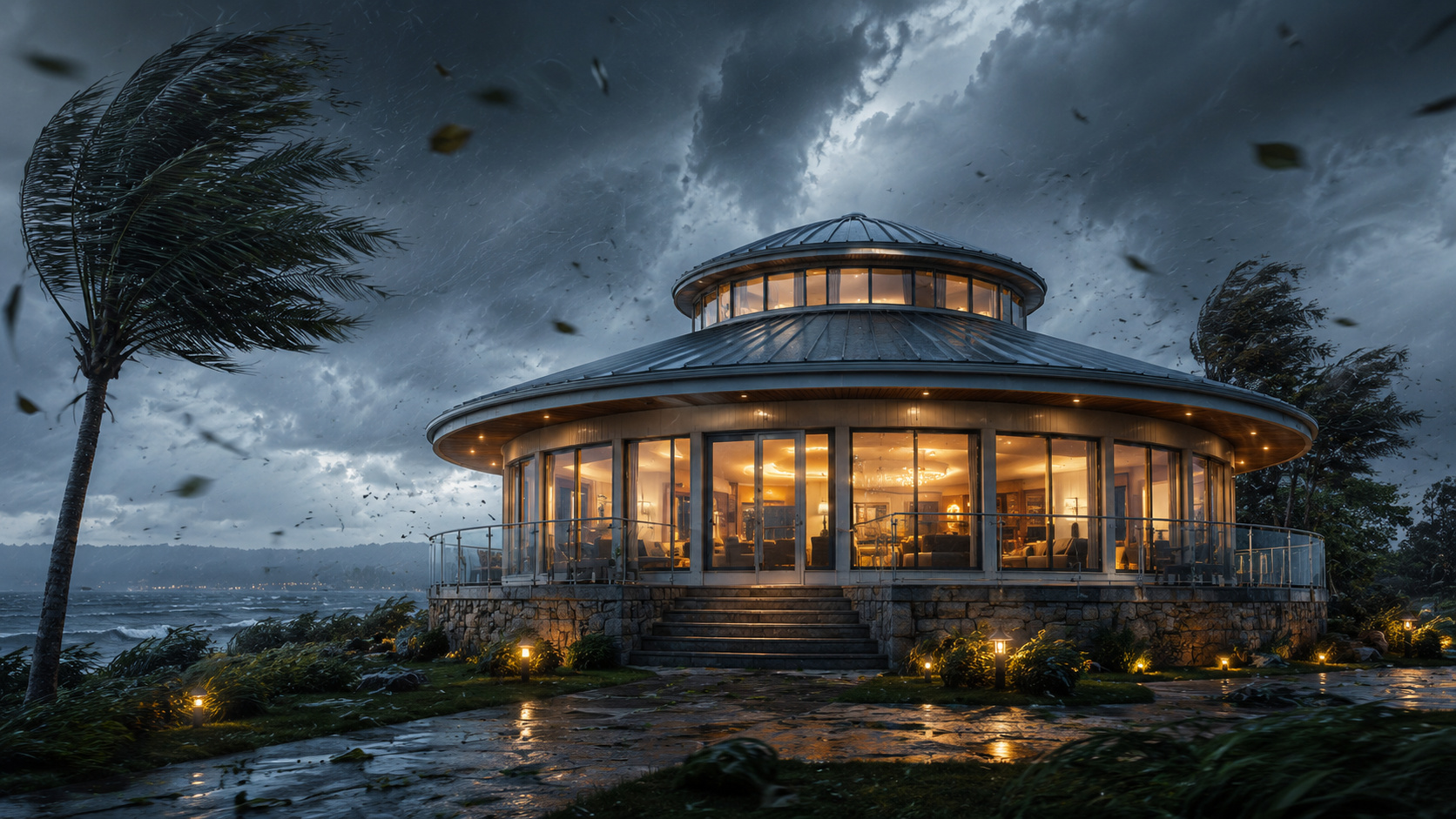
While regular houses face the hurricane head-on, a company in the United States sells round houses that deflect wind pressure, withstand 130 mph, and reach 190 mph with reinforcements.

-
The material that still causes surprise in Brazil has become walls in the USA, accelerated houses in Minnesota, and reduced heating costs by 70%.
-
Instead of burning or burying old tires, an American city is transforming about 2,000 of them into the street itself, paving its first sections with a quieter and more durable rubber asphalt.

-
How much does it cost to build a rental building in Brazil in 2026 according to three real architectural projects ranging from a plot of just 36 square meters to a five-story building with twenty mini apartments?



How an amphibious house can stay on the ground and rise when the flood arrives
The logic of the floating foundation is easy to visualize. On dry days, the house remains supported on the ground, like a regular dwelling.


When the flood advances, the base gains buoyancy. This allows the structure to rise with the water, without needing to leave the place where it was built.
The vertical foundations act as guides. They help keep the house aligned, preventing the force of the water from pushing the dwelling away.
Why the dwelling in Dhaka does not function like a houseboat
The LIFT House was not made to navigate. It also does not float all the time, like a common floating house.
The central point is the amphibious behavior. The house exists in two states: on the ground during dry periods and on the water during floods.
This difference changes the way of thinking about construction. The dwelling does not abandon the land, but also does not rely solely on fixed height to escape the flood.
The prototype was designed for low-income families in a flood-prone city
The research record The Lift House appears in 2011 and presents the dwelling as a flood-resistant solution for low-income families in Dhaka.
Buoyant Foundation Project, a research project on amphibious foundations, detailed that the LIFT House has two amphibious structures capable of adapting to rising water levels.
The proposal also involves basic services for residents without direct connection to city systems. This reinforces the idea of a house designed to function in difficult situations when flooding disrupts normal routine.
What happens when the water recedes and the house returns to its original position
When the flood recedes, the house does not continue floating. It descends with the water and returns to ground level.
This return is an essential part of the project. The dwelling needs to function before, during, and after the flood, without losing its primary function as a shelter.
For the resident, the practical difference is in permanence. The house was designed to stay in the same place, even when water invades the surroundings.
Where this type of flood-resistant house could attract attention in Brazil
In Brazil, floods affect urban neighborhoods, riverside areas, and communities built near rivers. Therefore, the idea of a flood-resistant house arouses curiosity.
Even so, each place would need to be studied carefully. Soil type, current strength, materials, cost, maintenance, and safety vary from one region to another.
The experience of Bangladesh does not mean a ready-made solution for any Brazilian city. It shows a possibility: adapting the dwelling to the movement of water instead of treating every flood merely as something to block.
The amphibious house in Bangladesh attracts attention because it makes flooding a planned part of the construction. It stays firm on the ground, rises when the water comes, and returns to the ground when the flood passes.
In a world where many families live in flood-prone areas, the LIFT House poses an important question for urban planners, governments, and residents: is it better to try to keep the water away at all costs or learn to build houses capable of coexisting with it? Leave your opinion in the comments and share this idea with those who follow flood solutions.


Be the first to react!