Portuguese
  Spanish




New Dragon Armor 3.0 Battery Separates Fire and Electricity, Reducing Fire Risk by 25%, Increases Capacity by Up to 10% in the Same Volume, and Exceeds 400 km of Autonomy in 86 kWh and 115 kWh Versions
Svolt announced the Dragon Armor 3.0 battery, a battery with physical separation between fire and electricity that reduces fire risk by 25% and extends autonomy to over 400 km, redefining the structural and thermal behavior of the battery in the event of a failure.
Battery with Physical Separation Between Fire and Electricity Alters Safety Logic
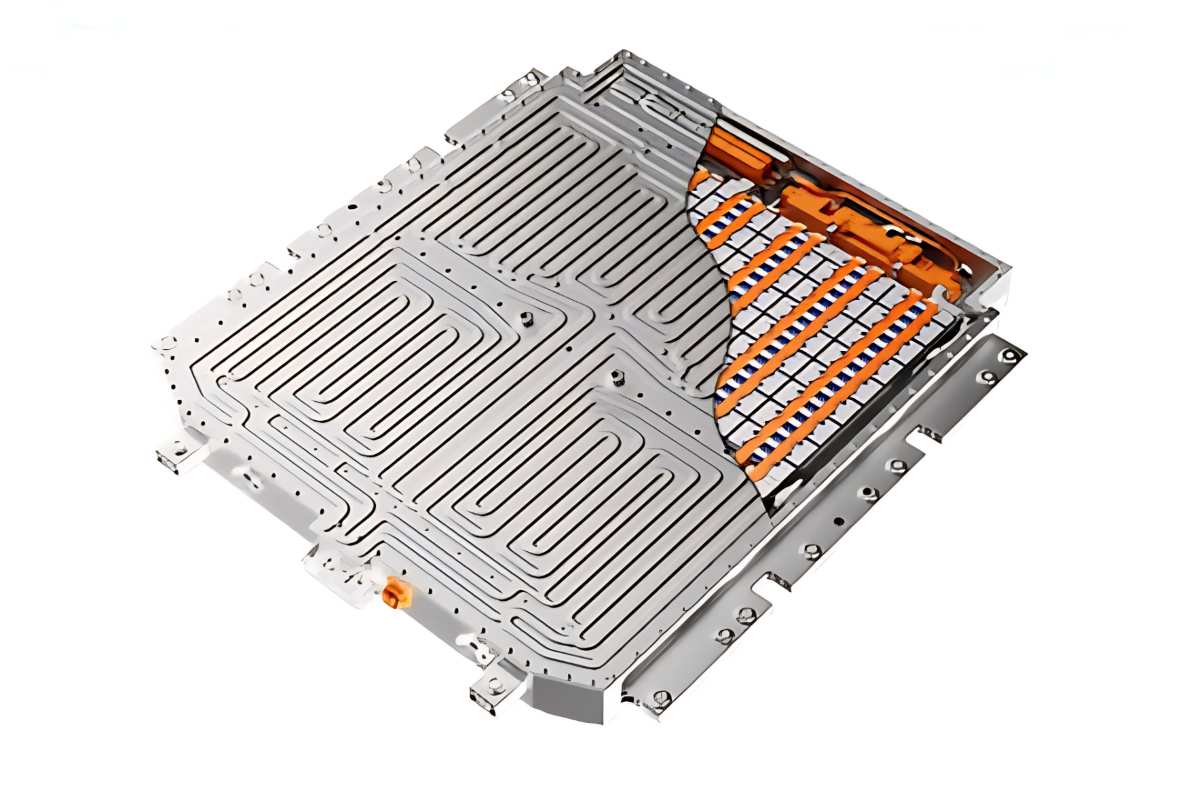
The Dragon Armor 3.0 battery introduces physical separation between electrical components and pressure relief and fire circuits. The proposal is not an incremental adjustment, but a redefinition of the battery’s behavior in the event of a failure.
The positive electrical terminals are positioned on one side of the design. The pressure relief and flame evacuation channels are on the opposite side. Each system has its own path, without direct interference.
-
Scientists Discover 125-Million-Year-Old “Pregnant Fossil” with Preserved Embryos and Microscopic Larvae Inside Mollusk in England

-
17-Year-Old Justin Bernstein Develops Bacteria to Produce Glass on Arctic Ice to Reflect Sunlight, Wins $50,000 U.S. Scholarship

-
The 19-Meter Rocket-Helicopter: A Private Industry Prototype That Challenged Space Race Logic

-
Brazilian Students Convert Seized Illegal TV Boxes into Linux-Powered Mini Computers for Schools and Social Projects Across São Paulo




This configuration prevents extreme heat and flames from interacting with critical electrical points. Instead of just containing the problem, the battery directs and isolates the thermal event before it reaches the occupants.
When thermal runaway occurs, energy does not disperse randomly. Flames are expelled downward and out of the vehicle, never towards the passenger compartment.
The approach is presented as controlled direction. Battery fires, although statistically rare, generate a disproportionate perception of risk in public opinion.
Structural Integration Increases Capacity Without Increasing Volume
The battery was developed to operate with prismatic cells and CTC and CTB architectures, Cell to Chassis and Cell to Body. Integrating the battery as a structural part of the vehicle reduces weight and increases efficiency.
Traditionally, this integration complicates thermal management and safety. Svolt claims to have solved the problem by separating the upper structural function from the lower thermal relief function.
The top part of the cell bears mechanical loads. The bottom part is optimized to release pressure and absorb impacts. This division maintains structural compatibility without compromising safety.
With a 5 mm increase in the height of the cell, the battery achieves a gain of between 7% and 10% in capacity without expanding the volume. The concept delivers more energy in the same space, without shortcuts.
Hybrid Technology Raises Battery Thermal Margins
The Dragon Armor 3.0 incorporates hybrid liquid-solid technology to stabilize the internal behavior of the cell. According to the company, there is an increase of 8°C in the self-heating temperature.
The safety margin grows by 10%. The initial temperature of thermal runaway rises by 5°C. The probability of occurrence is reduced by 25%.
The numbers indicate a greater interval between the onset of a critical event and its evolution. This additional time enhances the responsiveness of the vehicle’s systems.
The practical effect is described as more time for reaction and for occupants to remain safe. In critical situations, a few seconds can be decisive.
Mass Production and Commercial Configurations
The entry into mass production is pointed out as a critical point. Svolt forecasts two commercial configurations for the Dragon Armor 3.0 battery.
The 86 kWh version is intended for plug-in hybrid vehicles. The 115 kWh version is designed for 100% electric vehicles.
In the 86 kWh battery, the company indicates an increase in lifespan of over 10%. The electric autonomy exceeds 400 km under realistic usage conditions.
The performance is presented as applicable to fleets, family cars, and daily-use vehicles. The technology leaves the laboratory environment and reaches commercial application.
Potential and Developments
Technologies like the Dragon Armor 3.0 indicate progress in electrification regarding efficiency, trust, and resilience. The integrated battery acts as an active part of the vehicle’s safety.
Among the noted effects are a smaller carbon footprint per kilometer traveled and greater social acceptance of electric mobility. The technological base also supports reused stationary systems.
The proposal is not described as a miracle solution. It is presented as a firm step towards a more mature and responsible electric mobility.
By redefining the relationship between fire and electricity, the battery consolidates a change in logic in storage system design, prioritizing direction, isolation, and control before the thermal event reaches the habitable compartment.
With clear physical separation and improved thermal management, the Dragon Armor 3.0 battery repositions the debate on safety in electric vehicles, maintaining focus on objective data and measurable performance, even as it represents a technical redefinition of the sector.