






 Portuguese
  Spanish


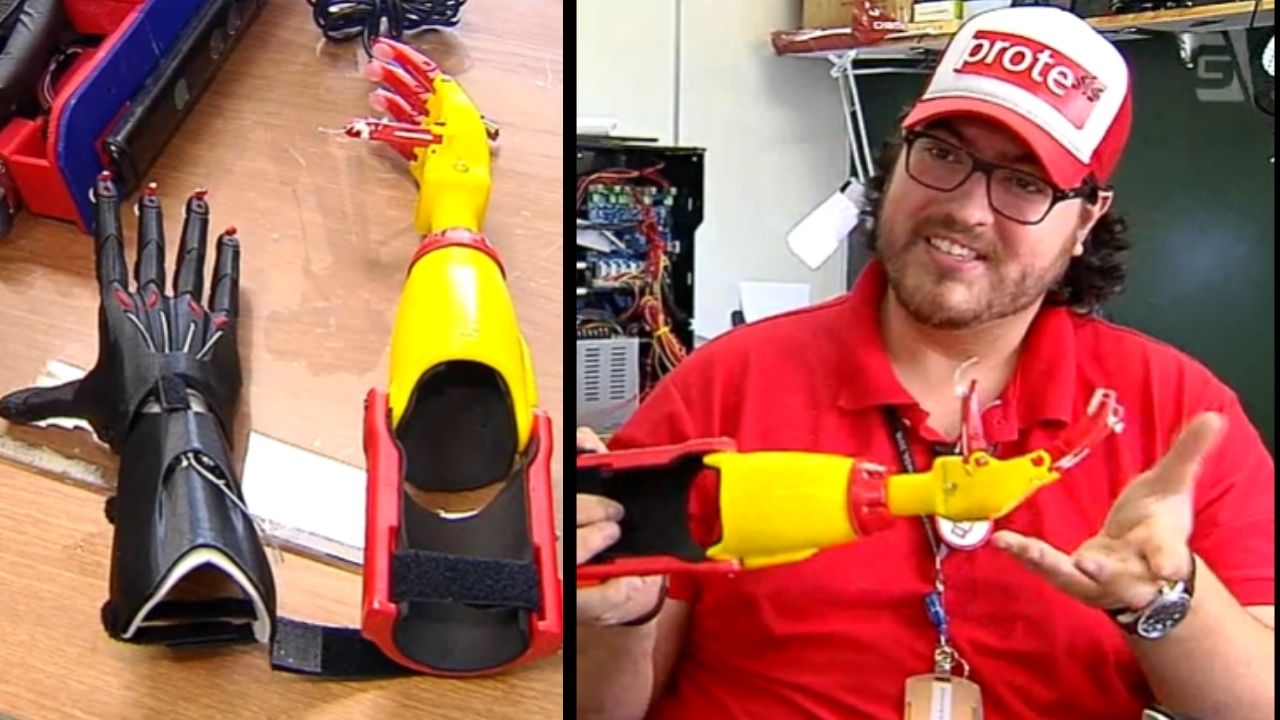

In a report by Jornal da Gazeta published on February 27, 2017, Thiago, a 26-year-old mechatronics engineer, presented mechanical prostheses made with 3D printing, activated by the user’s own movement, while values mentioned in the video appear as a reference from that period, not as the current market price in Brazil.
The mechanical 3D prostheses presented by Thiago, a 26-year-old mechatronics engineer, operate without a battery and rely on the user’s own movement to open and close the hand. The case was shown in a report by Jornal da Gazeta published on February 27, 2017.
In the video, Thiago explains that, instead of focusing his career on robots, he started investing in mechanical models made with 3D printing. The report also compares values mentioned at that time, showing a simple model around R$ 1,000 at the time and carbon parts presented as options above R$ 100,000 in 2017.
Models operate with body movement
The prostheses shown in the report are mechanical. This means that their operation does not depend on a battery, electric motor, or electronic system to perform the main movement of the hand.
-
China Left 51 Rocket Bodies in Low Earth Orbit Between 2021 and 2025, Doubling Previous Period, Report Warns of Space Debris Threatening Satellites for Decades

-
Brazilian Researcher Uses Low-Cost Sensors to Measure Cyclists’ Pollution Exposure in São Paulo

-
18 Iron Age gold coins discovered by a teacher using a metal detector in a Suffolk field sell for £33,200 at auction, exceeding estimates.
-
Chinese Farmer with No Formal Education Builds Over 60 Homemade Robots from Scrap Metal, Each Bearing His Surname


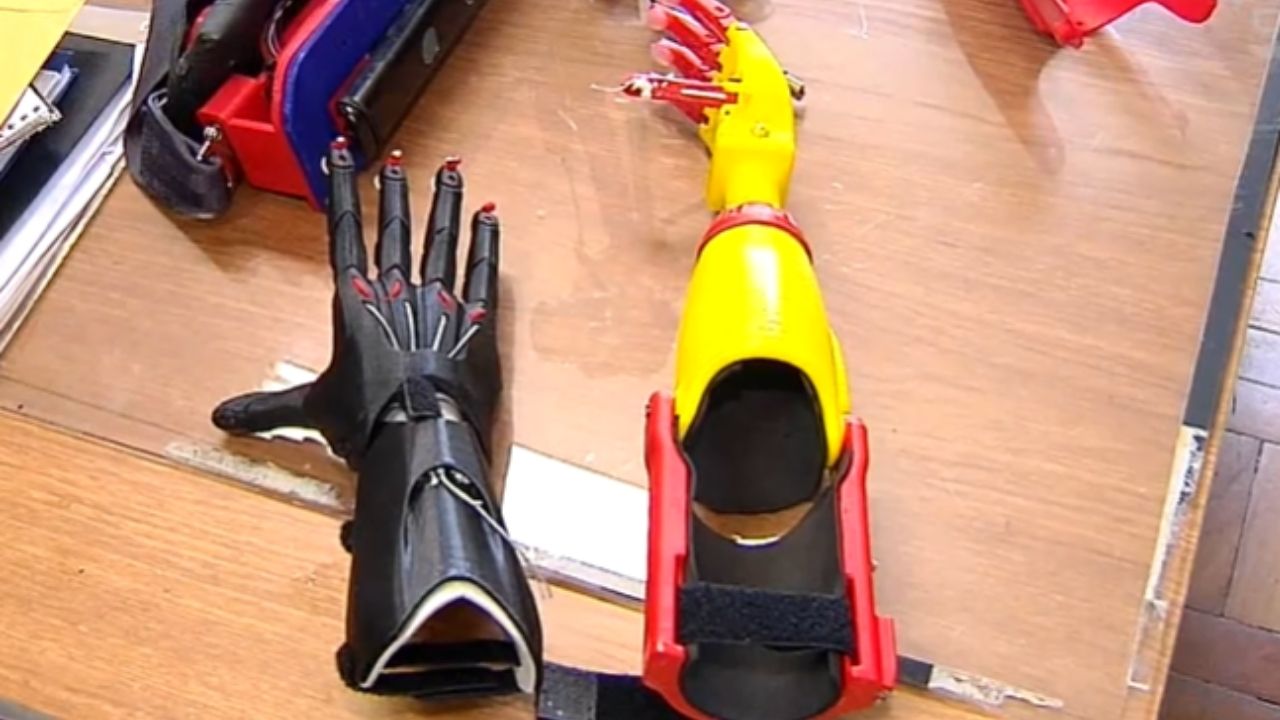
In one of the models, control occurs through elbow movement. When the user bends the arm, the mechanism allows the hand to open and close. In another model, activation is done by the wrist, maintaining the logic of operation based on the body’s own movement.
3D printing entered the mechanical part
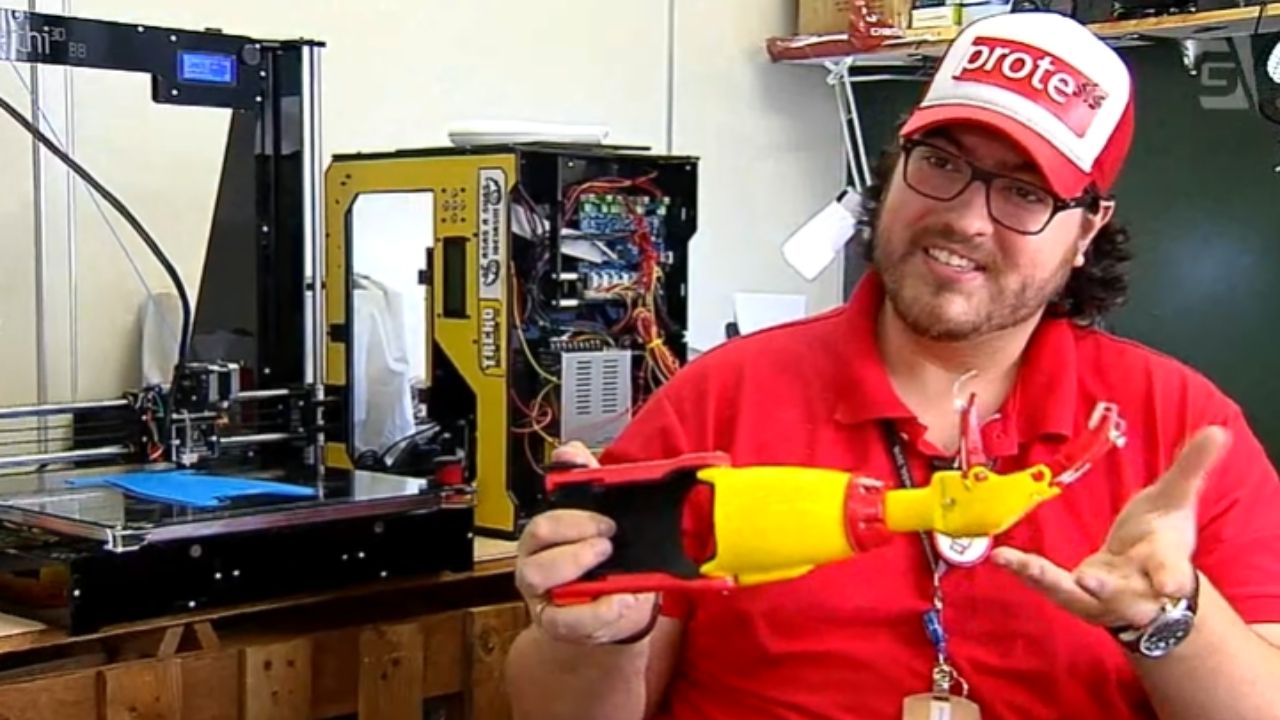
Thiago states in the video that he works with mechanical prostheses and that the mechanical part is made with 3D printing. The technology allows for the manufacturing of components in a personalized way, adapting shape, appearance, and structure according to the equipment’s proposal.
The report does not present 3D printing as a universal solution for all cases. What is shown is an applied use of the technology: creating simple, functional, and adjustable models, focusing on movement, cost, and visual identity.
Values cited are a reference from 2017
An important point of the report is the price comparison. In the video published on February 27, 2017, a simple model is mentioned to cost around R$ 1,000 at that time. Meanwhile, carbon parts appear as options that did not cost less than R$ 100,000 at the time.
These values should not be read as current quotes. They serve to understand the contrast presented by the report in 2017, as prices of materials, customization, maintenance, suppliers, and technologies may change over the years.
Mechanical parts do not depend on batteries
An advantage cited by Thiago is that mechanical prosthetics do not run out of power. Since the movement comes from the user’s body, there is no dependence on electrical charge to open and close the hand.
At the same time, the video also indicates a practical characteristic of this type of system: as the piece depends on body movement, the user may get tired. This observation avoids an exaggerated interpretation and shows that each model needs to be considered according to necessity, adaptation, and use.
Customization became a differentiator of the models


Besides functionality, the report highlights customization. The video mentions models with appearances inspired by characters, such as a Barbie-themed prosthetic for a 7-year-old child and another inspired by Iron Man for a 13-year-old teenager.
Thiago explains that the user can request an all-black prosthetic, inspired by a character or with another visual identity. The proposal is to make the equipment more related to the person who will use it, without being restricted to a single standard.
Appearance also interferes with adaptation
The visual customization can have an important impact, especially on children and teenagers. Instead of treating the piece solely as medical equipment, the project allows the appearance to connect with personal taste, favorite color, or emotional reference.
This does not replace comfort, safety, fit, and function. But it helps to understand why 3D prosthetics caught attention in the report: they combine mechanics, 3D printing, and visual identity in a single proposal.
Hospital das Clínicas maintains traditional workshop
The report also shows the orthopedic workshop of the Hospital das Clínicas in São Paulo. According to the video, since the 1950s, the HC has maintained a structure focused on the production of traditional prosthetics.
In the hospital, the models presented are offered at no cost to the patients served. The report states that there are almost 2,000 appointments per month and that the pieces take approximately a month to be ready, going through plaster molding, resin, and finishing.
HC’s strength is in lower limbs
At Hospital das Clínicas, the focus highlighted in the video is on lower limb prosthetics. The process starts with plaster molding, moves to resin application, and ends with finishing, which often includes the sole.
The doctor responsible for the sector, whose name is not provided in the supplied transcript, states that a large part of the patients served come due to trauma, mainly car and motorcycle accidents. The report positions the HC as a reference in traditional models, not in 3D printing.
3D printing was not yet available at HC
The video reports that 3D prosthetics were not available at Hospital das Clínicas at that time. Even so, the responsible doctor views the popularization of this type of material positively.
He notes that the use of 3D printers was not yet a reality for everyone due to cost and technical development issues. At the same time, he highlights that the individualization of the product makes 3D printing a technology increasingly present in this debate.
Technical development still limits scale
The report shows potential but also indicates limits. Producing a prosthetic does not only depend on printing parts: it is necessary to consider fit, resistance, adaptation, movement, comfort, and technical support.
For this reason, technology should be viewed with caution. 3D printing can reduce costs in some models, but it still requires development, evaluation, and responsibility in application. Each user may need a different solution.
Comparison with carbon showed market difference
The difference between the simple model mentioned around R$ 1,000 in 2017 and carbon parts above R$ 100,000 during that period shows how the prosthetics market can vary greatly. Material, complexity, finish, and indication directly influence the value.
In the case presented by Thiago, the focus was on simple, mechanical, and customized models. Carbon parts, on the other hand, may involve another standard of material, lightness, resistance, and application, depending on the project and the needs of each patient.
Mechatronic engineering changed application
Thiago’s training in mechatronic engineering helps explain the bridge between movement, mechanics, and digital manufacturing. Although robots are a common application in the field, he directed the knowledge towards rehabilitation equipment.
This change in application is the central point of the article. Instead of developing only automated systems, the engineer began to create prosthetics that respond to body movement and can be customized according to the user’s identity.
Simplicity was part of the proposal
Thiago states in the video that he can aim for a lower price because the project is simple and does not require a complexity that would necessitate charging high prices. This technical choice helps position the models as a mechanical alternative in certain contexts.
Simplicity, in this case, does not mean the absence of technology. It means selecting an objective solution for a specific function: opening and closing the hand through the elbow or wrist, without relying on batteries or more expensive electronic components.
3D prosthetics expanded a larger discussion
The report by Jornal da Gazeta shows that the topic goes beyond a piece made with a 3D printer. The subject involves cost, customization, access, technology, traditional care, and technical development.
Thiago’s mechanical prosthetics appear as a possible front within a broad field. Alongside them, the workshop at the Hospital das Clínicas highlights the importance of public, free, and traditional structures for patients served in large volumes.
A market between tradition and innovation
The video published in 2017 places two realities side by side. On one side, the HC workshop, with traditional production, almost 2,000 monthly appointments, and free models for patients. On the other, 3D printing, still outside the hospital at that time, but seen as a promising path due to the possibility of individualization.
This contrast helps to understand why the topic remains relevant. Rehabilitation can involve both established techniques and new manufacturing methods, as long as each solution respects the user’s safety, indication, and need.
Technology that brings function and identity closer
By replacing robots with personalized mechanical prostheses, Thiago brought engineering closer to a practical application related to human movement. The result is models activated by the elbow or wrist, with adjustable appearance and prices presented as more affordable in the context of 2017.
The report shows that the future of this market may involve the combination of traditional workshops, 3D printing, and personalization. Do you believe that simpler and more adaptable technologies can expand access to rehabilitation equipment in Brazil? Leave your opinion in the comments.


