Portuguese
  Spanish


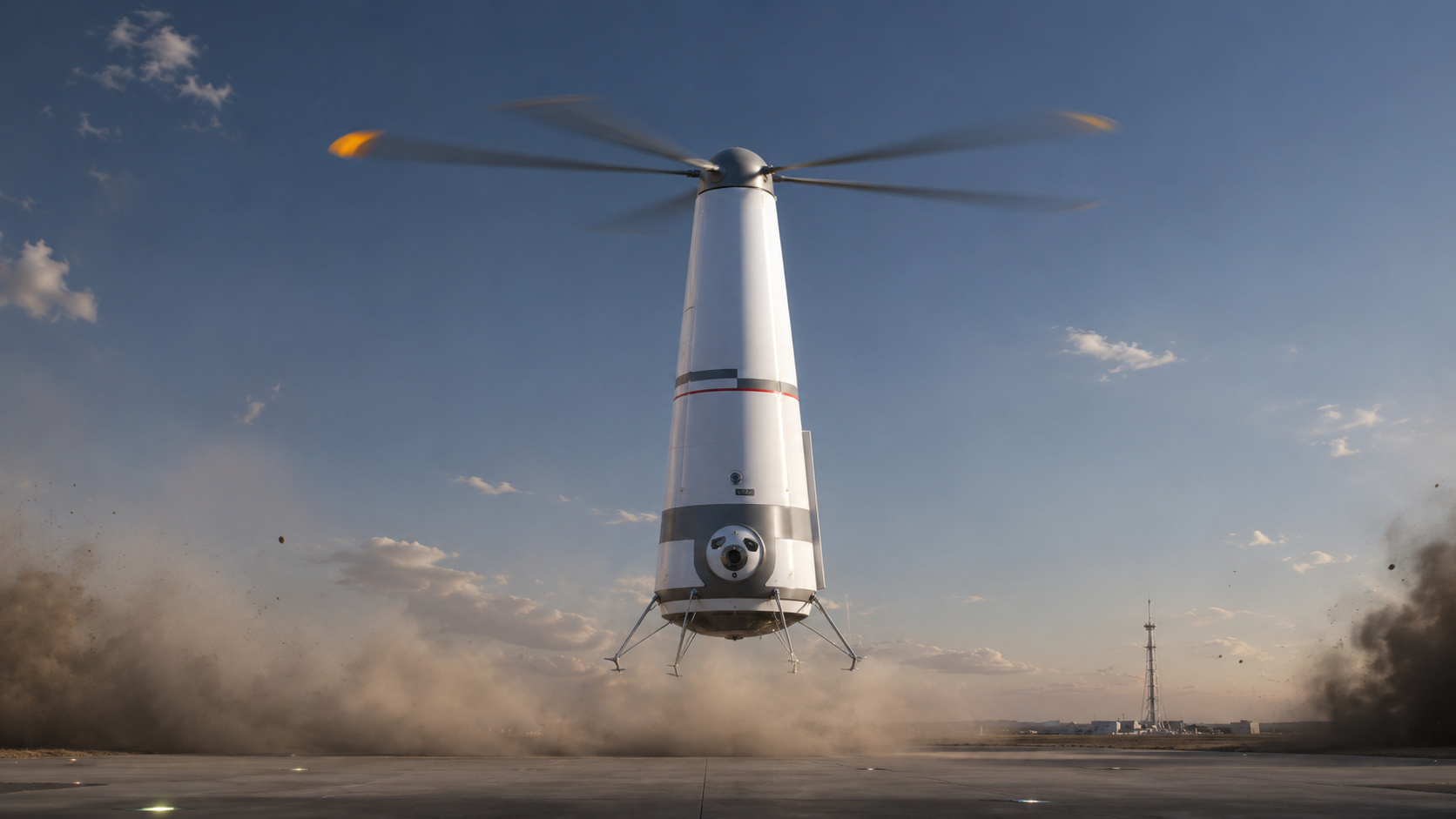

The Roton by Rotary Rocket wanted to combine a reusable rocket and helicopter into an SSTO spacecraft, but the project stopped after three test flights.
At the end of the 1990s, when the private space sector was still trying to prove it could compete with traditional programs, Rotary Rocket presented one of the most radical proposals of its generation. The Roton promised to combine a rocket and helicopter into a single craft, with the ambition of reducing costs and bringing back to the market the idea of a fully reusable space vehicle.
The logic was as simple as it was ambitious. Instead of launching cargo into space and discarding expensive parts of the structure along the way, the project bet on a Single Stage to Orbit vehicle, the SSTO concept, capable of taking off, completing the mission, and returning whole.
To try to demonstrate that at least the landing stage could work, the company built the Atmospheric Test Vehicle, which conducted three low-altitude experimental flights in 1999 before the program lost financial momentum and was eventually shut down.
-
Brazilian Students Convert Seized Illegal TV Boxes into Linux-Powered Mini Computers for Schools and Social Projects Across São Paulo

-
Brazilian Engineer Develops Affordable Custom 3D-Printed Prosthetics for Children and Teens, Operated by Elbow or Wrist Movement Without Batteries

-
China Left 51 Rocket Bodies in Low Earth Orbit Between 2021 and 2025, Doubling Previous Period, Report Warns of Space Debris Threatening Satellites for Decades
-
Brazilian Researcher Uses Low-Cost Sensors to Measure Cyclists’ Pollution Exposure in São Paulo




Roton by Rotary Rocket wanted to end the logic of disposable rockets
The Roton proposal tackled one of the biggest economic bottlenecks of space activity: the culture of discarding extremely expensive systems after a single use. In a text published during the initial phase of the concept, Gary Hudson argued that disposable rockets operated as a structurally expensive model, far from the reuse logic that transformed commercial aviation.
It was in this context that the bet on a reusable single-stage vehicle was born. The craft would take off like a rocket but use a rotor system to solve part of the aerodynamic challenges and, mainly, to make the return and landing less dependent on traditional solutions like parachutes or disposable structures.


The ambition was enormous because the project did not just try to improve an already known launcher. It wanted to change the very architecture of access to space, offering a craft that combined rocket propulsion with reusable aircraft behavior.
Rocket helicopter became a symbol of the boldest phase of the private space race
The concept seemed straight out of science fiction. The idea was that the vehicle would use a rotor with rocket-propelled tips, creating a hybrid solution that would aid both in flight dynamics and in the recovery of the craft upon return to Earth.
Even Wired, when publishing the concept in 1996, treated the project as an extreme proposal even by the standards of an industry accustomed to bold promises.
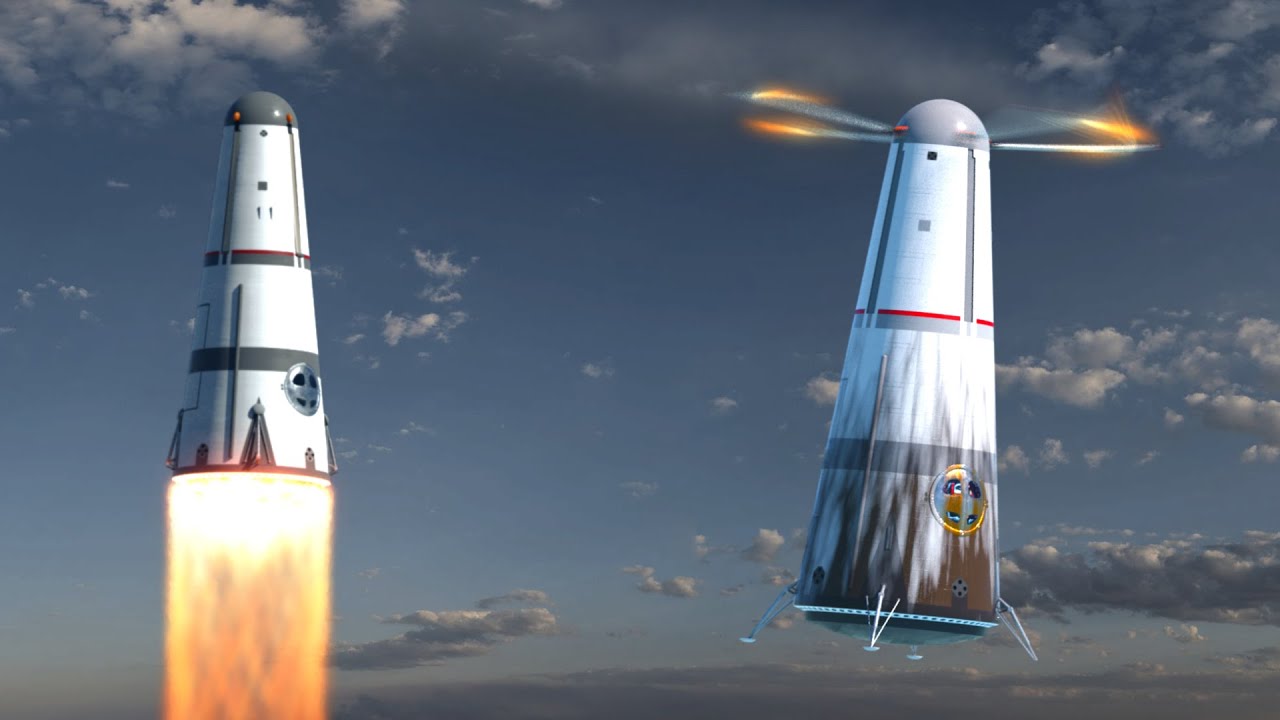
More than just an exotic visual detail, the rotor was a central piece of the technical reasoning. It appeared in the project as an element of support, efficiency, and landing, in an attempt to make the orbital system lighter and cheaper than the conventional launchers of the time.
This combination helped the Roton become one of the most remembered concepts of the first wave of modern private space companies. Even without reaching space, it became a reference when it comes to unconventional engineering and the pursuit of low-cost reusable rockets.
Atmospheric prototype of the Roton was created to test landing and control of the craft
Before considering a complete orbital flight, Rotary Rocket decided to validate the vehicle’s behavior within the atmosphere. In March 1999, the company presented the Atmospheric Test Vehicle, a prototype specifically aimed at testing the approach and landing of the reusable design that was at the heart of the program.
This point is crucial to understand the project. The ATV was not yet the final orbital craft, but a demonstrator built to verify if the controlled return proposal made sense in the real world. The focus was less on reaching altitude and more on proving that the vehicle’s unusual architecture could at least fly and land with some degree of predictability.
The strategy followed a typical logic of experimental engineering. Instead of trying to leap directly to orbit, the company preferred to start with the most critical phases of atmospheric behavior, precisely where such an unusual concept could first fail.
Three test flights in 1999 showed that the Roton could fly, but did not resolve its major risks
The tests ended up being short, but sufficient to place the Roton in the history of private astronautics. Wired records that the Atmospheric Test Vehicle performed three low-altitude flights in 1999, enough to demonstrate that the vehicle could lift off the ground, but not enough to dispel doubts about its viability as a reusable orbital system.
The project also bore the weight of being too pioneering for its time. The promise of combining rocket, helicopter, total reuse, and operation at much lower costs sounded revolutionary, but it required a rare combination of technical maturity, patient capital, and the ability to endure a long testing phase.

In practice, the flights served more as a proof of boldness than as a definitive validation of the architecture. The Roton showed that the idea was not just a blueprint fantasy, but also made it clear that transforming the concept into an operational orbital launcher would be a much more difficult task than the initial proposal suggested.
Lack of funding brought down Rotary Rocket before the orbital phase
After the test campaign, the next step would be to advance to a more robust phase of the program. This would require more time, integration of new systems, and above all, money. It was precisely at this point that the project lost momentum. Test pilot Brian Binnie reported to AOPA that the next step would be to install a rocket engine, but by then the funding environment was already drying up.
In the same interview, Binnie attributed part of this bottleneck to the burst of the dot-com bubble, which coincided with the deterioration of the company’s financial stamina. The result was direct: in 2001, Rotary Rocket closed its doors before taking the Roton to the actual space stage.
This helps explain why the program ended without a major public explosion or a memorable catastrophic flight. The project did not fail solely due to technical complexity. It was also defeated by the difficulty of financially sustaining extremely ambitious engineering in a still immature market.
Roton’s legacy survives in the history of reusable rockets
Even failing as an orbital program, the Roton anticipated debates that today dominate the space sector. The obsession with reuse, cost reduction per launch, and operation closer to aeronautical logic became, decades later, one of the pillars of the new space market.
The project also left an important symbolic mark. It showed that the attempt to reinvent access to space did not start with the most famous companies of the 2010s, but had been attempted since the 1990s by smaller groups willing to test solutions that seemed too improbable to receive widespread support.
For this reason, the Roton is still remembered as one of the most daring experiments in private aerospace engineering. It did not reach orbit, did not become a commercial system, and did not fulfill the promise of making space cheaper, but it left a clear legacy: many of the ideas that today seem normal were once part of projects that failed trying to arrive too early.