Portuguese
  Spanish


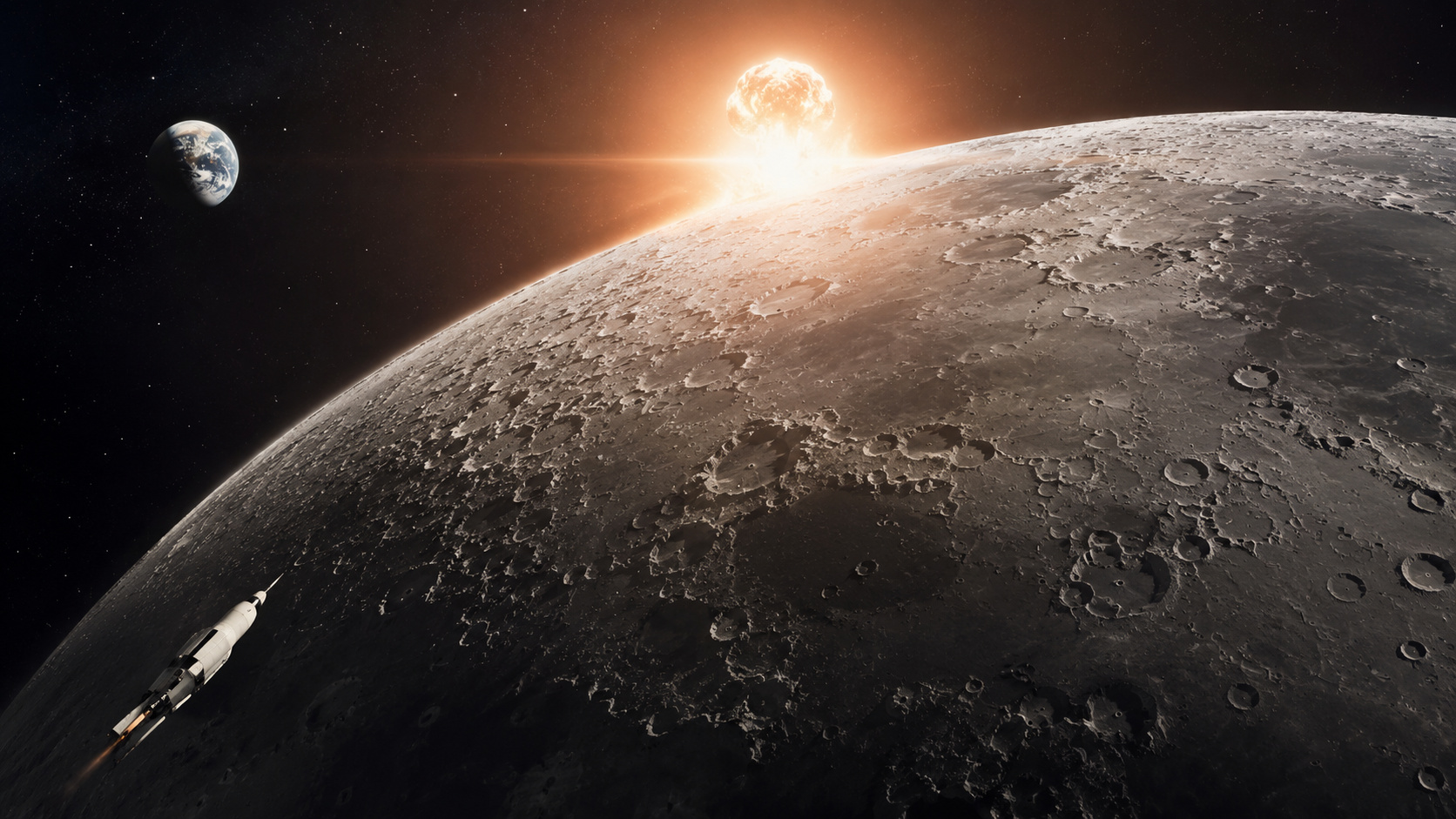

A report linked to the United States Air Force examined a nuclear explosion on the Moon, the possibility of a flash seen from Earth, dust, radiation, and the political weight of the space race in a dispute that mixed science and military force. Nothing was put into practice.
Before sending people to the Moon, the United States considered a nuclear bomb explosion near the natural satellite to produce a flash in space and reinforce the country’s image of strength.
In practice, the proposal was limited to a study linked to the United States Air Force. No nuclear explosion on the Moon occurred, and there is no basis to treat the case as a secret executed event.
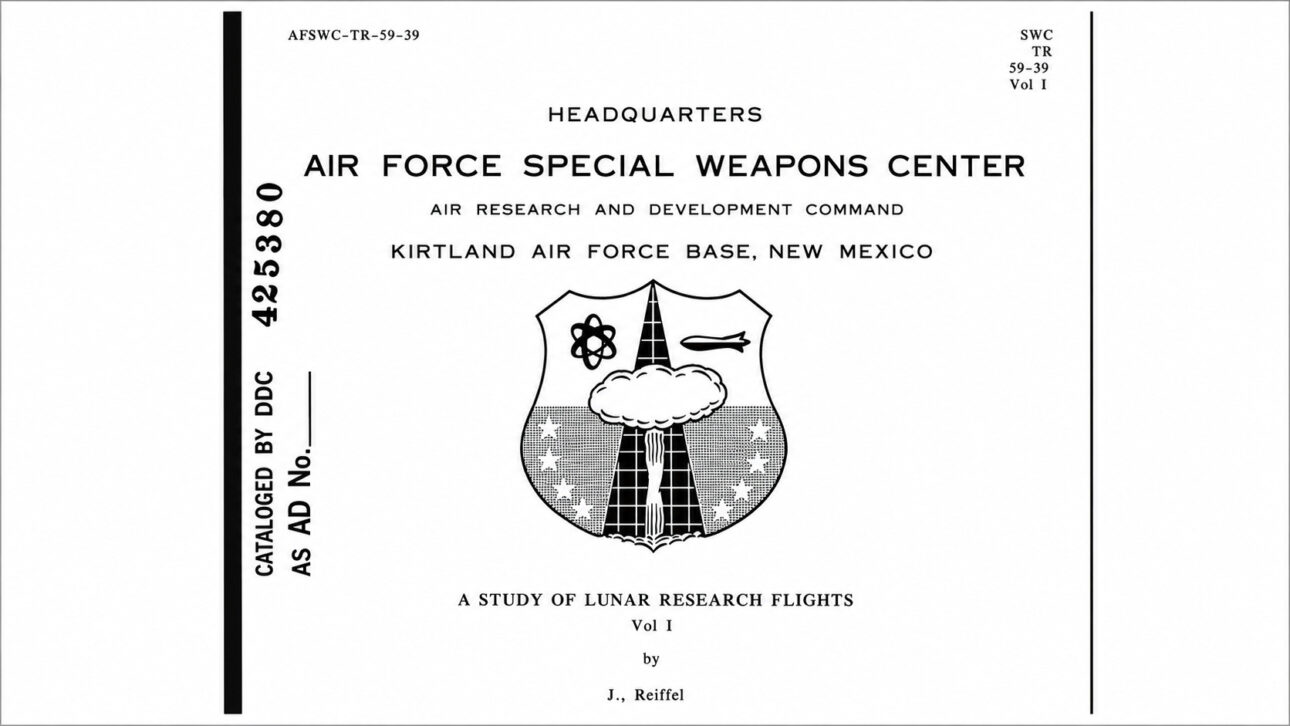
The National Security Archive, an entity that gathers declassified government documents, made available the report that investigated the scientific gains, military uses, and political propaganda of a detonation on or near the Moon.
-
In Cape Verde, Ekonatura Recycles 100 kg of Glass and Plastic per Hour into School Bags

-
Experts Reveal Which Water Bottle Material—Metal, Plastic, or Glass—Harbors the Most Bacteria and When Each is Best to Use
-
77-Year-Old Woman Earns Top Marks for Embroidered Children’s Book Thesis with Her 98-Year-Old Mother, Moves Audience After Returning to University Entrance Exams 30 Years Later with a Score of 980
-
Domestic Workers in Switzerland Earn Around $220 per Day, Compared to $24-$60 in Brazil



The nuclear bomb on the Moon was a study hypothesis, not an executed mission
The proposal examined possibilities, not a ready-to-happen operation. The report dealt with a detonation on the lunar surface or nearby, but does not record an actual launch.
The central point was to evaluate what could be learned from an explosion. The document imagined up to three sets of instruments on the visible side of the Moon before a possible detonation.
These equipments would take measurements before, during, and after the event. The study also made it clear that part of the observations could be made without an explosion, as the goal was to analyze many research possibilities.
The flash in space would have scientific and political value in the space race
One of the questions was whether the explosion could produce a visible flash from Earth. The report calculated the light intensity necessary for the glow to appear against the bright and irregular surface of the Moon.
The analysis included telescopes, fast photography equipment, and devices capable of separating light into colors. This would help observe the explosion’s glow and identify signals released into space.
The idea also had political weight. Showing that a country could carry out such an extreme operation could reinforce the image of technological superiority during the space race.
Lunar dust, radiation, and heat were among the evaluated effects
An explosion could raise lunar dust and spread surface material into space. The study sought to understand how this material would move and how long it could be observed.
The analysis also included high-energy radiation, magnetic fields, and plasma. Plasma is a very hot matter formed by electrically charged particles.


Another possibility was to measure how the lunar surface would cool after receiving a large amount of heat. This observation could help understand how the Moon’s soil can transmit heat.
The plan also foresaw risks of contamination and global rejection
Detonating a nuclear weapon on the Moon was not treated solely as an experiment. The report cited environmental disturbance, biological contamination, and radiological contamination, linked to materials capable of emitting radiation.
International repercussions also concerned those involved. An action intended to showcase technological capability could provoke a strong negative reaction in various countries.
The National Security Archive, an entity that gathers declassified government documents, shows that the report acknowledged possible prestige gains but also addressed the risks that could outweigh the benefits.
The report of June 19, 1959, never became a nuclear explosion on the Moon
The preserved document is dated June 19, 1959 and was approved at the Air Force Special Weapons Center in New Mexico. It records an investigation into lunar research flights, not a conducted detonation.
The proposal ended without being executed. The material does not indicate a bomb sent to the Moon nor a hidden explosion on the natural satellite’s surface.
The difference is simple: studying a hypothesis is not executing a mission. The report gathers ideas, calculations, and risks of a possibility that was never put into practice.
The space race mixed science, weapons, and demonstration of power
The space race went far beyond rockets and research missions. Each advance could serve to expand knowledge and also demonstrate military and technological capability.
The hypothesis of a nuclear explosion on the Moon shows the extent of the ambitions discussed during that period. The Moon appeared as a space for research but also as a stage for international competition.
The nuclear bomb near the Moon never exploded, but the proposal shows how space exploration was once considered for scientific, military, and political interests. A flash in the sky could be seen as a tool of prestige.
The most important caution is not to confuse this study with a real mission. The proposal never left the drawing board, although it reveals the tension surrounding the space race.
For you, should the Moon be just a space for research or could it also be used to demonstrate military strength? Comment and share.