Portuguese
  Spanish




Giant structure was found on the coast of Ishikawa, Japan, and is expected to require a complex removal due to its weight, size, and still undefined origin
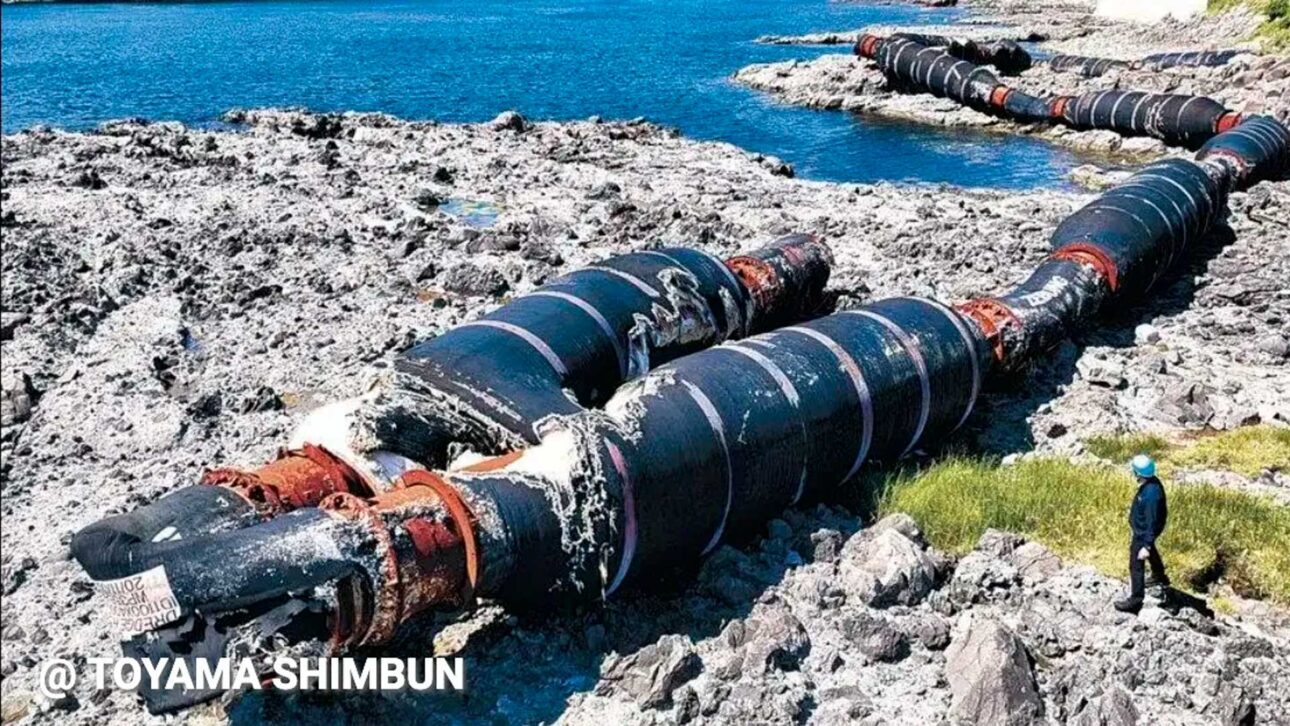
A giant industrial hose, about 150 meters long and weighing an estimated 300 tons, appeared on the coast of Ishikawa Prefecture, Japan, turning a curious case into a high-cost public operation. The piece, found in the Shika region on the Noto Peninsula, is expected to cost approximately 50 million yen, reported in Brazil as about R$ 1.6 million, to be removed from the beach.
According to the local Japanese press, the object is not a common hose. It is a structure known as a floating hose, a type of floating pipeline used in maritime and dredging operations, especially to move sediments removed from the seabed.
The case draws attention because the piece was identified months before becoming international news. As reported by the Jiji agency, published by the Nippon.com portal, authorities were notified on December 17, 2025 about a large hose adrift near a fishing port. Days later, on December 25, the structure was confirmed on the coastal strip.
-
Brazilian Construction Worker Moves to France, Earns Up to €2,500 Monthly with Home Renovations, Gains Social Media Attention

-
US Navy Sinks USS Oriskany with 230 kg of C-4, Creating World’s Largest Artificial Reef in 37 Minutes

-
U.S. Dumped Tanks, Jeeps, and Coca-Cola into the Pacific in 1945 After British and French Lowball Offer, Creating “Million Dollar Point”
-
WHO Warns of Unnecessary Interventions in Natural Births Worldwide, Advocates for More Human-Centered Care, Reigniting Debate on Medicalization




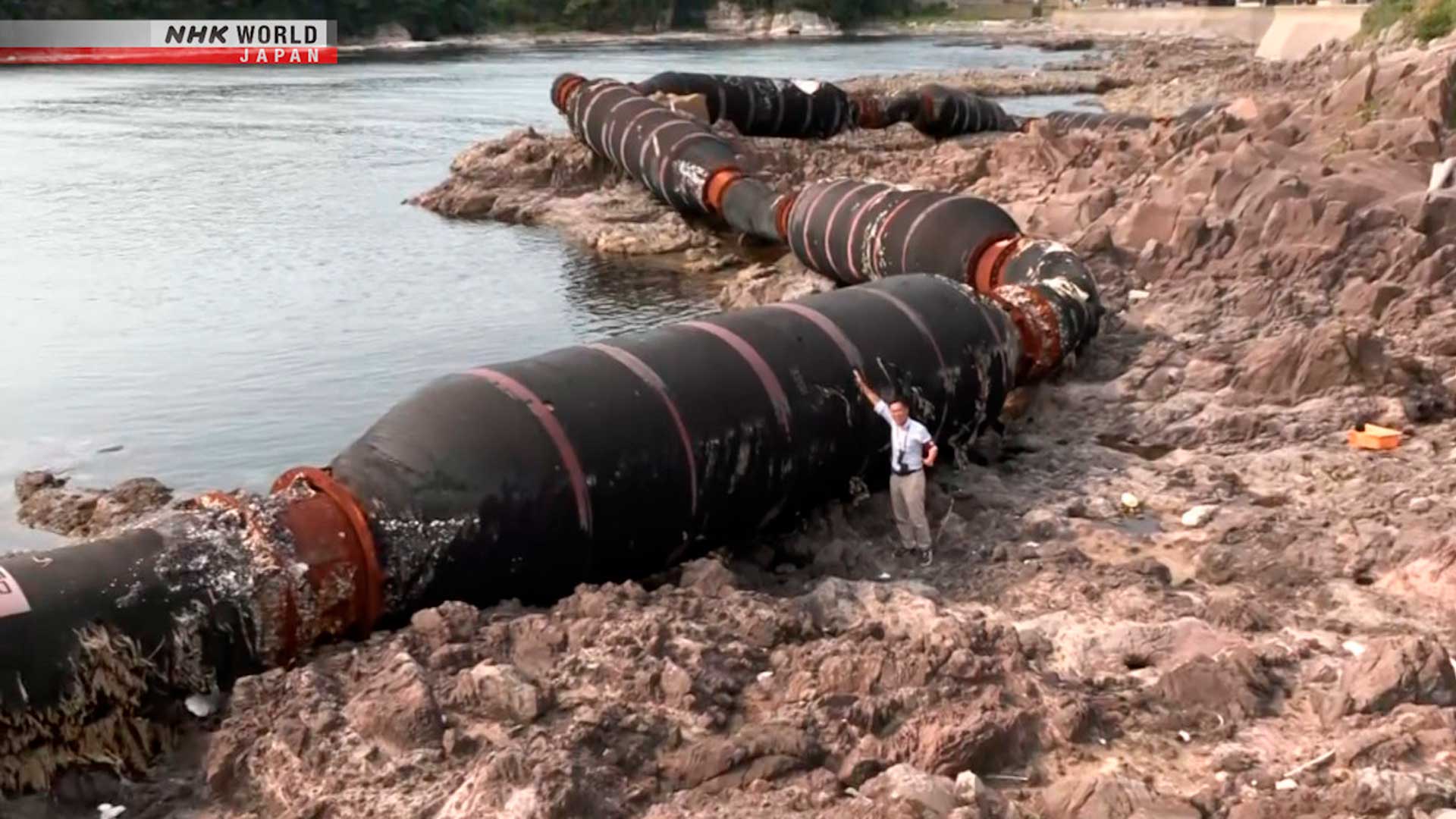
Besides the unusual size, what intrigues residents and authorities is the absence of a responsible party. The hose had the mark of a Chinese company, but according to Ishikawa authorities cited by the Japanese press, the owner has not yet been identified.
Object found on the beach is not common and may have been used in maritime construction


According to FNN Prime Online, in a report by Ishikawa TV, the hose found on the coast of Shika is approximately 150 meters long, with a diameter reaching 2 meters and an estimated weight of 300 tons. These dimensions explain why the removal cannot be done as a simple beach cleanup.
This type of structure is used in industrial activities at sea. The Japanese press describes the material as a floating pipeline used to transport or remove sediments accumulated on the seabed, a common practice in port works, dredging, and coastal interventions.
The presence of such a large object on a beach raises questions about its route to Ishikawa. As the owner has not been located, it is still unclear whether the hose came loose from some operation, was lost during transport, or drifted for a long period before running aground.
The case also shows how large and heavy marine debris can have immediate impacts on coastal communities. Even when there are no injuries or visible damage, the mere presence of an industrial object of this size creates risk, blocks areas, and requires machinery, technical teams, and planning.
Removal should start in June and cost will be borne by the government and province
As reported by Jiji agency on Nippon.com, the removal of the hose is scheduled to begin on June 15, 2026. The goal of local authorities is to complete the service by the Japanese autumn, which runs from September to November in the Northern Hemisphere.
The estimated cost is 50 million yen. According to the same publication, the Ishikawa province is expected to bear about 2 million yen, while the remainder should be covered by national subsidies intended for the treatment of waste that reaches coastal regions.
The operation is not simple because the object is heavy, extensive, and in a sensitive environment. To remove a structure of this type, authorities need to consider machine access, worker safety, tides, risk of material fragmentation, and transport to a suitable disposal or processing site.
The area where the object appeared is on the Noto Peninsula, a region that also received significant public attention after the 2024 earthquake. Although the hose case is not directly linked to the disaster, the presence of an industrial item of this size in a coastal area reinforces the pressure on local governments already involved in construction, safety, and regional recovery.
Owner has not yet been identified by Japanese authorities
One of the central points of the investigation is to find out who should be held accountable for the object. According to FNN Prime Online, the hose had the name of a Chinese manufacturer, but this does not necessarily mean that the company owns the structure or is responsible for its abandonment.
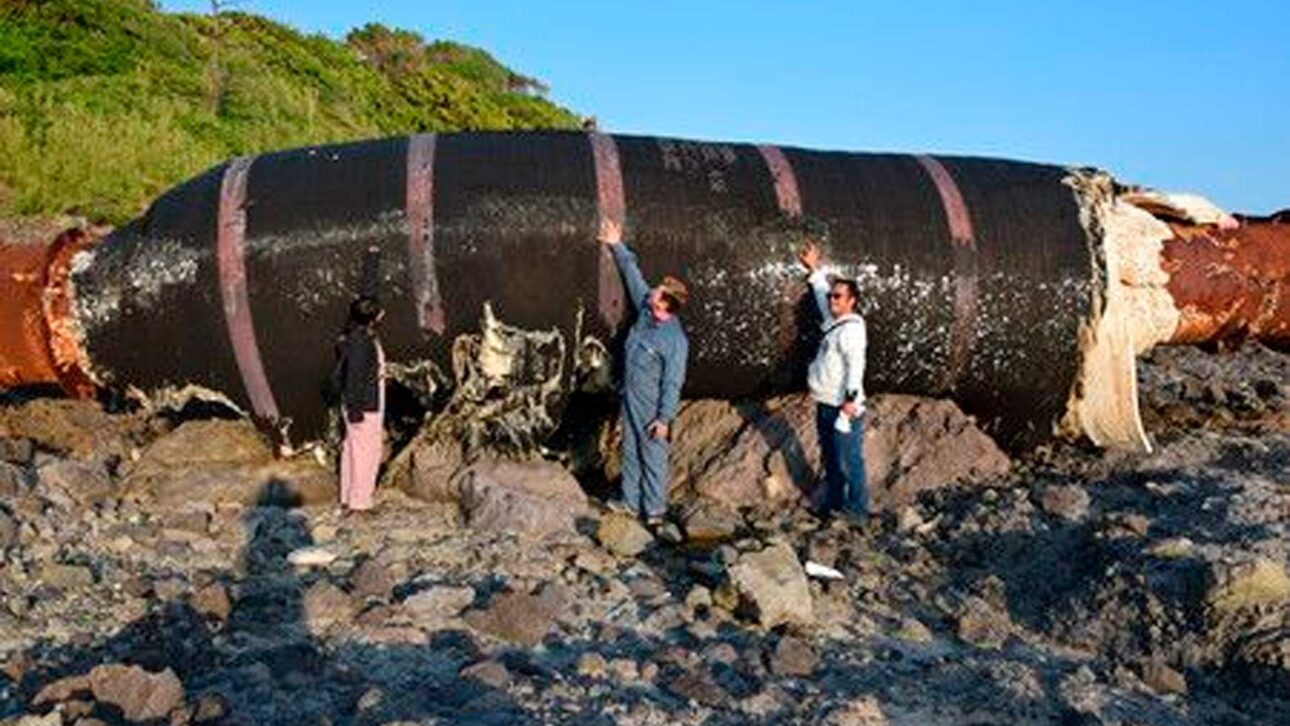
The Jiji agency reported that the company associated with the brand was contacted, but the owner of the hose was not identified. This makes it more difficult to charge the costs of removal to a private entity and causes the bill to be assumed by the public authorities, at least for the time being.
Such cases reveal a common difficulty in combating marine litter. Industrial objects, nets, buoys, cables, plastics, and equipment can travel long distances through ocean currents, reaching beaches far from where they were lost or discarded.
The International Maritime Organization defines marine litter as solid material of human origin that reaches the sea or coast, either by disposal, transport by rivers and winds, loss at sea, or abandonment on beaches. In the Japanese case, the exact origin of the hose remains undefined, but the responsibility for its removal has already become a practical and urgent issue.
Marine litter imposes environmental, economic, and safety costs
The case of the giant hose in Japan is not limited to visual curiosity. It shows how marine litter can become an economic, environmental, and public safety problem, especially when it involves large industrial pieces.
According to the International Maritime Organization, floating debris can pose a risk to navigation, damage propellers and rudders of vessels, and affect fishing activities. The entity also highlights that plastics and other persistent materials can remain in the marine environment for decades.
In Japan, the issue is addressed by specific legislation on waste that reaches the coasts. The Japanese law on the promotion of marine debris treatment establishes responsibilities for national and local governments, as well as financial measures to support the removal of materials that affect landscapes, ecosystems, and the lives of coastal communities.
Reports related to the Osaka Blue Ocean Vision initiative also indicate that Japan maintains programs to support local governments in the collection and treatment of coastal waste. These mechanisms help explain why the central government is expected to participate in paying for the operation in Ishikawa.
Case exposes challenge of tracking lost objects in the ocean
The difficulty in identifying the owner of the hose highlights a larger problem: tracking objects that come loose in the sea is not always simple. Even when there is a manufacturer’s mark, it does not prove ownership, recent use, or direct responsibility for disposal.
In maritime operations, equipment can pass through different companies, countries, contracts, and vessels. When an item becomes detached and drifts, identification depends on records, technical documentation, markings, operational routes, and cooperation between authorities.
In the case of Ishikawa, the authorities have not yet released a definitive conclusion about the origin of the structure. For now, the main focus is to remove the object to restore safety to the coastal area and prevent the hose from moving again with tides or bad weather.
The situation also reinforces the need for stricter monitoring of equipment used at sea. The larger the object, the higher the cost when something goes wrong, especially if the piece reaches an inhabited coast and requires an emergency response.
Japanese beach became a symbol of a problem that crosses borders
The image of a 150-meter hose stranded on a Japanese beach draws attention due to its scale, but the problem it represents is global. The ocean connects countries, ports, trade routes, and industrial activities, making the management of marine debris an international challenge.
For the authorities in Ishikawa, the priority now is to safely complete the removal. For residents and observers, the case raises a bigger question: who should pay when an ownerless industrial object appears on the coast and requires millions in public funds to be removed?
While the origin is not clarified, the Japanese operation shows that marine litter is not only made up of bottles, bags, and fishing nets. Sometimes, it appears as a gigantic, heavy, and expensive piece to remove, capable of turning a beach into the scene of a complex environmental operation.