






 Portuguese
  Spanish


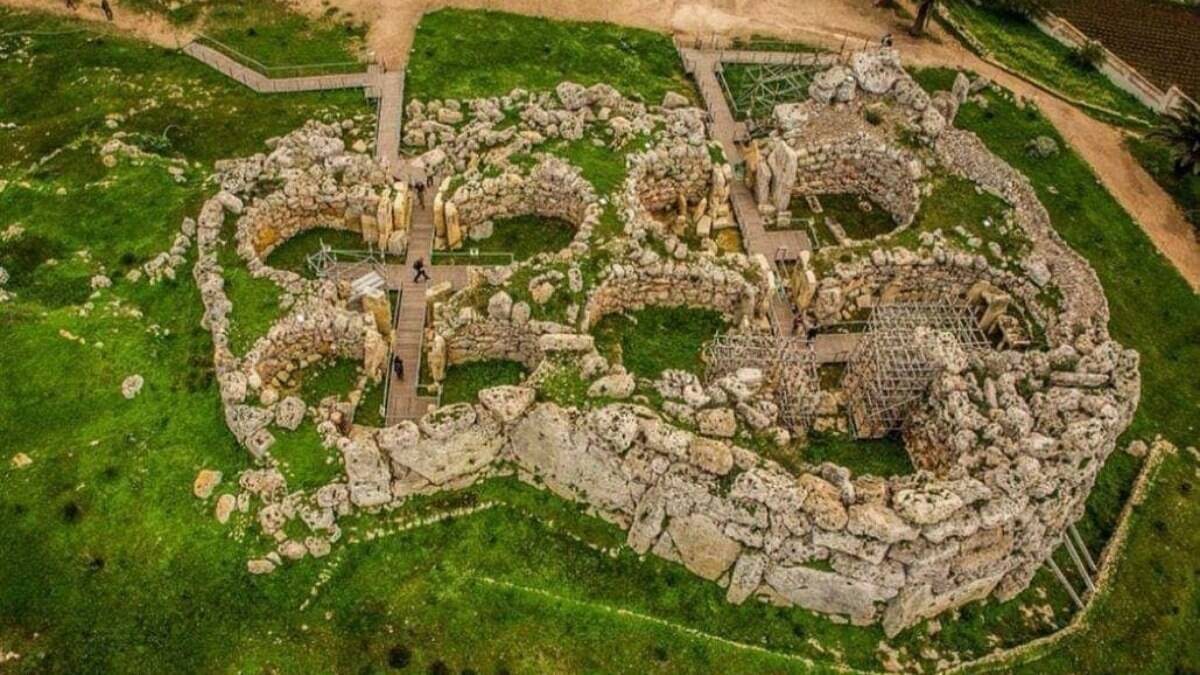


The Megalithic Temples of Malta Use Blocks Weighing Up to 50 Tons, Were Built Without Machines, and Are Older Than the Pyramids of Egypt.
In the heart of the Mediterranean, a small archipelago holds one of the greatest mysteries of ancient engineering: the Megalithic Temples of Malta. These monumental structures began to be built around 3600 B.C., or about 1,500 years before the Pyramids of Egypt. Even so, they use stone blocks that reach 20, 30, and even 50 tons, all moved without wheels, without known draft animals, without steel, and without any type of machine.
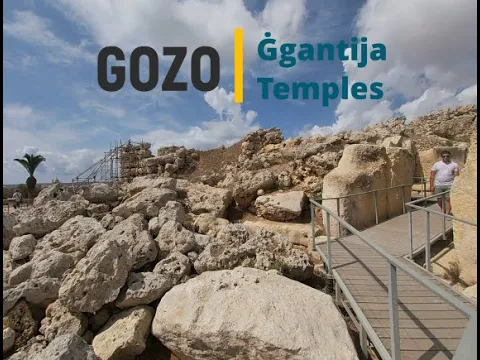
Among these temples, the most iconic is Ġgantija, on the island of Gozo, whose name in Maltese means “place of giants.” And it’s not just an figure of speech: there are walls made with blocks larger than many modern trucks.
Cyclopean Blocks Raised With Technology That Left No Records
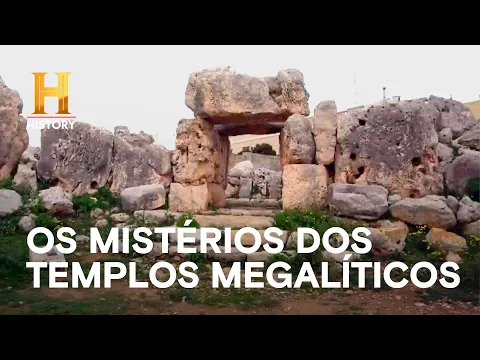

The composition of these structures impresses not only by the weight of the stones but by the level of precision in the fitting. Many blocks were:
-
Prefabricated Home Assembled in Days Offers Cleaner, More Efficient Construction with Factory-Made Panels, Requires Technical Design to Prevent Moisture Issues

-
Single Mother Working Three Jobs Receives 111 m² 3D-Printed Home with Concrete Walls Built in 12 Hours, Featuring 3 Bedrooms, 2 Bathrooms, and a Printer for Replacement Parts

-
Simple Technique to Restore Rusty Metal Window Grilles Gains Attention for Revitalizing Old Structures Without Full Replacement

-
Couple Transforms Suffolk’s Last 1891 Windmill into Luxurious Four-Story Home with Zinc Observation Room in England




- quarried nearby,
- hand-chiseled,
- transported across uneven terrain,
- positioned upright with precise alignment.
All this was done by a civilization that left no written records, technical drawings, or calculations. The reconstruction of the methods is based only on experimental archaeology and direct observation of the remains.
Researchers today work with hypotheses such as:
- use of stone rollers,
- wooden levers,
- earth ramps,
- coordinated human force in mass.
But none of these theories fully explain how 50-ton blocks were lifted and fitted into vertical position with millimeter precision.
The Temples Were Neither Houses, Nor Fortresses, Nor Tombs
Another point that deeply intrigues archaeologists is the exact function of these constructions. Unlike pyramids, walls, or walled cities, the temples of Malta feature:
- curved and symmetrical internal layouts,
- clover-shaped chambers,
- worked stone altars,
- clear astronomical alignments.
Everything indicates that they were ceremonial and religious structures, probably linked to fertility cults, solar cycles, and life. Sculptures found on site depict human figures with voluminous shapes, reinforcing the connection to symbolic rituals, not military.
In other words, we are talking about a civilization capable of moving tons of stone not for defensive necessity, but for ritual and spiritual motivation.
Alignment With the Sun and Time Management
Several of the temples were designed so that sunlight enters precisely through specific openings during solstices and equinoxes. In practice, they functioned as:
- stone calendars,
- season markers,
- ritualistic instruments tied to time.
This reveals that the builders possessed:
- advanced astronomical knowledge,
- spatial orientation skills,
- precise understanding of the sun’s movement throughout the year.
All this without any modern optical instruments.
The Physical Dimension of the Work Is Impressive Even Today
Some numbers help to understand the scale of the achievement:
- Individual blocks weighing up to 50 tons;
- Walls over 6 meters high;
- Temples formed by dozens of megaliths;
- Transport of materials for hundreds of meters over uneven ground.
Even with modern cranes, moving such large blocks requires technical planning, steel rigging, hydraulic support, and trained personnel. In the case of Malta, this was done at prehistoric levels, with stone and wooden tools.
An Advanced Civilization That Disappeared Without Leaving Heirs
Perhaps the greatest mystery is this: the civilization that built the temples simply vanished. There is no clear evidence of invasion, large-scale war, or a specific catastrophe. What is known is that:
- society thrived for about 1,000 years,
- mastered colossal construction techniques,
- and then underwent gradual decline.
Some modern hypotheses include:
- soil depletion,
- prolonged food crisis,
- climatic changes,
- internal social collapse.
The fact is that one of the most advanced cultures of prehistoric Europe disappeared without passing on its knowledge.
Why These Temples Are Older Than the Pyramids
The average dates accepted today by archaeology place:
- temples of Malta between 3600 and 2500 B.C.
- pyramid of Khufu around 2560 B.C.
This means that the Maltese were already working with monumental stone engineering when Egypt was still consolidating its first dynasties.
In other words: before the pyramids, before Stonehenge in its final form, before much of classical engineering, Malta was already moving megaliths with precision and clear architectural intent.
Without Wheels, Without Steel, Without Heavy Animal Draught
Another little-known technical detail is even more impressive. At the time of construction:
- there was no functional heavy wheel for cargo,
- there was no systematized animal draught for giant blocks,
- there was no advanced metallurgy for tools.
This implies that movement depended almost exclusively on:
- human coordination,
- empirical knowledge of forces,
- collective planning,
- intelligent use of gravity and incline.
It was not just brute force. It was social engineering, logistics, and physics applied in practice.
Why the Place Got the Name “Ġgantija”
The main complex received this name because, for centuries, the island’s inhabitants believed that only giants could have raised those structures.

The idea made sense within popular logic: how would “normal” people move stones that seem impossible even for modern machines?
Only in the 19th century did scientific excavations confirm: it was real human beings who built all that.
Worldwide Recognition, Yet Still Little Known to the General Public
Today, the megalithic temples of Malta are considered:
- UNESCO World Heritage,
- the oldest free-standing stone structures in the world,
- an absolute landmark of prehistoric engineering.
Still, outside archaeological circles and European tourism, hardly anyone knows about this work. It always remains in the shadow of the pyramids, Stonehenge, and Machu Picchu, even though it is older than all of them.
An Achievement That Changes Our Notion of “Advanced Civilization”
The temples of Malta compel any scholar to reassess a basic concept: technology does not begin with metal, machines, or writing. It begins with organization, practical mathematics, observation of nature, human coordination, and oral transmission of knowledge.
Blocks weighing 50 tons do not move by chance. They require:
- planning,
- empirical engineering,
- collective control,
- long-term vision.
Nothing there was done on an improvisational basis.
A Stone Colossus That Defies Time for Over 5,500 Years
While cities have risen and fallen, empires have crumbled, and oceans have changed trade routes, the temples of Malta have remained standing.
No steel. No cement. No concrete. Just stone upon stone, pure balance and accumulated human knowledge.
They are a direct reminder that humanity’s capacity to build on a grand scale is much older and far more impressive than most people imagine.


Pessoas muito inteligente
Os extras terrestre estão presentes desde o início da civilização da terra. Eles permanecem nos orientando e passando conhecimento tecnológicos, não descobrimos, somos induzidos a desvendar ao que nos parece mistério.
Fomos visitados por seres extraterrestres inteligentes que eram gigantes e construíram os templos de Malta, as pirâmides, os templos indianos de pedra massiva e todas as grandes construções daquela época ao redor do mundo. Depois sumiram porque decidiram voltar para seu planeta ou para outro planeta do universo…