






 Portuguese
  Spanish
  5 min of reading
  0 comments


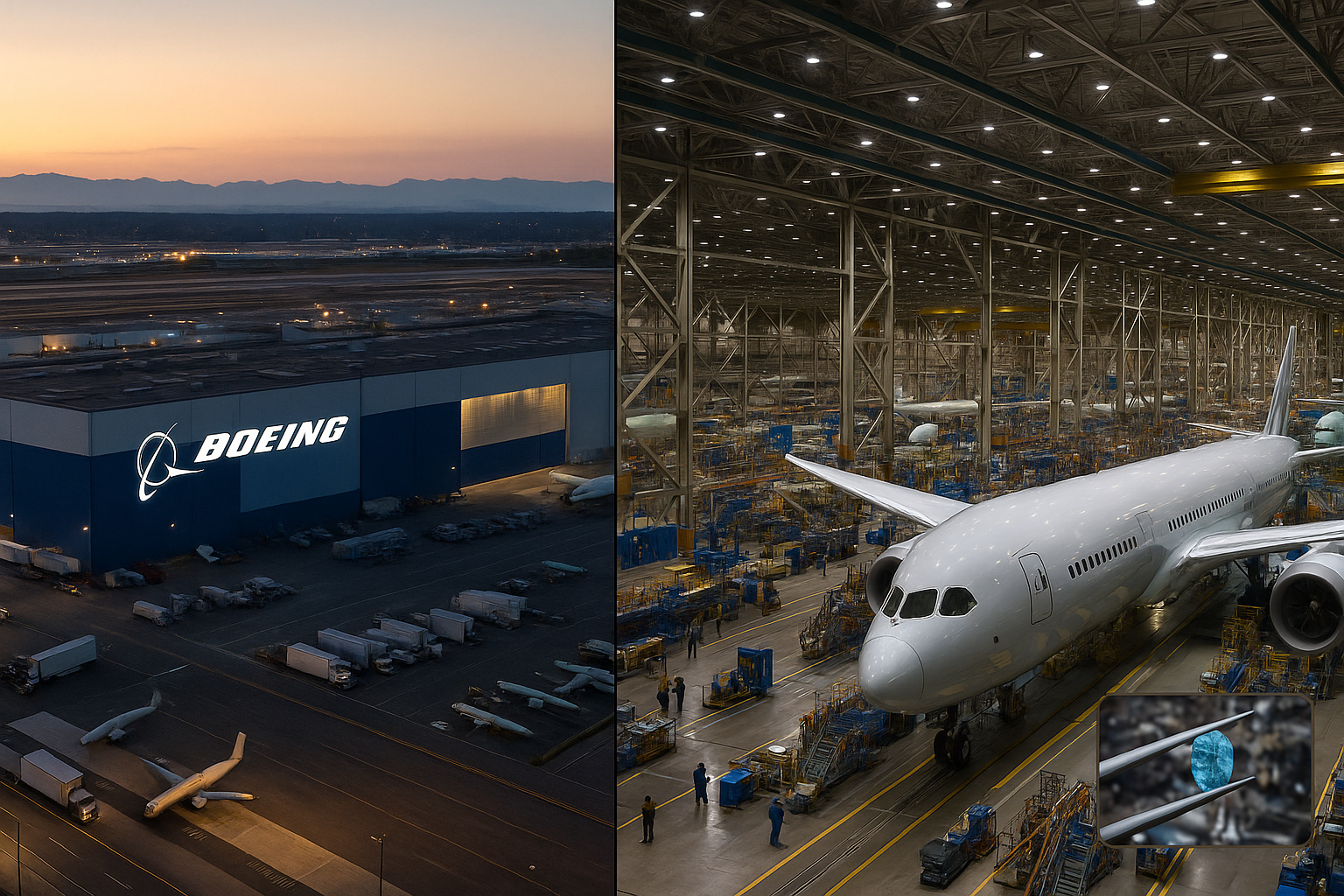
With 399,000 m² and 13.3 million m³ of internal volume, the Boeing Everett Factory, in Washington, is the largest covered factory in the world and a symbol of the global aerospace industry.
Located in the city of Everett, in the state of Washington, the Boeing Everett Factory is one of the most impressive structures ever built by modern engineering. With 399,000 square meters of area and an internal volume of over 13.3 million cubic meters, it is officially recognized by Guinness World Records as the largest covered factory in the world — and one of the pillars of the global aerospace industry.
Opened in 1967, the plant was created to house the assembly of the legendary Boeing 747, the “Jumbo Jet” that revolutionized commercial air transport. Since then, the complex has never stopped growing and today houses production lines for large aircraft such as the 777, 767, 787 Dreamliner, and 747-8, with continuous operations 24 hours a day.
A Colossus of Industrial Engineering
The grandeur of the Boeing Everett Factory defies any comparison. The main building is so extensive that it could hold the entire Disneyland Park of Los Angeles and still have space left. If the internal volume of the structure were completely filled with water, it would hold more than 5,600 Olympic swimming pools.
-
Japanese fans transform NFL stadium into a global example of education at the 2026 World Cup; after a dramatic draw against the Netherlands, blue bags used in the celebration become a cleaning tool and the stands end up trash-free in the United States.

-
United Kingdom announces social media ban for under 16s

-
Human beings are ‘dumber’ and Generation Z’s IQ raises a global alert: for the first time in 100 years, studies indicate a decline in scores, but 70% of large companies already prioritize skills that tests created in 1905 cannot measure.

-
Brazilian military personnel march in an exercise that brought together more than 300 members of the FAB in São Paulo and included war dogs trained to restrain suspects and detect narcotics.




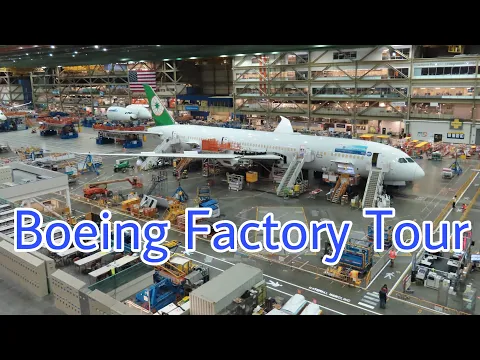

The factory employs nearly 30,000 direct employees, engineers, and technicians from various nationalities, as well as dozens of subcontractors who provide logistical and technological support. Within the complex, there are internal streets, dedicated buses for transporting workers, restaurants, medical clinics, and emergency services — transforming the site into a true industrial air city.
Even with its colossal size, efficiency is the strong point: the factory operates with millimeter precision, with parts and components arriving from over 50 different countries, organized in a global supply chain that feeds the assembly lines continuously.
Where Giants of the Skies are Born
The heart of the Boeing Everett Factory is the assembly lines for wide-body aircraft — the giants of the sky that cross oceans and connect continents.
It is there that legendary models such as the Boeing 747, known as the “Queen of the Skies,” the 767, used in civil and military operations, the 777, regarded as one of the most reliable airplanes in the history of commercial aviation, and the modern 787 Dreamliner, a symbol of the new era of energy efficiency and composite materials, are assembled.
Each airplane can take 4 to 6 months to be completed, depending on the model and the customization required by airlines. At the end of the process, the aircraft are taken to Paine Field Airport, adjacent to the factory, where they undergo flight tests, system calibrations, and certifications before being delivered to customers.
A City That Lives for the Factory
The influence of Boeing in Everett is so profound that the city has practically grown around the factory. The municipality, which had just over 30,000 residents in the 1960s, now exceeds 110,000 inhabitants, many of whom are direct or indirect employees of the complex.
Local studies indicate that the plant accounts for more than 60% of the region’s economic activity, with a direct impact on commerce, housing, transportation, and public services. Additionally, thousands of small supplier companies depend on Boeing to maintain their operations, from component manufacturers to advanced technology and engineering firms.
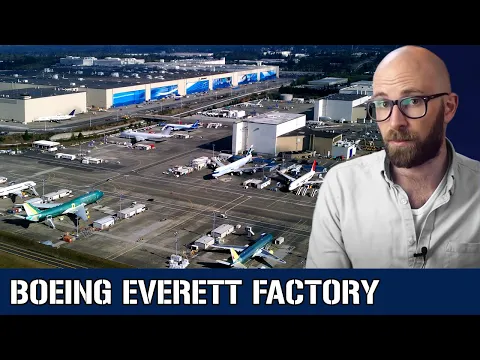
The factory’s presence has also transformed Everett into an industrial tourist destination: over 150,000 people visit the site annually, attracted by the Future of Flight Aviation Center, an interactive museum and observation deck of the assembly lines, where it is possible to see up close the airplanes being built piece by piece.
24-Hour Operations and Precision Logistics
The operation of the Boeing Everett Factory is continuous, day and night. Each shift, about 12,000 people circulate through the warehouses. Trucks, forklifts, and automated transport systems move tons of materials per minute, all synchronized by industrial management software that controls each stage of the production in real-time.
To keep this machinery running, the factory’s energy consumption is comparable to that of a mid-sized city. Even so, Boeing constantly invests in energy efficiency and sustainability, with rainwater reuse systems, natural lighting, and an internal carbon emission reduction program.
The ceiling of the facility — which alone has an area larger than 80 football fields — is equipped with a ventilation system that automatically regulates temperature and humidity, ensuring the ideal environment for assembling aircraft.
The Future of Boeing and the New Generation of Airplanes
Despite decades of glory and its iconic position in aviation history, the Boeing Everett Factory is undergoing a period of transition. After the end of 747 production in 2023, the plant is undergoing a complete reconfiguration to make way for new aircraft lines with lower consumption and greater efficiency, such as the 777X, which promises to redefine the limits of long-haul flight.
The 777X, featuring foldable wings and GE9X engines — the largest ever installed on a commercial aircraft — is partially assembled in Everett and symbolizes Boeing’s effort to adapt to the new era of sustainability and digitalization in the aviation sector.
Additionally, the company has been increasing the use of augmented reality, robotics, and artificial intelligence in the production process, automating critical tasks and reducing assembly time by up to 25%.
A Legacy That Shaped Modern Aviation
Over more than half a century of operation, the Boeing Everett Factory has produced over 1,500 units of the Boeing 747, as well as thousands of other models that now soar through the skies all over the planet.
This impressive production capacity has solidified Everett as the heart of global commercial aviation, being the birthplace of technologies that forever changed how humanity travels, connects, and transports.
More than a symbol of American engineering, the largest factory of airplanes in the world represents what the industry is capable of achieving when innovation, precision, and scale come together under one roof. A place where the noise of machines and the shine of aluminum reflect not only technological prowess but also the human ambition to conquer the skies.







-

-

-

-

-

-

87 people reacted to this.