Portuguese
  Spanish




The Eucalyptus and Pulp Boom Is Changing Ribas do Rio Pardo and Inocência, While Schools, Health, and Housing Race to Keep Up
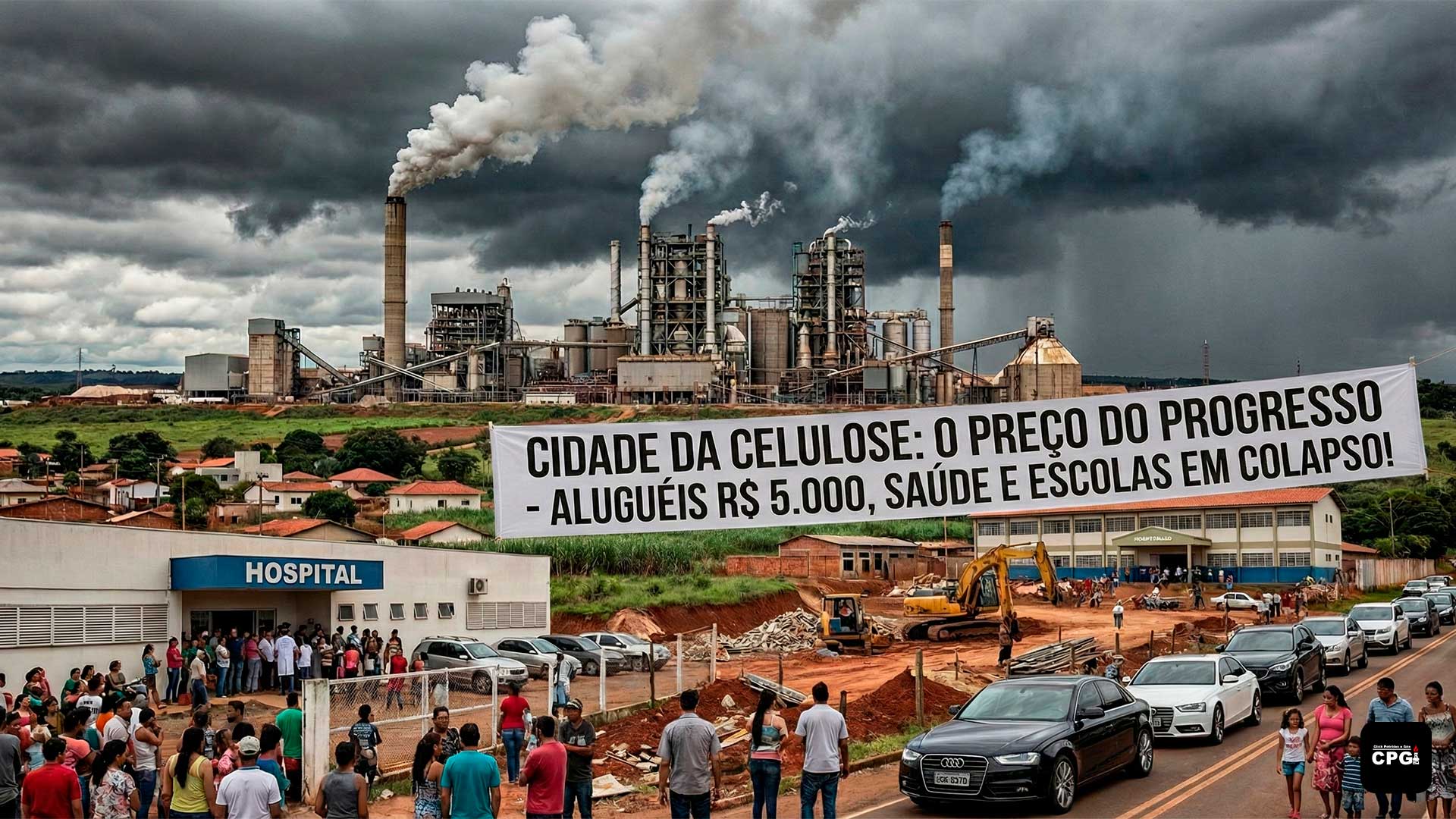
The arrival of megafactories for pulp in small towns in Mato Grosso do Sul is reshaping the local economy in just a few years, with more jobs, revenue, and new businesses. At the same time, the surge in demand for housing, health, education, and urban infrastructure reveals typical limitations of municipalities that were not planned to accommodate intense migration.
In the eastern region of the state, Ribas do Rio Pardo, with 23,150 residents, has become a symbol of this movement. In Ribas, the installation of the Cerrado Project by Suzano has transformed the municipality into an industrial and forestry hub, with direct reflections on the budget and cost of living.
In Inocência, with 8,404 residents, the transformation is significant as well; expectations surrounding the Sucuriú Project by Arauco are already putting pressure on rent, public services, and logistics. The official narrative speaks of prosperity and development, but mayors and residents report that the “before” and “after” have come too quickly.
-
Brazilian Executive Takes Helm of Heineken Amid Decline in Sales: 51-Year-Old Has Led Operations Across Four Continents and Managed a $7 Billion Empire

-
Brazilian Actress Turns Waxing Clinic into 400-Unit Chain with $50 Million Revenue, Sells Stake After 13 Years
-
Major Company Shuts Down 70-Year-Old Factory in Brazil, Relocating Production and Impacting Over 100 Families
-
Toyota Shuts Down Brazilian Plant After Producing Over 1 Million Vehicles, Plans Special Destination for Final Corolla Produced Following $2.1 Billion Investment and Expansion.


The central challenge now is to balance economic growth with the capacity of the city hall, avoiding a situation where progress translates into irregular occupations, long queues at health units, and overcrowding in schools.
Ribas do Rio Pardo Gains Pace with Suzano and Sees Infrastructure Tested in Practice
In Ribas do Rio Pardo, Suzano announced the Cerrado Project in 2021 and began industrial operations in July 2024, describing the unit as the largest single production line of pulp in the world. According to the company, the factory has an installed capacity of 2.55 million tons per year and involved a total investment of R$ 22.2 billion, in addition to generating over 10,000 jobs at the peak of construction and around 3,000 positions in the operational phase.
The economic effect has spread to commerce, service provision, and income, but the city has begun to deal with growth that pressures daily life. Local reports describe population increase, rising rents, and the expansion of irregular occupations, a scenario in which some residents say they cannot keep up with the new prices.
According to an institutional statement from Suzano, over R$ 300 million have been directed to local initiatives, including projects from the Basic Environmental Plan in areas such as health, education, housing, and safety. Among the contributions mentioned by the company are funding for hospital expansion, public security structures, and housing units, in an attempt to reduce the mismatch between economic expansion and essential services.
Inocência Prepares for Arauco and Feels Pressure for Housing Even Before the Peak of Construction
In Inocência, the Sucuriú Project is presented by Arauco as the largest investment in the company’s history, with US$ 4.6 billion and installation about 50 km from the urban area, next to the Sucuriú River. According to the company itself, the plant is expected to begin operations by the end of 2027 and has a capacity of 3.5 million tons per year, in addition to promising over 14,000 job opportunities during construction and around 6,000 jobs after operations begin.
Even before the peak, the municipality is already facing signs of stress in housing and services. The Government of Mato Grosso do Sul’s News Agency reported an expectation of a population surge during the construction phase, with possible stabilization afterward, which increases the pressure for urban planning, sanitation, and healthcare networks.
According to Campo Grande News, Arauco announced R$ 85 million for a Socio-Environmental Strategic Plan, structured around areas like health, safety, social assistance, education, sanitation, and housing. The proposal includes, for example, management actions and increased health services capacity and construction of hospital infrastructure, as well as measures related to territorial planning.
In practice, local managers are concerned about not repeating the pattern of cities that became wealthy quickly but ended up with long-term bottlenecks. The risk, pointed out by authorities and regional leaders, is that the city becomes a permanent site for “emergency solutions,” with high costs and limited results.
Environmental Plans and Counterparts Act as a Brake, but the Operational Phase Becomes the Sensitive Point
Part of the institutional response involves licensing and compensation instruments, such as the Basic Environmental Plan, which imposes obligations and goals to mitigate impacts. The idea is simple: if the city changes its status, part of the investment needs to become public infrastructure and service capacity.
In the case of Ribas do Rio Pardo, Suzano states that its program associated with the PBA includes dozens of projects and includes contributions in health, safety, and housing, with detailed investments in equipment and construction. In Inocência, the socio-environmental plan announced by Arauco also relies on this model, combining voluntary actions and requirements linked to licensing.
The point that still generates friction is the “after the inauguration,” when the pressure ceases to be temporary and becomes routine. Town halls want assurances of continuous funding and oversight, because economic growth may be permanent, but the capacity for schools, hospitals, and affordable housing does not increase at the same pace.
Mato Grosso do Sul Becomes a Pulp Power and the Debate About the Pulp Valley Reaches Brasília
The advance of megafactories is not an isolated phenomenon in just two cities. According to Semadesc, the state is experiencing accelerated expansion of planted forests and a cycle of projects that includes Ribas do Rio Pardo, Inocência, and other municipalities, with billion-dollar investments and expectations to further increase production in the coming years.
According to the secretary, the forestry sector already accounts for 10.7% of the state GDP, generating R$ 15.7 billion in 2024, and continues to be one of the main bets for attracting investments. This backdrop explains why the issue has moved from being merely municipal to regional, impacting highways, logistics, energy, and public services.
In 2025, the Senate scheduled a hearing to discuss the “Pulp Valley” and its regional development challenges, with participation from mayors and political leaders. The existence of this institutional debate reinforces that the dilemma is not just about growth, but about how to grow, who pays for infrastructure, and what metrics will be used to measure quality of life.
The risk, pointed out by specialists and managers, is that the state consolidates industrial leadership while part of the urban population remains trapped by the cost of living, improvised housing, and overloaded services. The promise of megafactories is prosperity, but the local demand is for prosperity with a functioning city.
In your municipality, do you think that this type of megainvestment justifies the impact on rent, health service queues, and school overcrowding, or should the city accept “the price of progress”? Leave a comment stating where you stand and what compensation should be mandatory for companies and governments.