Portuguese
  Spanish


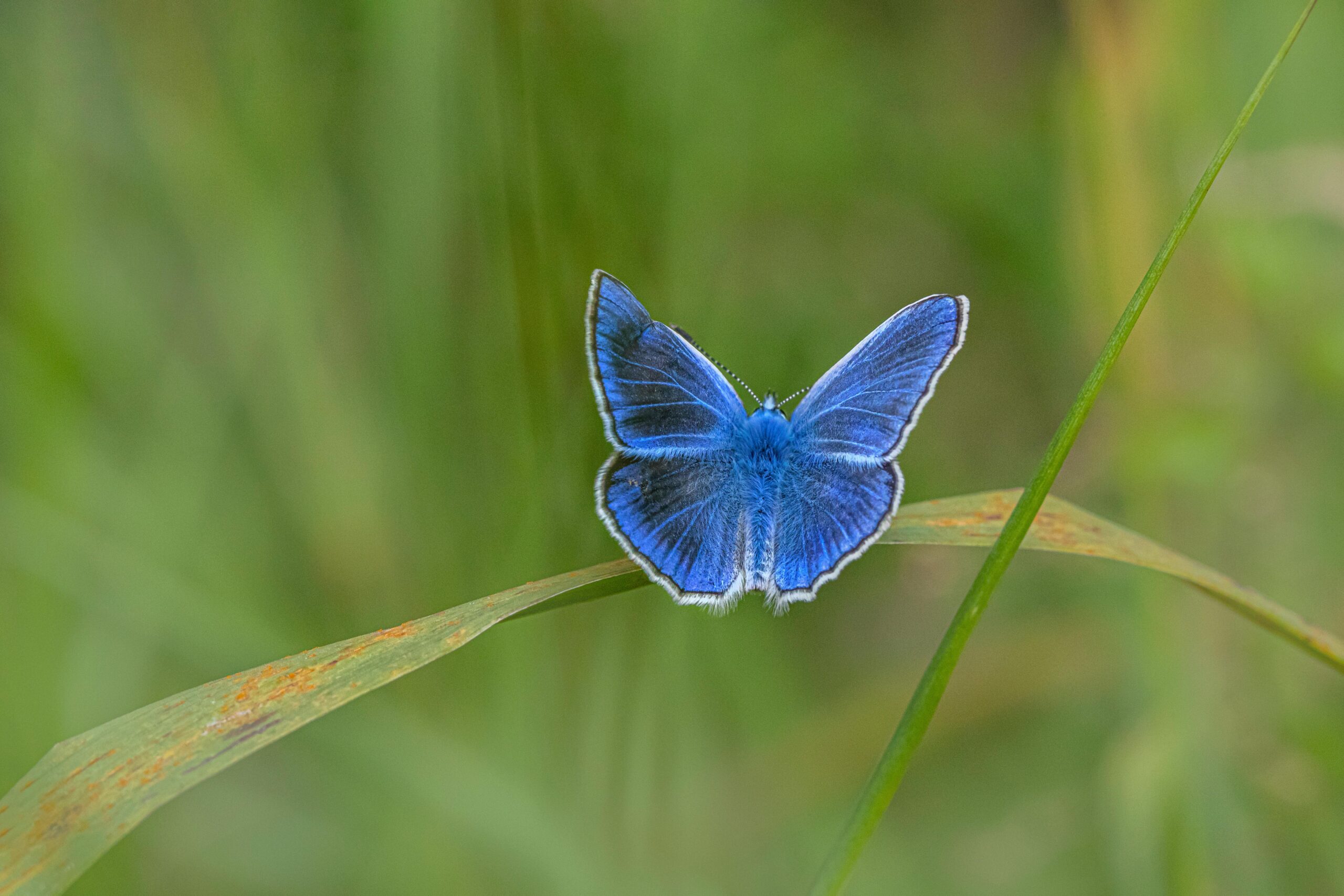


Rediscovered in 1994 After 50 Years Missing, the Palos Verdes Blue Butterfly Survived in a Single Valley in California and Became a Global Conservation Priority.
The story of the Palos Verdes blue butterfly, officially called Glaucopsyche lygdamus palosverdesensis, is one of the most emblematic cases in modern conservation biology. For decades, it was considered extinct. Scientific records indicated that the last reliable sighting occurred in the early 1940s, in a highly urbanized coastal area of Southern California. With the rapid advancement of cities, destruction of natural habitat, and introduction of invasive plants, everything pointed to a definitive disappearance.
This changed in 1994, when researchers accidentally found a small group of butterflies living in a single isolated valley in the Palos Verdes Peninsula, Los Angeles County. The find not only contradicted half a century of scientific consensus but also revealed one of the most extreme examples of silent survival ever documented among endangered insects.
A Disappearance Linked to Extreme Urbanization
The Palos Verdes blue is a small butterfly, with bluish-gray coloration in males and more subdued tones in females, typical of coastal environments with specific native vegetation.
-
San Andreas Fault Reaches “Highest Tension in 1,000 Years,” Raising Fears of the “Big One,” but New Study Identifies Key Zone Near Los Angeles Influencing Earthquake Impact

-
French Scientists Set Sail on Ice-Trapped Ship for 18-Month Arctic Climate Study

-
Dyson Introduces WashG1: A Revolutionary Floor Cleaner with Motorized Rollers and Self-Cleaning Technology
-
Australian Megafactory Austal Constructs 380-Foot, $74 Million High-Speed Ferry for Canary Islands Capable of Carrying 1,100 Passengers and 278 Cars at 38 Knots




Its life cycle directly depends on host plants of the genus Astragalus, especially Astragalus trichopodus lonchus, in addition to a delicate ecological relationship with native ants that protect its larvae in exchange for sugary secretions.

The problem is that this ecosystem began to disappear rapidly throughout the 20th century. The urban expansion of Los Angeles and its surroundings was accompanied by land leveling, construction of highways, condominiums, and military bases, as well as the introduction of exotic plant species used in landscaping. In just a few decades, practically all of the butterfly’s original habitat was destroyed.
When no new sightings occurred for over 50 years, the species began to be treated as locally extinct and, for many, extinct on the planet.
The Rediscovery in 1994 That Changed Everything
The turning point came in 1994, when entomologist David Murphy from Stanford University and his team were conducting insect surveys in the Palos Verdes area. In an extremely restricted valley surrounded by degraded areas, they identified adult individuals of the Palos Verdes blue in flight.
The population was minuscule and confined to just a few acres. Initial estimates indicated fewer than 100 individuals at that time.
Survival had been possible thanks to a rare combination of factors: geographical isolation, residual presence of the host plant, and a temporary absence of some invasive species in that specific location.
The case quickly drew attention from environmental agencies and the international scientific community, as it represented a genuine, documented, and verifiable rediscovery of a species thought lost.
One of the Rarest Butterflies in the World
After the official confirmation of its rediscovery, the Palos Verdes blue was listed as critically endangered and entered the priority list of the U.S. Fish & Wildlife Service. Subsequent studies showed that the species has extremely low genetic variability, the result of decades of extreme isolation, making it even more vulnerable to diseases, climate change, and random events.
In a few years, the population dropped to fewer than 20 adult individuals, a number considered dangerously close to functional extinction. For comparison, many common butterflies have populations in the millions distributed over vast areas. In the case of the Palos Verdes blue, the entire species literally depended on a single valley.
This level of rarity led it to be frequently cited as one of the most endangered butterflies on the planet.
The Scientific Effort to Avoid Definitive Extinction
Faced with the imminent risk, researchers, universities, federal agencies, and organizations like Nature Conservancy initiated an intensive conservation program. The actions involved multiple fronts.
One of them was captive breeding. Larvae were carefully collected and raised in controlled environments to increase survival rates until adulthood.
Meanwhile, there was massive planting of native Astragalus species in restored areas, recreating the minimum conditions for the butterfly to complete its life cycle.

Another crucial point was the control of invasive plants, such as exotic grasses that compete with native vegetation and completely alter soil dynamics. In some locations, manual removal of these species was necessary to prevent the collapse of the restored habitat.
Additionally, scientists began to carefully monitor the interaction between the butterfly larvae and native ants, as this symbiotic relationship is essential for the survival of the insect’s early stages.
A Global Symbol of Modern Conservation
Today, the Palos Verdes blue is more than just a rare butterfly. It has become a global symbol of how species can survive unseen for decades and how science is still capable of reversing seemingly irreversible trajectories.
The case also exposed an uncomfortable paradox: even in one of the most densely populated and monitored urban areas on the planet, an entire species managed to go unnoticed for more than half a century. This raised important debates about how many other species may have disappeared without record — or may still be surviving in microscopic pockets of habitat.
Although the status of the Palos Verdes blue remains fragile, conservation efforts have allowed the population to stabilize at certain times, with controlled reintroductions in restored areas of the peninsula.
The story of this butterfly shows that extinction is not always definitive, but it also makes it clear that survival depends on quick decisions, continuous scientific investment, and the preservation of entire ecosystems, not just isolated species. In an increasingly urbanized world, the Palos Verdes blue stands as a living and extremely rare reminder of everything that can still be lost or saved.