






 Portuguese
  Spanish


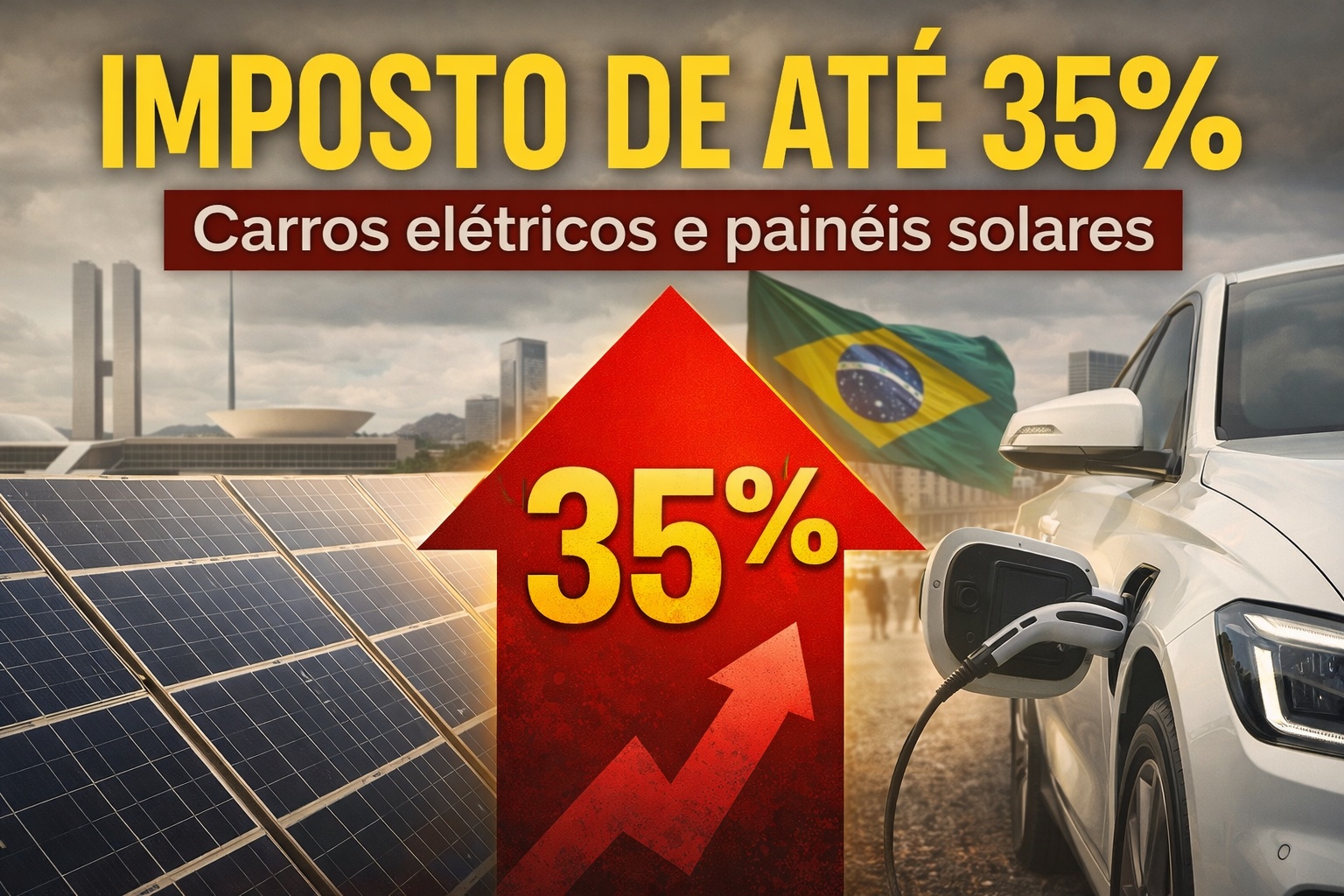


Brazil Decides To Tax Solar Panels And Electric Cars: Tax That Was Zero Returns In Stages And May Reach 35% In 2026, Impacting Prices And Investments.
For nearly a decade, solar panels and electric cars have been treated as symbols of Brazil’s energy transition. Tax exemptions, reduced taxes, and import incentives helped lower prices, accelerate the adoption of these technologies, and attract investments. This scenario began to change definitively when the federal government decided to resume and scale the import tax, ending the zero rate and establishing a schedule that may lead to a charge of 35% in July 2026.
The decision is not isolated nor improvised. It was formalized within the Chamber of Foreign Trade (Gecex/Camex) and directly affects two strategic sectors: electric mobility and solar energy, now pillars of the country’s environmental and industrial discourse.
How The Increase In The Tax On Electric Cars Works In 2026
In the case of electric vehicles, the import tax that was zero has returned to being collected in a staggered manner. The approved schedule provides for gradual increases, starting in 2024 and reaching the ceiling of 35% in July 2026 for 100% electric cars. Hybrid and plug-in hybrid models follow a similar logic, with progressive percentages over the coming years.
-
Brazilian Job Market Surprises: Unemployment Falls to 5.6%, Hits Record Low for May, Brazilian Incomes Rise, and Underemployment Reaches Lowest Level Ever Recorded by IBGE

-
Chinese E-commerce Giant Predicts Robots Will Replace 700,000 Delivery Workers as Autonomous Vehicles Expand to 200 Cities, Offering Training for Workers to Maintain Their Machines

-
Trump warns Europe with 100% tariff threat on digital tax, potentially impacting wine and trade agreements
-
As Homeownership Becomes Unattainable in Brazil, Japanese Municipalities Offer Abandoned Houses for as Low as $3,000 to Revitalize Aging, Emptying Cities


The official justification is to stimulate local industrialization, forcing automakers to produce in Brazil rather than just import ready-made vehicles. In practice, however, the immediate effect falls on the consumer, as a large part of the electric cars sold today still heavily depends on imports.
Automotive sector experts warn that the tax increase tends to be passed on almost entirely to the final price, slowing the growth rate of the electric market just as it was starting to gain scale.
What Changes For Solar Panels With The End Of The Zero Rate
Solar energy follows a similar path. Imported Photovoltaic Panels also ceased to have total exemption and began to coexist with progressive tax rules, although with temporary exemption quotas for certain volumes until 2026.
Brazil has built one of the largest distributed solar generation markets in the world based on imported equipment, especially from Asia. The resumption of the tax changes this equation and threatens to raise the cost of residential, commercial, and industrial projects.
Industry entities estimate that the impact may slow new investments, directly affecting the expansion of installed capacity and the generation of jobs linked to the solar chain, which has grown explosively over the last decade.
Why The Government Decided To Tax Solar Panels And Electric Cars Now
The decision is part of a broader industrial policy strategy. The government argues that prolonged import incentives ended up creating external dependency and weakening domestic production. By raising the tax, the idea is to create space for local manufacturing, technology transfer, and greater value aggregation in the country.
However, critics point out a contradiction: while Brazil takes on international climate commitments and advocates for decarbonization, it simultaneously raises the costs of the technologies that enable this transition.
Direct Impact On Prices For Consumers And Businesses
For the end consumer, the effect is direct. Electric cars are likely to become more expensive, delaying the popularization of the electric model as an alternative to combustion engines.
In the solar sector, photovoltaic systems may require larger investments, extending the financial return period that made the technology so attractive.
Companies that planned to migrate fleets to electric vehicles or install their own solar plants are reevaluating budgets and timelines. Small and medium projects are the most sensitive, as they have less margin to absorb tax increases.
Market And Productive Sector Reaction
Associations from the automotive and solar energy sectors reacted cautiously and critically. On one side, there is recognition of the importance of developing national industry. On the other, there is fear that the transition will be made abruptly, without local production being able to meet demand in the short term.
Manufacturers warn that the simple increase in tax does not automatically guarantee factories, jobs, or innovation. Without complementary policies — such as credit, infrastructure, and regulatory predictability — the risk is merely raising product costs and stalling the market.
The tax that was zero and now may reach 35% redefines the game for consumers, businesses, and investors. More than a tax change, it is a strategic choice that will have lasting effects on the future of mobility and energy in Brazil.
And you, reader: will the tax increase really create a strong industry in the country, or will it only make clean energy and electric cars more expensive for those who want to change now?


Esse governo dos impostos é gastos descontrolados, faz um discurso nessas reuniões climáticas inúteis que só serve para gastarem dinheiro do contribuinte e viajarem e resultados práticos nenhum,já que as grandes potências não pactuam esse acordo como positivo.Estamos em um caminho sem volta,enquanto o povo não acordar de verdade, só haverá sofrimento e ranger de dentes, e acabaremos ruminando que nem os animais.
Gastam mais do que devia, dívida aumenta, imposto também, consumidor é que paga.
Bom dia. Sem dúvida, o interesse do desgoverno é simplesmente sugar e explorar a sociedade. Não vejo de forma nenhuma a possibilidade de se agregar crescimento na criação de empresas nacionais dentro do segmento fotovoltaico e mobilidade.