Portuguese
  Spanish


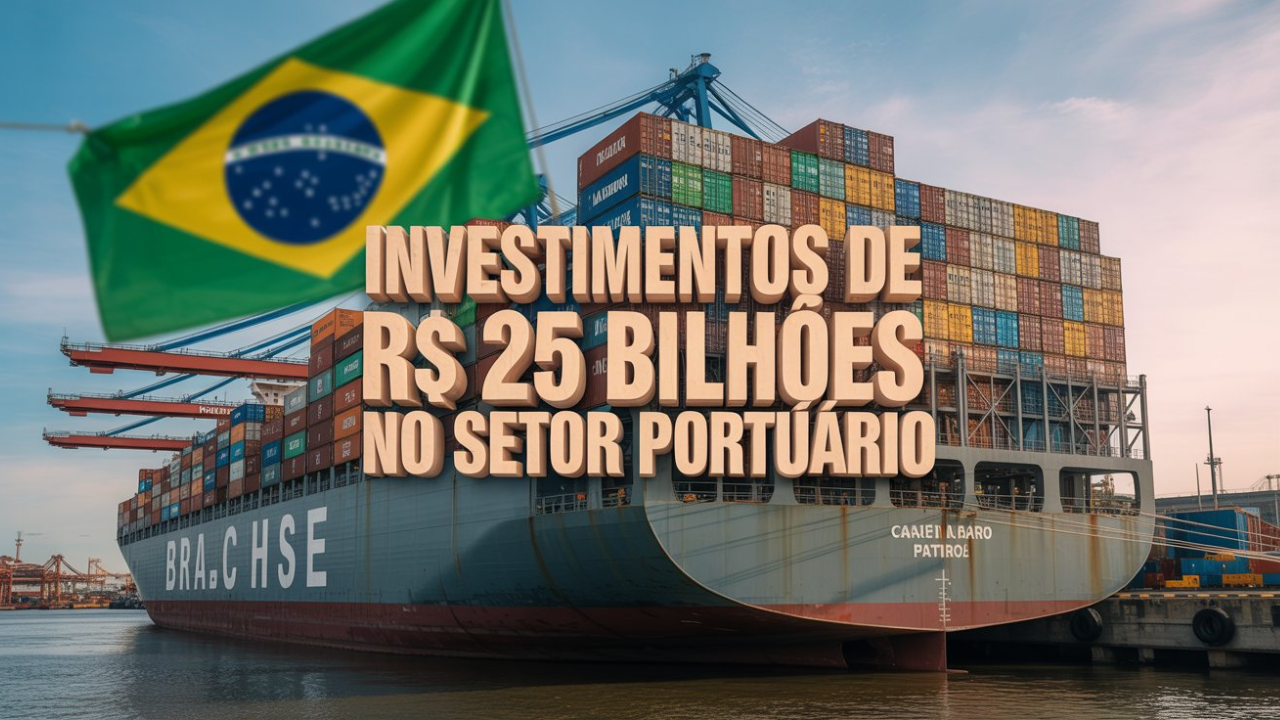

Brazilian Port Sector Is Set to Receive Record Investment of R$ 25 Billion in International Investments, Says Minister.
The Brazilian port sector is preparing for a new growth cycle with an expected R$ 25 billion in foreign investments by 2026. During his appearance on the program Good Morning, Minister, last Tuesday, the 27th, the information was confirmed by the Minister of Ports and Airports, Silvio Costa Filho.
The significant volume of resources is expected to strengthen the country’s logistical infrastructure and boost the competitiveness of foreign trade.
Various Countries Interested in the Brazilian Port Sector
According to the minister, the financial contribution will come from various parts of the world.
-
The FLIP: A 108-Meter Ocean Laboratory That Stood Vertically for 60 Years, Dismantled in 2023

-
North Korean Fiasco: Launch of the Largest Warship Ends in Sinking

-
While giant ships still burn heavy fuel and the maritime sector races against climate targets, Maersk and Vale are starting to bet on ethanol as a new route to reduce emissions at sea.

-
China begins construction of the world’s largest LNG ship, a 344-meter giant capable of supplying 4.7 million homes for a month, carrying 271,000 m³ of gas, and placing QatarEnergy in the largest naval order ever recorded in world history.


“We expect significant investments in the port sector. Our expectation is that foreign investors will invest more than R$ 25 billion in Brazil over the next two years,” declared Costa Filho.
He also detailed that investments are expected to come from companies in Switzerland, Norway, Portugal, Germany, Spain, the United States, and Asian countries.
Among the highlights is the potential participation of CCCC, one of the largest construction companies in the world, of Chinese origin.
The company has expressed interest in joining the project for the concession of the Santos tunnel, an undertaking estimated at nearly R$ 6 billion.
Santos Tunnel Is an Important Project for Logistical Development
The Santos tunnel, identified by the minister as the “largest project of the PAC (Growth Acceleration Program)”, will be essential for expanding national logistical capacity. With a length of 870 meters and a depth of 21 meters, it will be the first underwater tunnel in Latin America.
In addition to its innovative engineering role, the project is strategic for the economy.
“This project will help urban mobility and strengthen the largest port in Latin America, which is the Port of Santos,” emphasized the minister.
Comparison of Investments and Goals of the Federal Government
Silvio Costa Filho also criticized the investments made during the previous administration.
“In four years of the previous administration, investments equivalent to R$ 400 million were made, and the current government aims to invest around R$ 10 billion,” he stated.
This disparity highlights the federal government’s ambition to reclaim Brazil’s prominence in the logistical sector, with solid investments in the port sector as a central part of the sustainable growth strategy and expansion of national infrastructure.
With the anticipated resources, the port sector is expected to modernize and expand its operational capacity, ensuring greater agility and efficiency in the flow of production.
The expectation is that the new round of investments will place Brazil in a prominent position in international logistics, with positive impacts on the trade balance and job generation.
The outlook points to a new era of modernization in the port sector, where strategic foreign investments will directly contribute to national economic development and the strengthening of productive chains.