Portuguese
  Spanish


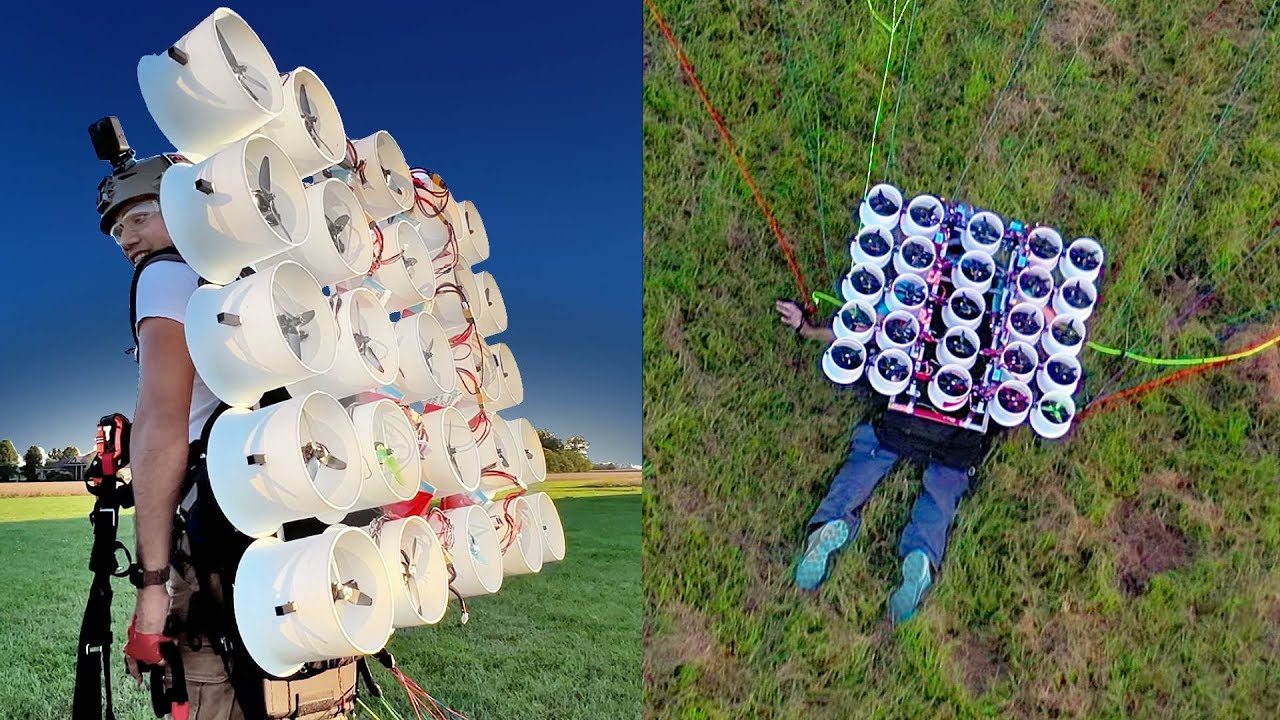

YouTuber Peter Sripol created a flying machine using 50 drone motors, 3D printed parts, and duct tape, managing to perform short flights.
In 2021, inventor and YouTuber Peter Sripol caught the attention of millions by presenting a project that seemed impossible even to experimental aviation enthusiasts. Instead of using a conventional aircraft engine, he decided to build an electric flying machine using 50 drone motors, 3D printed parts, batteries, and a considerable amount of duct tape. The result was one of the most unusual experiments ever seen in garage aviation.
The goal was not to create a commercial vehicle or a practical aircraft. Sripol wanted to find out if dozens of small drone motors could generate enough thrust to lift a person off the ground. Against all odds, the answer turned out to be yes. The equipment managed to perform short flights during tests, turning the experiment into an internet phenomenon.
The idea arose from a seemingly simple question about the limit of drone motors
Modern drones can lift cameras, sensors, and relatively heavy equipment. But Peter Sripol decided to take this concept to the extreme. Instead of using four or six motors, as in conventional drones, he decided to install fifty units working simultaneously to produce lift.
-
NASA’s Plan to Dump ISS Debris in Ocean Sparks Environmental Concerns Among Scientists

-
14-Year-Old Invents Eco-Friendly Water Pump Using Recycled Materials to Aid Communities Without Water Access
-
Pigeons Trained to Detect Cancerous Changes in Medical Images Astonish Scientific Community

-
Plastic Waste from Beaches and Poor Communities in Kenya Transformed into School Desks, Replacing Wood in Classrooms and Turning Marine Litter into Durable Study Tables


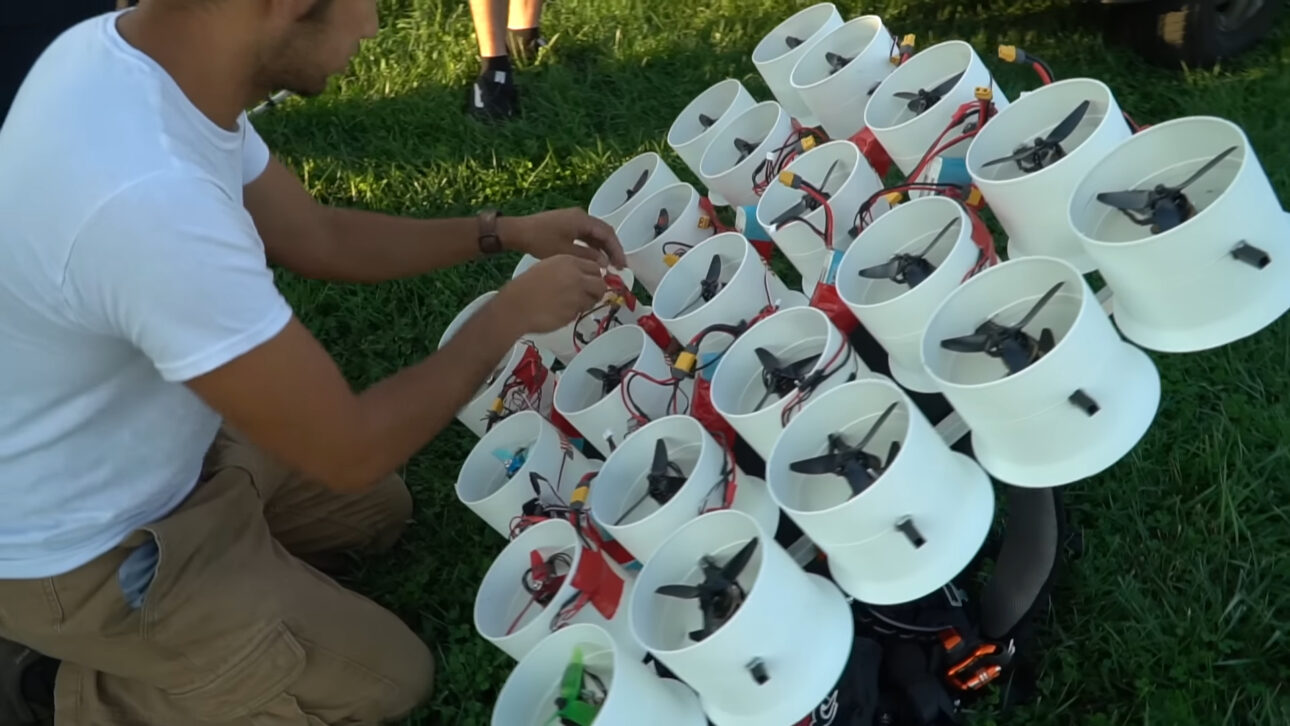
The concept resembled an electric paramotor, equipment used in motorized paragliders. The difference is that, instead of a large rear propeller, the system used dozens of small electric motors distributed in a circular structure attached to the pilot’s back.
The proposal seemed absurd even to drone specialists, but that was precisely what made the project so interesting.
The equipment was built with 3D printing, batteries, and a lot of improvisation
A large part of the structure was produced using 3D printers. The motor mounts, connections, and various structural components were created specifically for the project. The assembly also received high-capacity batteries responsible for simultaneously powering the fifty electric motors.


Mr. Sripol himself made it clear that the project should not serve as an example of aeronautical construction.
In his video, he repeatedly stated that the experiment involved significant risks and should not be reproduced. Various components were assembled in an improvised manner during development, including parts fixed with adhesive tape while more definitive solutions were not ready.
This mix of creativity, improvisation, and boldness became one of the project’s trademarks.
The biggest challenge was generating enough thrust without making the structure too heavy
The physics behind the experiment was more complicated than it seemed. Each individual motor generated little thrust. For fifty units to be able to lift a person, it was necessary to keep the assembly extremely light. Any excess weight would drastically reduce the chances of success.
For this reason, the equipment used lightweight materials and a simplified structure.
Even so, the margin between lift and total weight remained small throughout the development. Small failures or losses of efficiency could completely compromise the system’s operation.
The first tests revealed unexpected problems
As occurs in many experimental projects, not everything worked on the first try. During some tests, motors failed, screws came loose, and components needed reinforcement.
In one of the flights reported by the specialized press, one of the motors partially detached from the structure, forcing the immediate interruption of the attempt. Another important challenge was autonomy.
According to reports published at the time, the battery set allowed approximately five minutes of operation, significantly limiting the time available for tests. Even so, the system managed to demonstrate that the concept was technically viable.
The machine really managed to get off the ground
The most anticipated moment finally happened when the tests showed that the set of engines produced enough lift to raise the pilot.
The flights conducted were short and experimental, but proved that the concept worked. Images recorded during the tests show the equipment leaving the ground and remaining sustained by the combined thrust of the fifty electric engines.
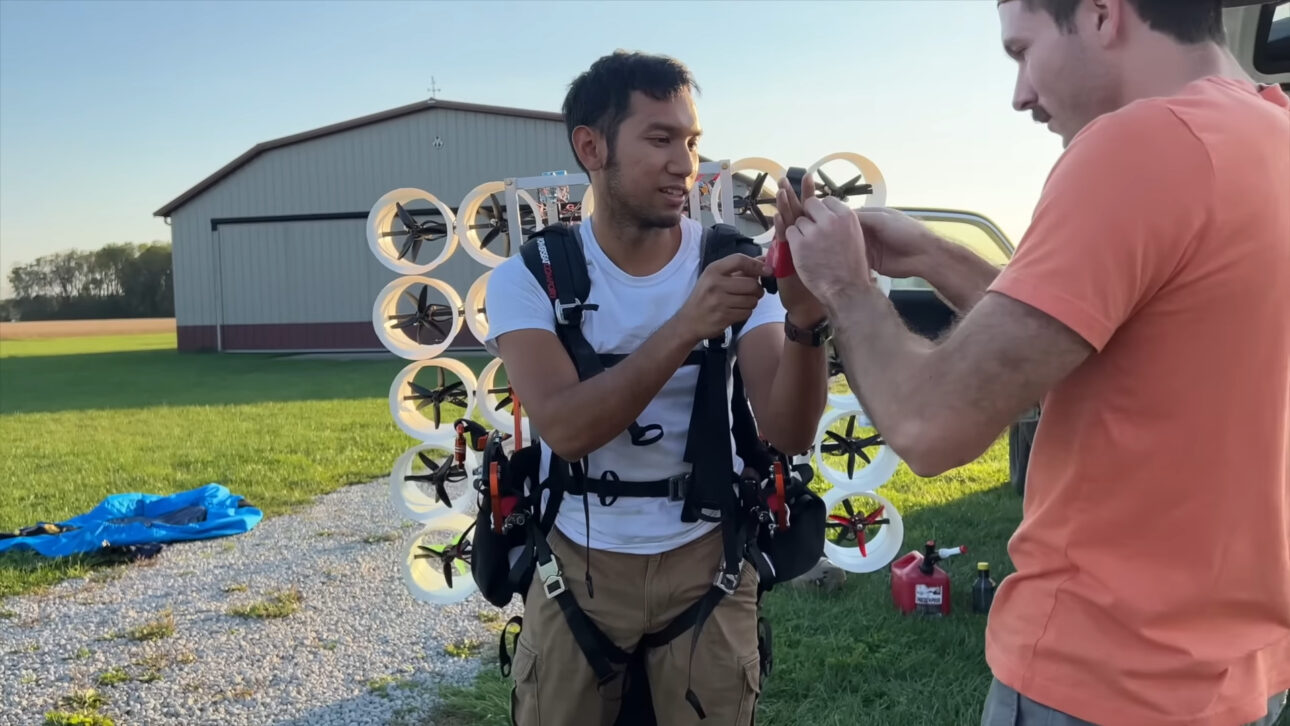
Although the performance was far from any conventional aeronautical standard, the simple fact that the machine flew already represented a victory for the experiment.
It was precisely this combination of extreme improvisation and unexpected result that made the project go viral.
The noise of the 50 engines became an attraction in itself
Those who watched the tests quickly noticed another detail. The noise produced by the fifty engines running simultaneously was impressive.
Specialized vehicles in drones and aviation described the sound as a mix between a giant swarm of insects and dozens of drones operating simultaneously.
The noise ended up becoming a striking feature of the project, helping to reinforce the futuristic yet chaotic appearance of the flying machine.
The experiment showed how far creativity can take garage projects
Peter Sripol’s project had no commercial objective nor intended to compete with real aircraft. Its value was precisely in the practical demonstration of a concept that few people would imagine testing.
By combining 3D printing, drone engines, electronics, and a lot of experimentation, the YouTuber managed to turn an apparently absurd idea into a machine that actually left the ground.
The project never intended to revolutionize aviation. Still, it showed something that has fascinated inventors for decades: sometimes, an idea that seems completely impossible can end up working when someone decides to test it in practice.
With fifty drone engines, a 3D printer, and a lot of creativity, Peter Sripol turned a garage experiment into one of the most curious flight experiments ever recorded on the internet.