Portuguese
  Spanish


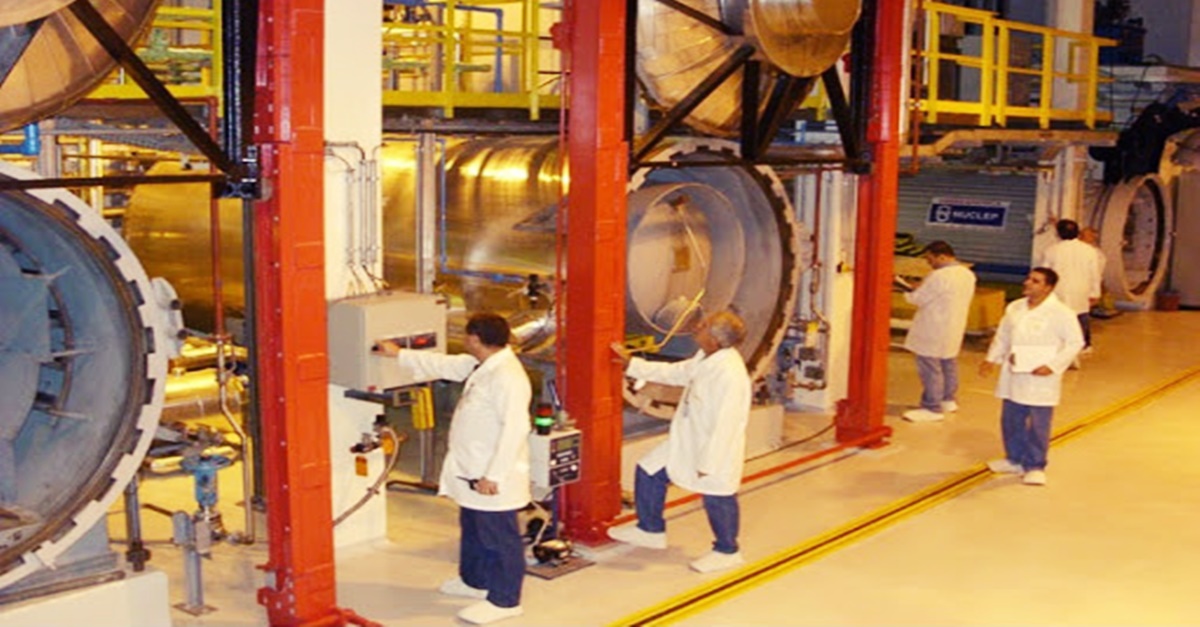

The Commercial Relationship Between Brazil and Argentina Regarding Nuclear Fuel Started in 2016, with the Export of 4 Tons of Uranium.
Brazil will export enriched uranium to fuel nuclear reactors in Argentina. The countries are in negotiation and, according to Indústrias Nucleares do Brasil (INB), the export may occur by the beginning of next year. The third export, in May, was enriched uranium at 4.15%, in the form of UO2 powder, intended for the Atucha nuclear reactors and the modular Carem-25.
Read Also
- To Advance in the Nuclear Energy Sector, the Government of Brazil Wants to Increase Annual Uranium Production to 2.4 Thousand Tons by 2030
- Government Creates Constitutional Project to End the Uranium Exploration Monopoly, Affirmed the MME Last Friday (21/08)
- Million-Dollar Investment in MS: Government Defines Company Responsible for the Project That Will Give Access to the Bioceanic Route, the Bridge That Will Connect Brazil, Paraguay, Argentina, and Chile
If the negotiation is concluded, this will be the fourth time that Argentine nuclear reactors will be fueled with Brazilian enriched uranium. The previous export occurred on May 7, amid the new coronavirus pandemic.
The shipment left the Nuclear Fuel Factory (FCN) in Rio de Janeiro, involving a significant logistical security apparatus for transportation and was delivered to Combustibles Nucleares Argentinos (Conuar) four days later.
-
Brazil’s July Bolsa Família Payments May Include Extra $150 and $50 for Families with Children, Pregnant Women, and Updated CadÚnico Registration

-
Brazilian Woman Buys €1 House in Sicily, Clears 50 Truckloads of Debris, and Transforms Ancient Ruin into Inspiring Life Project by 2026

-
Havan Competitor Expands in Brazil with 170 Stores, Offering Everything from Stationery to Asian Food and Focusing on Affordable Products to Attract Shoppers

-
Norway’s $2 Trillion Dilemma: How Oil Revenue Created a Massive Savings Fund with Too Much Money to Spend




The commercial relationship between Brazil and Argentina regarding nuclear fuel began in 2016, with the export of the first shipment of 4 tons of the product to Conuar.
Currently, Argentina has three nuclear reactors generating about 5 percent of the electricity in the country. The first one started operating in 1974.
Uranium Reserves in Brazil
Brazil holds one of the largest uranium reserves in the world. It was once in fifth place, but in the International Atomic Energy Agency’s ranking of 2017, it fell to ninth, which is still quite significant. However, due to a lack of research, the country may have much more uranium than is accounted for.
Currently, national resources are estimated at 244,788 tons of uranium concentrate (U3O8). Of this total, 32.5% is located in Itataia, in the state of Ceará, and 40.6% in Caetité, in Bahia. These are two major deposits, also known as Uraniferous Provinces, where there are several potential areas to be explored.
In Bahia’s Caetité, the government wants to start work soon at the Mina do Engenho. To this end, it has just signed a contract with the company Tracomal Terraplenagem e Construções Machado for the provision of mining services.
In the Ceará mine of Santa Quitéria, in Itataia, INB has partnered with the private company Galvani. Together, they formed the Santa Quitéria Consortium to extract uranium associated with phosphate. The operation is expected to begin by 2024, with an estimated production of up to 1,600 tons of yellowcake per year, using phosphate-uranium separation technology.
The licenses are under review by the CNEN and Ibama, but the Minister of Mines and Energy, Bento de Albuquerque, recently met with the two companies forming the consortium, which represents approval for the new business model.
by- Clarin