Portuguese
  Spanish


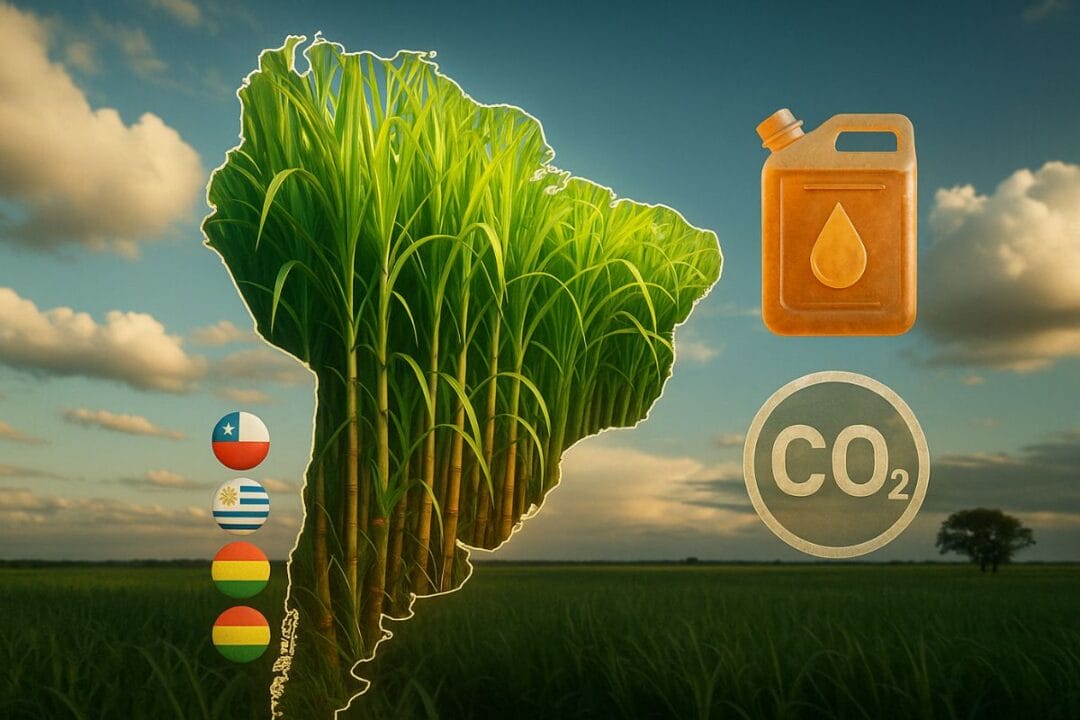

Ethanol Volume Used in the Country Surpasses Emissions Equivalent to the Sum of Gasoline Consumption of Seven South American Countries
The Brazil currently occupies a leading position globally in the use of biodiesel, being the country with the highest per capita consumption on the planet. In 2023, national production of ethanol (anhydrous + hydrated) reached 35.4 billion liters, directly contributing to the reduction of net greenhouse gas emissions (GHG).
This significant volume of ethanol prevented the release of approximately 50.3 million tons of CO₂ equivalent per year (MtCO₂e/year). According to Marcelo Gauto, for comparison purposes, this value exceeds all emissions associated with gasoline consumption from countries such as Chile, Uruguay, Paraguay, Bolivia, Ecuador, Peru, and Suriname combined, according to a full cycle analysis “from well to wheel.”
Biodiesel Helps Brazil Lead Energy Transition in Light Vehicles

The combination of a flexible fleet, investments in the sugarcane production chain, and policies to encourage ethanol has established Brazil as a key player in the energy transition for light transportation.
-
Brazilian Congress Moves to End 6-Day Workweek, Sparking Industry Concerns Over Competitiveness and Costs

-
Labor Shortage: Despite More Doctors Graduating in Brazil, Lack of Anesthesiologists Leads to Surgery Cancellations and Exposes Hidden Bottleneck in Hospitals

-
Thames Water, serving 16 million in London, faces potential nationalization amid £20 billion debt and KKR withdrawal.

-
New $42 Million Bridge Over Brazil’s São Francisco River Surpasses 50% Completion, Ending Decades of Anticipation




The use of biodiesel in the country is already integrated into everyday mobility, being one of the few nations in the world with a complete infrastructure for ethanol, from the field to the fueling station.
While many countries are still at the beginning of electrification, Brazil is advancing with flex hybrid solutions and the integration of ethanol and electricity, creating a complementary approach between renewables.
Emissions Avoided with Biodiesel: The Data Behind the Impact
Brazilian ethanol, according to data from ANP and European regulation, has a carbon intensity (CI) of only 28 gCO₂e/MJ, compared to 93.5 gCO₂e/MJ for gasoline.
Considering the densities and calorific power of liquid fuels:
- 50.3 MtCO₂e/year were avoided with the use of ethanol
- This exceeds the 49.8 MtCO₂e/year generated by the annual gasoline consumption of seven South American countries
These numbers reinforce the climatic advantage of biodiesel, especially when compared to imported fossil fuels.
Electrification and Biodiesel Go Hand in Hand in Brazil
Although electric vehicles are gaining ground in the national market, Brazil is betting on a hybrid strategy, where biodiesel and electrification complement each other. Flex hybrid models are becoming popular and represent a viable alternative with a lower immediate environmental impact, without requiring major changes to the fueling infrastructure.
The convergence between advanced biodiesel, improvements in energy efficiency, and clean automotive technologies positions Brazil as an example for other countries in development looking for sustainable mobility alternatives.